ETC of PWD Trustees trip to Gulu, 2024

The ETC of PWD trustees are just back from their (self-financed, of course) biannual trip to Gulu Disabled Persons Union in Northern Uganda.
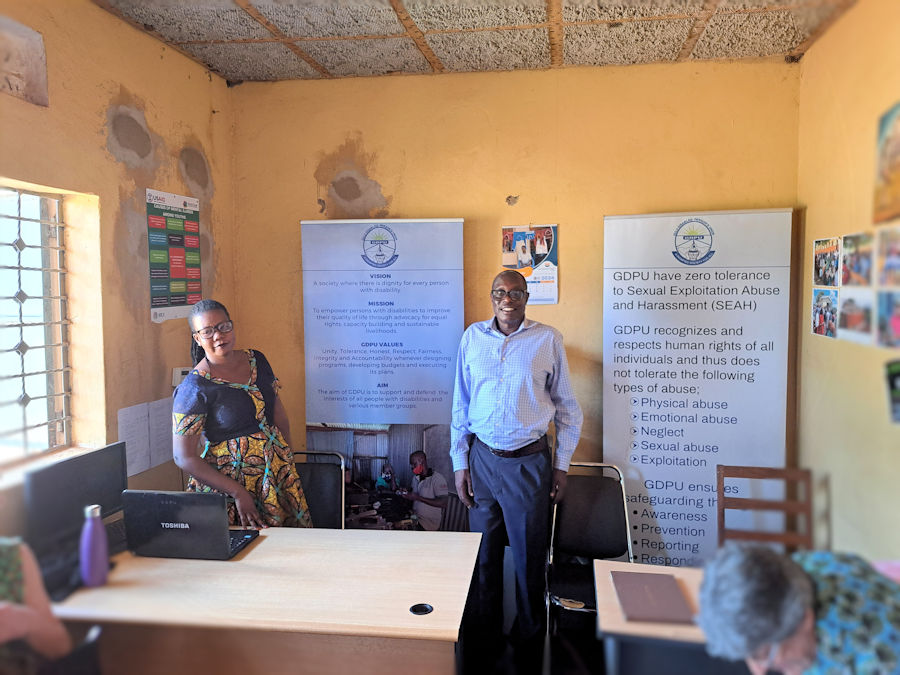
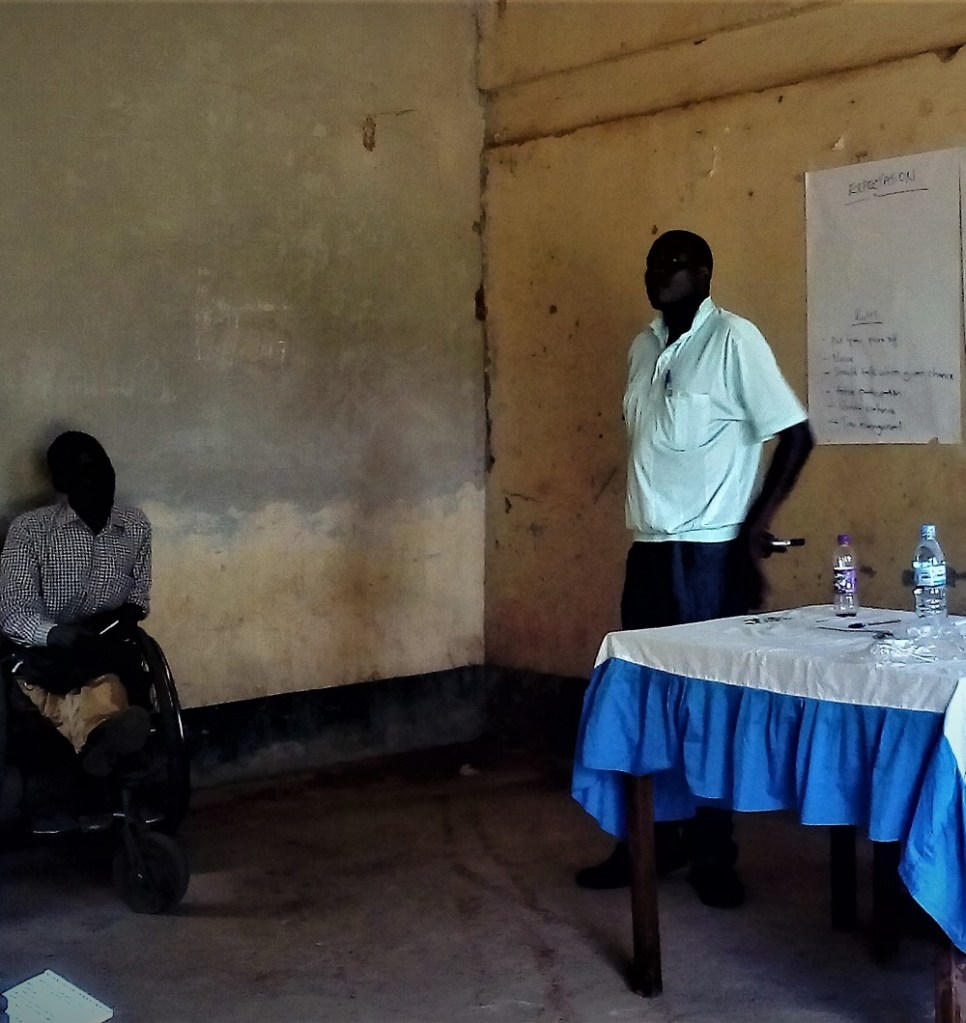
In the GDPU office with Okello Emma (Safeguarding) and Ojok Patrick (Centre Coordinator)

VPlus Evaluation

The VPlus vocational training programme for young people with disabilities in Gulu and surrounding districts has been signed off with an A+ (project exceeded expectations) by FCDO. The full evaluation report is available for all to see on the ETC of PWD website, a shorter executive summary is also there. Printed copies are being distributed to interested parties in Gulu.
Trip Focus 1: How Are They Pushing On?

Our focus was to see how the subsequent Vplusplus programme (Post training for VPlus graduates and others) is pushing on and, of course, to discuss the new Viva@GDPU programme.

Reflections

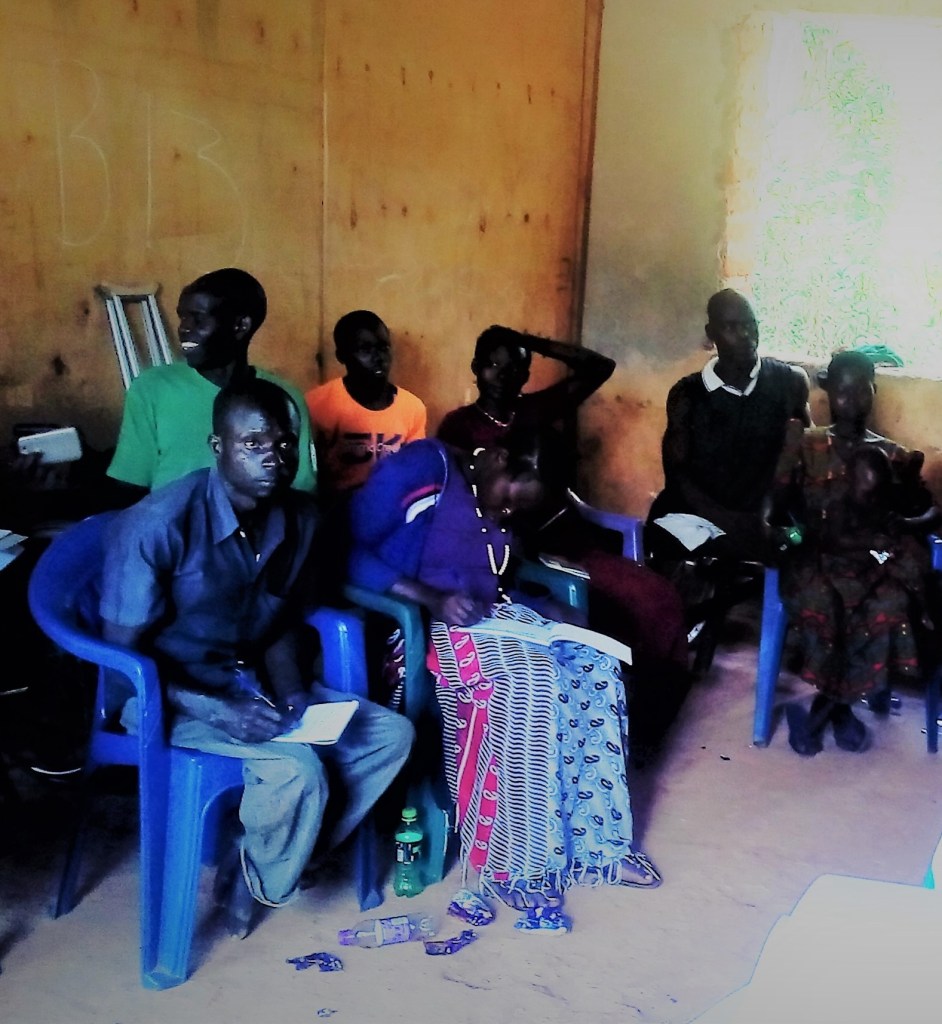
Our discussions at GDPU, showed how much was learnt during VPlus and how flexible a programme must be. Reflection meetings for example, have increased in importance, they bring together past trainees and have become a vital part of Post Training.
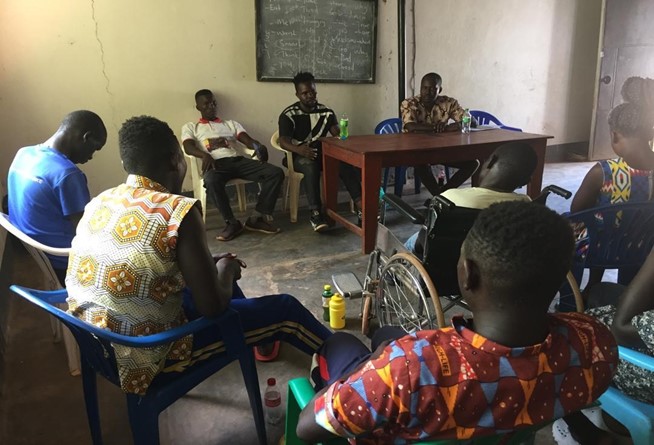
Reflection meeting

These meetings create networks that support graduates, attendees open up in ways that are useful. Peers learn new ideas from the successes and mistakes of others. Other sources of income are discovered, eg the boy who has made a bicycle powered knife sharpener. Making liquid soap came from reflection meetings and is now a useful income stream for many, especially Sweater Weavers whose work is seasonal. Every meeting leads to new developments.

To the Field
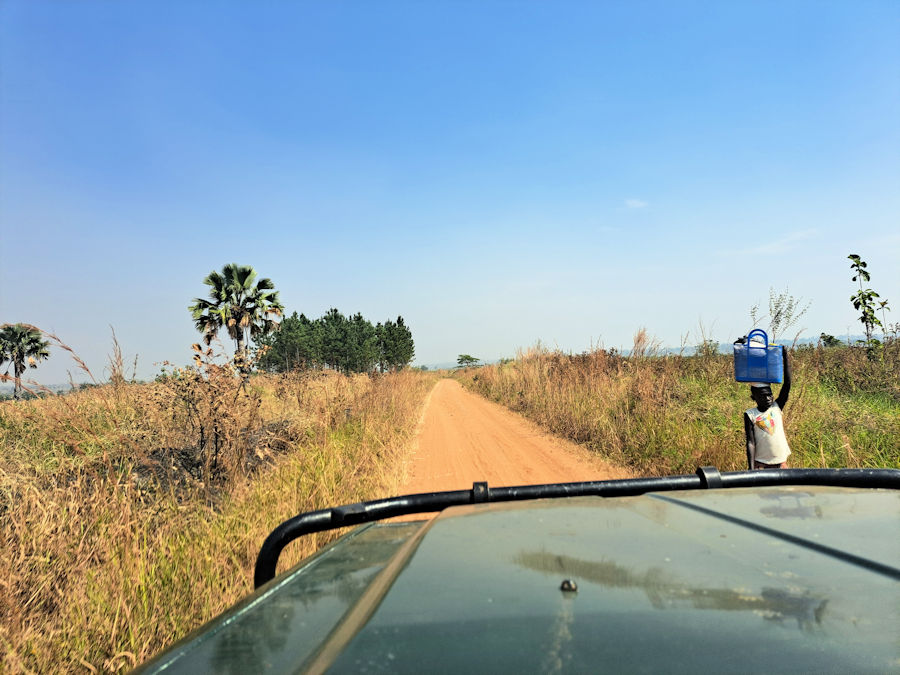
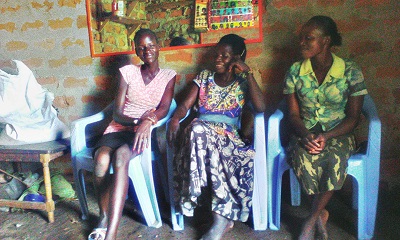
Musema Faruk – the programme manager – put on trips to the field for ETC trustees to see beneficiaries. For example, to Abwor to visit Brenda, a Design and Decoration graduate. Such visits allow you to appreciate the significance of long term support.

Brenda with her mother in Abwor

Brenda makes mats and beads, but it’s the beads that are the real sellers. She lives with her mother and is a keen member of her church choir. We met her pastor who is helpful and wants her to do well. Unfortunately others are not so supportive, it will take time for them to see her qualities.

Families

GDPU has also developed greater interaction with parents and the community. Teaching family members the same skills as the trainee for instance. So that when, as is often the case with Design and Decoration graduates, they forget what they have learnt the family member can step in and reinforce earlier learning. Many girls with disabilities stay with their mothers, future courses should therefore include the mother for various forms of support. As trustees saw on field trips to Brenda  in Abwor and Winnie in Pabbo.

Winnie and her mother with Musema Faruk in Pabbo

In Koch a VPlus Motor cycle mechanic has a position in a workshop, with obvious support from the owner. Each mechanic works and charges their own customers, but has to buy spares and pay rent to the owner. That means competition for customers and the less strong get less work, obviously a concern for those with disabilities. Unless, as in this case, the owner looks out for them in conjunction with visits from GDPU.

Viva@GDPU
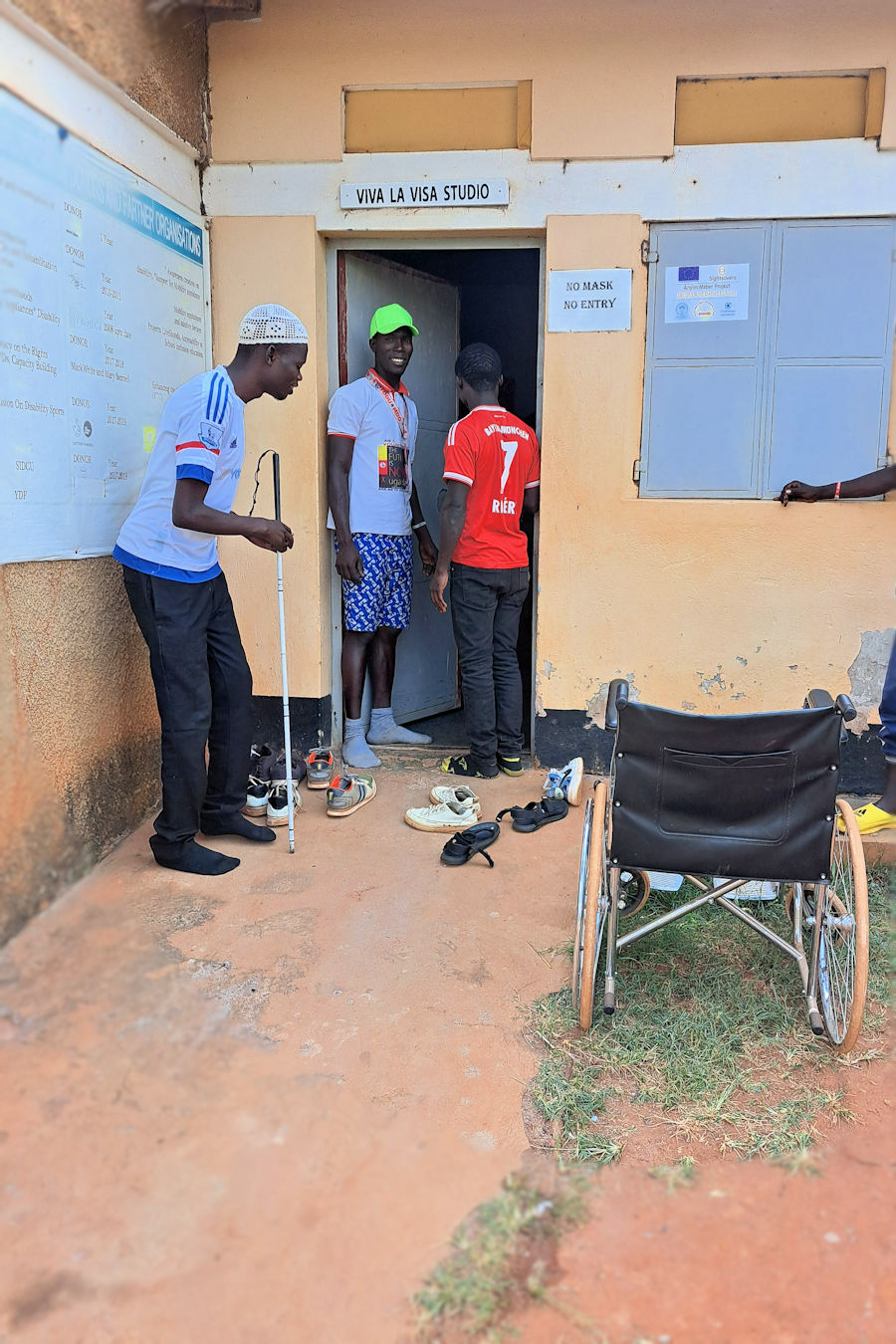
Waiting to get to work in the Viva studio

The new Viva@GDPU music studio is a delight, small but perfectly formed and very active, it creates a real buzz across the whole GDPU site. It was wonderful to see, for example, a young man with severe cerebral palsy who finds it difficult to communicate, really developing his computer skills, and busy writing some excellent music too.  The key to the emerging Viva sound is bringing together traditional instruments and modern music. Not only does this give these young musicians a unique approach it further embeds them within their community. In the past people with disabilities were not encouraged and often not allowed to take part in community celebrations and activities, events that always involve music and dance. Their growing mastery of their music is changing that. 

Abraham, a trainee (in the centre) with his two instructors

Trip Focus 2: Safeguarding

Another focus of the ETC trip was Safeguarding, in particular the difficulties around safeguarding, social media and the new worlds that these young musicians might be exposed to. Increasing ability and profile brings challenges. It’s a complex and fast changing area, but productive discussions between the GDPU safeguarding manager, the Viva music instructor and the ETC of PWD safeguarding manager led to a new studio protocol and an enhanced digital and social media policy for the Viva programme. We hope to get the protocol set to music so that it can be remembered more easily.

Outcomes

By the end of our visit it was agreed that:

  • ETC of PWD could fund the vplusplus programme for another year,
  • The Viva@GDPU music programme was a growing success and that the donors, Viva la Visa, were right in wanting to fund the initial programme for another two months.
  • There were areas at GDPU itself that needed continued assistance and capacity building. Some of the GDPU buildings have also suffered badly from termites and need literal support,
  • And it is undeniable that the staff have far too much to do, perhaps some volunteer interns could be found.
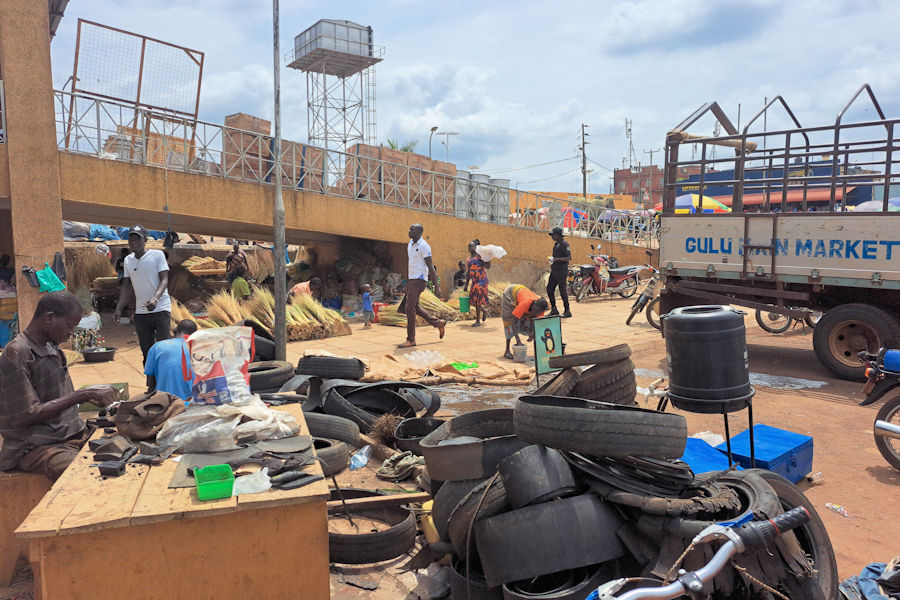
Downtown Gulu

As always, a fascinating trip to Gulu, much to see and even more to applaud as GDPU found ways to help young people with disabilities develop their own potential and create sustainable lives for themselves. Above all else, it was the optimism, the belief that life can be made better, that we brought home with us.
If you would like to know more about the ETC of PWD charity that manages the Vplus plus programme please go to our Home page.

If you would like to give something, please go to our Donate page.

If you would like to know more about Gulu Disabled Persons Union (GDPU) please go to their website or Facebook page. 

Many Thanks.
Let the Music Play: Announcing VIVA@GDPU

During the last ETC of PWD trustees trip to Gulu, for the graduation of the second cohort of VPlus at GDPU, the trainees excitement in making music really stood out. Their pleasure in traditional dance and songs was obvious, so was the joy in the audience in watching them .

Traditional Dance at the School Open Day

Music as a learning tool

After the event we discussed this with the team at Gulu Disabled Persons Union (GDPU). Learning Acholi dance has long been one of the activities during training at GDPU. Music and music related activities create enjoyment and become a very useful advocacy tool when displayed to the local community. But could music making also be an aid to other forms of learning?

Could this joy become more formalised and part of the curriculum? As a way of helping trainees, most have little of no formal education, learn how to learn?

Odong Sunday and group singing and dancing at Graduation Day

Music as an income stream

Not forgetting also, that many graduates have made money through their music. In one of the endless reports demanded by FCDO for VPlus project completion, one earner stood out. Most trainee incomes came in under the UGX 1 million mark per month, but one person earned UGX 6 million last month (about £125.00), just from his music.

Should music, music related activities and music technology therefore become part of the vocational skills training courses at GDPU and as a standalone course in itself? The answer was obviously, yes. But it’s an expensive answer. To set up a working music studio worthy of the name would be a big undertaking. Who could fund this? Step forward: Viva La Visa.

Dance Performance at Vplus School Open Day

Who are Viva la Visa?

Viva La Visa are a UK based visa and immigration specialists for the music and entertainment industry, and beyond!

Viva La Visa
“We aim to streamline the visa application process and enhance the overall experience whilst offering the best possible chance of success with visa applications worldwide.
Viva La Visa is a one stop shop when it comes to passport and visa needs, with a high success rate and an array of experience, we focus on providing seamless hassle-free visa services across all nationalities and to any destination.”

Viva La Visa was set up by Andy Corrigan in 2009. Andy is an experienced musician and a touring veteran, he also runs a successful music production company. He’s been in the business since 1977, and knows it from every angle. He has followed ETC from the start and has always been interested in what we do. VIVA @GDPU is a natural fit for these ideas and we are incredibly grateful to him for stepping forward to fund this project and look forward to him becoming involved in its development too.

VIVA@GDPU: the proposal

Music and dance practice

This is an exciting and innovative project, with enormous potential, it could grow in so many different ways. Unlike traditional skills based projects, the subject of the training – music – comes directly from those being trained.

  • VIVA@GDPU is targeting 10 x youth for in-centre training; they will either be new trainees or past graduates from VPlus or etc@gdpu.
  • The new music instructor will also be working with trainees and instructors across all the vocational courses. Finding ways to use music to help learning.
  • The new music studio funded by VIVA@GDPU will let trainees produce music for change and advocacy. They will be trained on how to produce music and will remain to produce music by other PWDs (persons with disabilities). They will become trainers themselves, skilled in music production.
  • The music department will run continuously, even at the weekend and people from the community will come to the VIVA@GDPU studio make music and to learn skills. This will be subsidised by the programme and they will only be charged small amounts. The aim is to change community views of disability.
  • Success will be measured by how many youth are employed in music and music related activities, and by how much music made at the centre, is played on radio stations. The long term plan is for GDPU to set up it’s own radio station.

Acholi music and traditional dance

School Open Day: Traditional Dance, the Ajero

Acholi music and dance are unique and central to the identity of people from this region. People with disability have often been excluded from their community by refusing to let them take part in their own music.

This project will help to change that mindset and allow young Acholis with disabilities access to their own community and culture on equal terms. It will help them earn a living too, either as one of many income streams, or maybe, It will help them towards the sustainable lives that they long for and deserve.

We will keep you posted, stand by for songs and dance!

If you would like to know more about the ETC of PWD charity please go to our Home page.

If you would like to give something, please go to our Donate page.

If you would like to know more about Gulu Disabled Persons Union (GDPU) please go to their website or Facebook page. 

Many Thanks.

Next Steps: ETC@GDPU in September

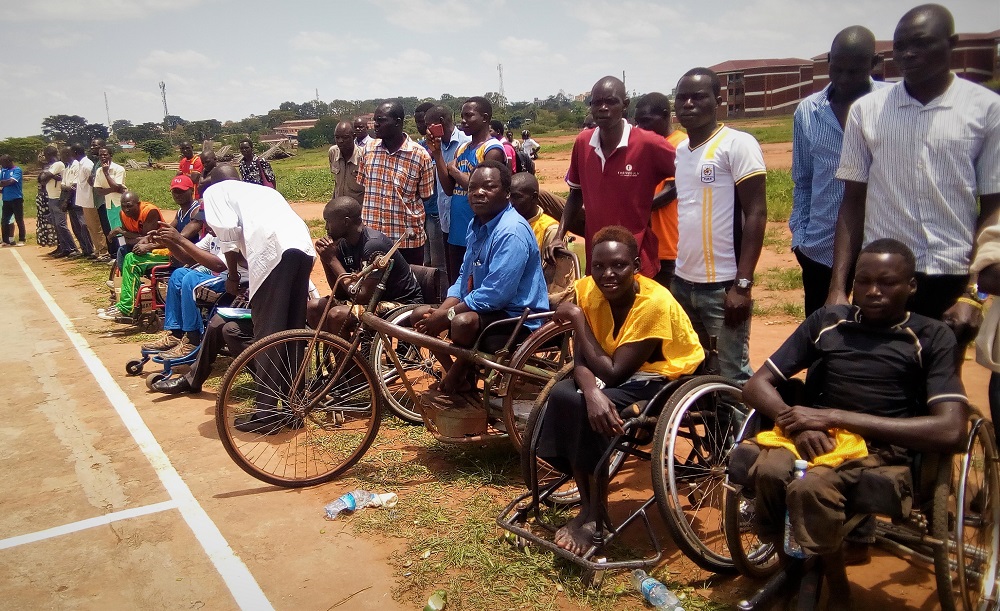
Spectators at the 2017 National Disability Sports Gala in Gulu

Highlights of the month

  • Gulu PWDs Electronic and other members of Gulu Wheelchair Basketball Team took part in a National Sport Gala for Persons with Disabilities organized by Uganda Paralympic Committee and won! See this earlier post.
  • Members taking part in ETC@GDPU report significant increase in income as a result of their training
  • An in-depth Reflection Meeting will really help us all evaluate what has worked in the pilot project, and what has not, and where to go from here.

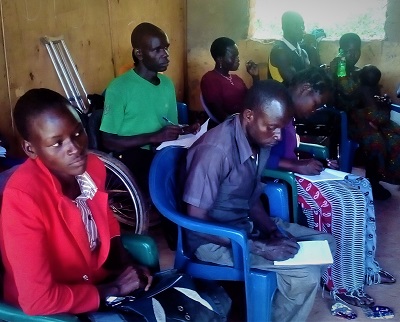
Reflection Meeting in Gulu

Skills Training Report

The ETC@GDPU project officer followed up recent trainings in Omoro and Gulu, to ensure that the pilot business enterprises are building their capacities in areas such as:

  • Business plan development,
  • Skills training
  • Conflict management and resolution.

The youth are now actively participating in the training programme and 75% are reporting that their levels of income are increasing because:

  1. Their area of coverage has increased
  2. They can now repair more things compared to when they started project.

The training program is running up to the end of October and the GDPU project officer is following up to ensure that they are getting the required skills and that relevant knowledge is imparted

Hairdressing Training in Acet

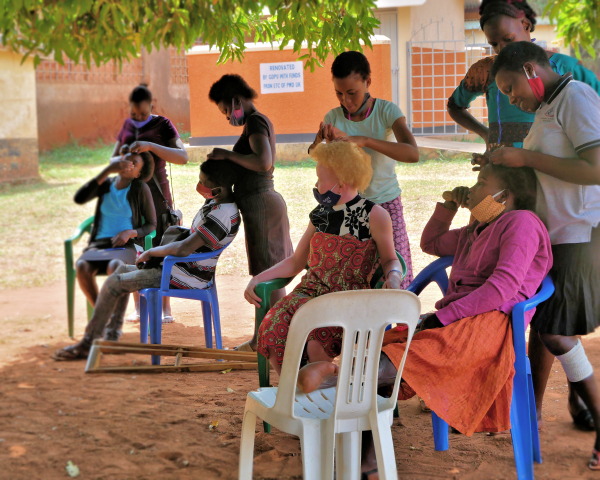
Hairdressing at Acet

Five members of Nyeko Rac Hairdressing and Salon at Acet Centre are trained in areas they need. These are:

  • pencil plaiting
  • styling and twisting hair
  • dread locks
  • free hand.

Savings are being made among members of Nyeko Rach hairdressing,

Conflicts are being resolved among members

Challenges

  • Some materials for hairdressing are now available at Nyeko Rac Hair Beauty Salon at Acet, although lack of material for weaves, chemicals etc

Gulu PWDs Electronics and Repair, Training at GDPU, Gulu

Gulu Pwds Electronic

The ETC@GDPU project officer has reported before about difficulties with Gulu PWDs, their lack of cohesion as a group, their disinterest in saving money and in training for anything but phone repair.

Training is going on for two months from 11th September to 19th November 2017, aimed at addressing problems areas where they feel they face difficulties:

  • Discovered the use of charcoal stove for soldering gargets such as Radio, TV, phones etc
  • Changing/repair of mouth piece, charging system and screens
  • Discovered the alternative for Blower Machine by using candle when there is no electricity

Challenges

  • The training program was affected by the National Sports Gala which took place from 25th to 30th September 2017.
  • Village savings and loan association (VSLA) is not active among Gulu PWDS electronics members although they attended training for VSLA
  • Business location for PWD electronic is neither favourable or easily accessible, it is hard for them to keep customers appliances because they operate their business in a corridor.
  • Some phones are complicated to repair, spare parts are not available for most bought in the area, especially Chinese phones.
  • Unlike their business competitors they lack software to unlock phones
  • Business is not growing for electronics
  • Limited knowledge and skills on other electronic appliances such TV, Radio, DVD players, Smart Phones and Amplifiers
  • Customer demand lower prices than are viable

Akera Roberts, Individual Business Enterprise, Electronics and Repair, Gulu

Akera Roberts

Radio repair is doing well for Akera Robert, Rubanga Na Electronics business plan was successfully developed and completed by Akera Robert and GDPU project officer

Challenge

  • Security for his place of work is still an issue, Akera Robert still operates under the veranda

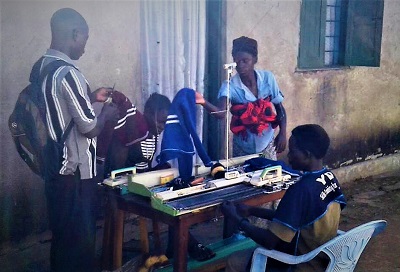
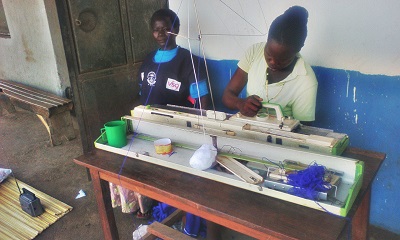
Akello Catherine and Florence are being trained in making V necked sweaters

Knitting and Sweater Weaving

Sweater weaving is doing well, they get contracts from schools and local community members. Support training is aimed at improving their quality of work and building customers trust, training area for knitting is:

  • joining using sewing machine
  • making V shape sweater
  • designing sweaters.

Learning to Make V Necked Sweaters, A customer checking on his newly made garment

Challenge

  • High-level absenteeism from the instructor for knitting and sweater weaving might be affecting the positive development of the programme.
  • Customers take long to pick their items
  • Customer demand lower prices than are viable


Reflection Meeting

Conducted by GDPU project officer and ETC and Project Coordinator GDPU to check on the impact of ETC project in Gulu and Omoro District.

What has worked?

The local community attitude towards PWDs is that they are best known for leather work. Yet as this and the YDP proved, they are able to do other income generating activities such hairdressing, motorcycle repair, electronic repair and maintenance.

  • Skills training has improved the ‘offer’ of all the business groups
  • Active in repair of electronic gadgets, hairdressing and sweater weaving, i.e. businesses are growing although some are slower than others.
  • Record keeping is now observed in all enterprises, learnt how to balance books of account because of financial literacy received during the ETC project.
  • Learnt to communicate effectively with customers, most of the youth enterprise members had bad communication skills that made them lose customers but the capacity building trainings offered by the ETC@GDPU project has improved this aspect.
  • Learnt how to deal with large number of customers, greatly improved customer services by use of first come first serve.

Reflection Meeting Gulu

Challenges: Solutions and the Way Forward

The reported rise in members incomes is very welcome, how can we continue this increase? Which parts of the programme are working and what do we need to do to improve them as part of the pilot programme and for future programme planning? Diversification and widening the ‘offer’ of each group, further investigation into sources of investment and increasing the self-confidence of members could all play a part. As could:

  • Linking the enterprise to other service providers available in their location
  • Having a by law on mandatory savings
  • Inclusion saving for disabled and non-disabled
  • Continuous follow-up and support from GDPU project staff
  • Further tailor-made refresher training in specific areas e.g. Repair of modern phones, TV radio etc
  • More advertising using posters
  • Enterprise members to carry out market survey to check on the prices of commodities and services to be comparable with other enterprises and avoid over pricing.

    GDPU Co-ordinator Conducting the Reflection Meeting

Apologies

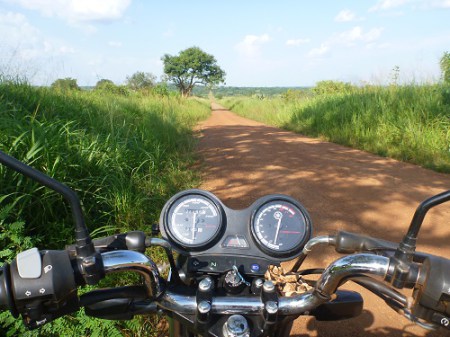
Apologies for the late posting of this months news, also we (the UK founders of ETC@GDPU) had  hoped to be flying out to Gulu at the end of this month to discuss and evaluate the pilot phase and how to move on to the full project. Sadly, Mark was involved in a motorbike accident in the UK just weeks before departure. Although he will be OK his mobility is restricted for a few months. Ironically Mark clocked up 12,000 kilometres on a motorbike around Gulu and district with only a few bumps and scrapes, riding in the UK is far more dangerous. If you are a car driver, please look properly before you pull out of a side road! However we hope to carry on the project development by Skype in the next few months and return to Gulu in February.

The safer roads in Gulu District!


Gulu PWDs Electronic win again

The Triumphant Gulu Wheelchair Basketball Team

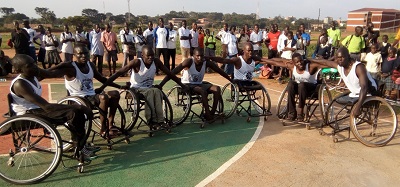
Wheelchair basketball has long been a feature at GDPU. From 25th to 30th September 2017 Gulu PWDs Electronic, one of the three pilot groups on the ETC@GDPU project, along with other members of Gulu Wheelchair Basketball Team took part in a National Sport Gala for Persons with Disabilities.

Spectators at the 2017 National Disability Sports Gala in Gulu

The Gala was organized by The Uganda Paralympic Committee and hosted by Gulu district. They took part in wheelchair race, wheelchair basketball and sitting volley ball.

Gulu Wheelchair Basketball Team in Action at Kaunda Ground, Gulu.

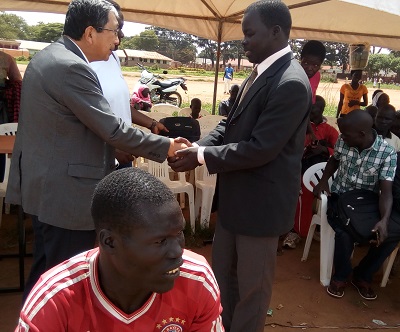
Gulu Wheelchair Basketball Club kept their national trophy by defeating arch-rivals Kampala Wheelchair Basketball Club 26-17. The exciting final of the Uganda National Paralympic Games in Wheelchair Basketball, held at Kaunda Grounds in Gulu, was witnessed by chief guest Kameda Kazuaki, the Japanese ambassador to Uganda.

The Japanese Ambassador at National Sports Gala, Gulu.

The Ugandan national paper, the Daily Monitor appears to believe that Japan might have a future role in training Ugandan Paralympic athletes, GDPU are following this up; you never know!

Awarding the medals at 2017 National Disability Sports Gala in Gulu

Gulu Pwds Electronics members of that winning team were: Ojara Charles, Ocira Richard, Okwonga Charles, Akera Robert, Oloya Kenneth and Omony Patrick, congratulations to them and everyone else who took part.

Congratulations to Gulu PWDS Electronic


Still Pushing On: three key questions for ETC @ GDPU

Camera 360
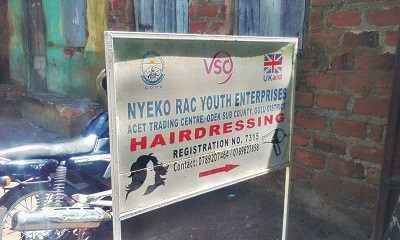
The Nyeko Rac Business group signboard at Acet (note that they are registered with the local authority, very important)

Still Pushing On: three key questions for ECT @ GDPU

  1. What do you need to set up a small business and keep it going?
  2. What do you need to run a sustainable small business in Gulu District, Northern Uganda, East Africa?
  3. What do you need succeed in a small business in that district if you are a person with disabilities?

These are some of the questions that the ‘Enhancing the Capacity at Gulu Disabled Persons Union; (ETC @ GDPU) project is starting to look at.

Camera 360
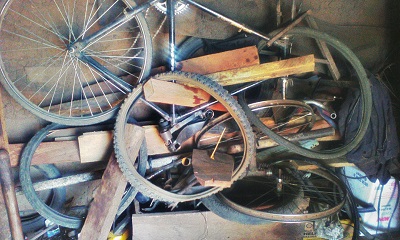
Bicycle Repair: Tam Anyim Youth Enterprise

Where are we up to?

GDPU have come back with the first assessment of the nine existing business groups that were set up by students with disabilities under the Youth Development Programme in 2015. There are 4 x electronics repairs groups. 2 x hairdressers. 2 x Sweater weavers. 1 x motorcycle and bicycle repairs. The electronics groups seem to be the most financially successful, partly because they are based in the centre of town, although that has significant mobility and security issues.

Camera 360
Diversification: a knife sharpener fashioned out of a bicycle

Group Strengths

Their businesses have been running for about two years, it seems that (most of) the groups share certain strengths:

  1. Good customer relations
  2. Viable businesses, in that there is a demand for their services in the area that they are working
  3. Many are able to diversify. So, for example many are able to carry out some small-scale farming alongside hairdressing.
  4. About half of the groups are able to make small savings from their earnings, typically about 200, 000 shillings a month per group (about £40). Having a financial cushion, however small, is vital to protect against ‘life events’. Average individual income is not easy to determine, given the lack of records (see below) but is somewhere around 66, 000 shillings a week or £14.50.

Camera 360
Store keeping

Group Challenges

But, from the GDPU report it seems that all the groups share similar weaknesses:

  • Keeping records is not built into their way of thinking, partly through poor literacy/ numeracy and self-confidence which…
  • Makes it difficult for members to plan ahead and to find out where they are at the moment
  • The planning methods they were taught under YDP are not suitable: too complex and text based for people who still struggle with reading and writing.
  • Core skills need updating to satisfy the needs of customers
  • Lack of suitable tools is holding back development, but there is no point members investing in tools until …
  • Security is much better
  • Group dynamics are stronger (in most cases these are poor), with theft and lack of trust between members holding back development.
  • Groups need considerable support (in literacy/ numeracy and self-confidence) to apply for grants/ loans to help them invest in their future.

Camera 360
Lubanga Aye Twero Business Group: Sweater Weaving

What next?

Now that we know how these nine groups are getting on and what their challenges are, the next step for the steering committee at GDPU is to choose three groups for the pilot phase of the project. These pilot groups, together with the project team, will then put together their own tailored programme for skills training, literacy/ numeracy, pyscho-social support and so on; exciting days.

Camera 360
The Nyeko Rac business group