Back to Gulu: how has the project been pushing on?

Downtown Gulu 3
Downtown Gulu

Well, we’ve been back to Gulu again, taking two of the new trustees from ETC of PWD this time. We were bringing together the strands of the project so far and thinking about where this accumulated knowledge should take everyone involved.

There were:

  1. Visits to the field with Musema Faruk the project officer from Gulu Disabled Persons Union to see business groups from both phases of the project.
  2. Meetings with local councillors from the new district of Omorro to discuss their approach to disability and whether our project might fit into it.
  3. And a very productive meeting with GDPU members themselves, to discuss the project so far and where it might lead in the future.

Many thanks to Faruk for organising the visits, for his hard work with the groups and for supporting the evident improvements that we saw.

Chairman GDPU with Lubanga Lakica
Back to the field: Ongom Simon, the Chairman of the GDPU board with members of Lubanga Lakica Motorcycle repair group in Koch Li

Two key issues arose from our field trips:

  1. What makes a successful group and how best to support business groups to achieve that success, and what does success look like anyway
  2. What are the best vocational skills for students to learn and how specialised should they be?

And at our subsequent meeting at GDPU we all spent a long time thinking about their plans to make a training hub for future students with disability, what should be taught?

Members of lubanga lakica Enterprise Developing their Business plan
Members of Lubanga Lakica Enterprise developing their Business Plan

But each of these three questions could be reduced down to one word: sustainability. How can the hard work of the members of the business enterprises and of the members of GDPU be kept going? How can they make sure that what they are doing will earn enough to keep them and their families alive and better than alive; thriving.

Our last post mentioned success by two groups. This time perhaps, by concentrating on the work of two others we can tease out some of the implications for sustainability in their success.

Akera Roberts in Gulu and Lubanga Lakica in Koch Li

Akera Roberts Businesss Enterprise
Akera Roberts, individual Businesss Enterprise on the pilot programme, Gulu.

Akera Robert  

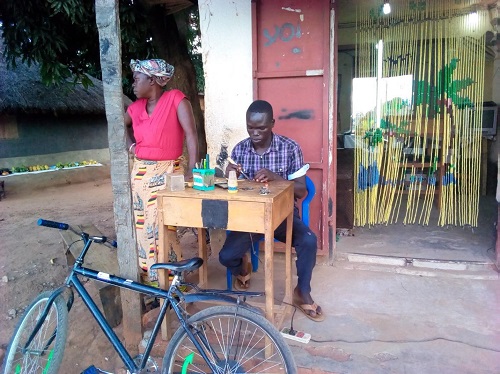
Is based in the centre of Gulu town and doing extremely well, has plans and enough money saved to move from his table on a veranda into new premises within 3 months. Has just sent his son to one of the top primary schools in Gulu, paid for by his own work. A real difference in aspirations this year compared to last, Akera Robert has become far more confident and has a vision of his own future far larger than we saw last year. Important to note that he focuses on electrical and solar appliances not mobile phones. He puts his success down to

Akera Robert mending a solar light 4
Akera Robert mending a solar light
  • Diversity of equipment repaired, unlike for example the Gulu PWDs enterprise who solely mend feature phones and therefore have a diminishing market, Akera’s range will only grow.
  • He has a very good reputation, particularly among people from the villages who bring their items on the bus for him to repair when they come into town
  • He is always there from 8 in the morning till dark, even when he has no work he will be at his desk, so customers know they can always find him
Lubanga Lakija 3
Members of Lubanga Lakica with the GDPU Chairman of the Board (also a councillor for the area)

Lubanga Lakica:

Based in Koch Li, a very small place on a mud road road between Koch Goma and Bobi. Koch Li is about 5 miles from the main road that passes through Koch Goma, a small town about 20 miles outside Gulu. There is not much at Koch Li, but isolation can bring benefits as well as challenges;

Benefits: in particular a lack of competition. Koch Goma is full of people mending motorcycles, but as the members of Lubanga Lakica have realised there is great market for them if they can learn how to work on the many different possible machines to repair in their area: slashing machines/ generators/ small agricultural machines etc. They have some of the skills needed, but need more. Some of the members already know how to carry out small welding repairs although they lack the machinery to do so.

Lubanga Lakija
Lubanga Lakija spares store

Challenges: security is a real problem in isolated areas, tools and anything portable or of any value will be stolen. Which means keeping spares for example, is a difficult. These mechanics have a tie up with a spares dealer in Koch Goma, but to run a proper service they need a secure container, which costs money. As is often the way, the group are reluctant to invest their own money in paying for a container, although they have negotiated a good price for one made by Mr Labongo from the disabled welders group in Gulu. As Faruk says, “They fear risk”.

Lubanga Likija tools
Lubanga Lakica tools and storage

The implications from discussions with these two businesses were twofold

  1. Trainees need different skills set to succeed in town and in out in the village, in essence urban trainees will need specific skills in greater depth and country trainees will need a very wide range of basic skills. Our Post-Training Support programmes have certainly been location specific and responded to the wishes of the beneficiaries. But, in future training institutions will have to establish where the future trainees intend to work before planning their skills training programme. It seems obvious doesn’t it, but I have never found a training programme that does this
  2. To build on their success members will need to understand the role of investment and have access to it; either their own money or from grants.
MCRM
Motorcycle Repair and Maintenance by the side of the road

These field trips and Faruk’s great depth of understanding and knowledge of the enterprises he supports, built up over the last few years, gave us all much to think about and take forward to our meeting at Gulu Disabled Persons Union. Where should the ETC project go next? See the next post to find out!

How Are They Pushing on at GDPU?

What does progress look like in this type of (very) small scale development context?

Where does long lasting improvement come from and how can you recognise it?

We are now coming to the end of Phase Two of our project, ETC@GDPU (Enhancing the Capacity of Persons with Disability) it provides skills training and business support for young people with disabilities in Gulu and surrounding region. Faruk the project officer from Gulu Disabled Persons Union (GDPU) has been out and about assessing the development of each group in Phase Two and of course checking on the progress of the pilot groups.

Recent Activities:

Financial and Literacy Training 3
Recent Financial and Marketing Training

Financial training/ Marketing training:

  • GDPU hired Mr Okumu Moris, a lecturer in entrepreneurship and commerce, to train youth in marketing skills; a gap identified among the enterprises.
  • The other support offered by the ETC project for the past 8 months also included: Life skills; Financial literacy and record keeping; Business management skills, Group dynamic training and training in specific vocational skills, eg knitting and joining of sweaters using a sewing machine, or electronics or repairing different types of motorbike.
  • Follow ups to the training given and Reflection Meetings were also held.

A look at a couple of the ETC @ GDPU Phase Two Groups might show the effects of this support and training:

Working with the sewing machine at GDPKW

Gulu Disabled Persons Knitting Workshop:

Along with the general training, members of GDPKW have attended Skills Training for two months, training in open sweater weaving, joining sweaters, and using the sewing machine. As Faruk, the project officer has said: “their capacity was successfully built and they are all able to do work without any problems.”

Sample Cash Book from a Training Session

Training outcomes:

    • After the marketing training the enterprise was advised to look for contracts, not only from schools which are the usual outlets for sweater weavers, but also from the community in order to increase their sales. The group should also try to display their products so that others will know them.
  • There is sign of increase in their income, for example, the enterprise was able to get contracts of 206000 Ugandan shillings (about £45.00) for one month, awarded to the enterprise as a result of increased skills and knowledge of marketing and sourcing of contracts from the community.
  • The group has an updated record book which is a very good sign of financial literacy and good practise within the enterprise.
  • The enterprise members have managed to work very hard to improve on the performance of their enterprise.
New Clothes from Old at GDPKW

Good signs for the future

Members of GDPKW have started making individual sweaters of different designs, rather than just school uniforms, and are now getting small individual contracts. GDPU have linked the enterprise to friends who wanted sweaters, and they already been awarded the contract to knit two sweaters at a total cost of 60,000 Ugandan Shillings (about £13.00).

Upcycling at GDPKW

Also, they now sew dresses from small pieces of cloth, recycling different pieces of cheap cloth and offcuts to make one beautiful one. These are particularly suitable for children’s clothing and are therefore very saleable.

School Uniform Sweaters

Small Steps?

Both of these outcomes might seem very small steps but in fact they mark significant progress. Previously, members have felt bound by the forms and types that they had been taught and appeared fearful of anything new, of investing their own time, money or resources in risk. School uniform sweater contracts are seasonal, only available in January/ February at the start of the school year as a bulk order, one-off contract with a low rate of financial return. If you miss the order, through a broken machine or illness perhaps, then you make nothing for the rest of the year. These new ventures not only show people with enough self-confidence to ‘own’ their own business, but also a means for individual makers of new clothes to make a serious future income that is sustainable throughout the year; there is considerable potential for developing ‘upcycling’ and new designs in the local markets.

Other routes to boosting confidence and self esteem:

Sport: Participation in: one of the GDPKW members of the group (Aciro Brenda, a physically disabled girl) participated in the disability Paralympics, winning gold medals in 100m, 200m and Javelin.

Acet Market

Nyeko Rach

A pilot phase hairdressing group based in Acet, a small isolated town some 25 miles out of Gulu on a very poor road.

Description of activities carried out by the group this period:

targeting your market and plaiting of hair: the enterprise performed very well recently, especially during the period of Uganda independence and market days. The enterprise had a lot of customers, all members were engaged and able to earn good money.

Going to see Nyeko Rach Hairdressers in Acet

Increase in commercial confidence and business planning after training: the isolation of Acet, which has no retail shop for salon products, makes using the right materials difficult. The enterprise has realised that if they plan properly, they are able to source and buy the salon products requested by their customers, in Gulu and transport them out to Acet by bus; as Faruk says: “This is a good sign for customer relations and ownership of the enterprise. The enterprise has shown a lot of progress compared to other enterprises as they do buy their materials on a weekly basis.”

Again, small steps but important ones for future sustainability, this is what progress in small scale development looks like.

New Clothes from Old at GDPKW

Coming in the next update:

news about the recent ETC of PWD trustee visit to Gulu and news about the next steps for this project.

How have they been pushing on at GDPU?

Jokene Geoffry of Tam Anyim Youth Entereprise working on his business plan
Jokene Geoffry of Tam Anyim Youth Enterprise working on his business plan

Any further sporting achievements to celebrate?

Members of Gulu PWDs electronics went to the national competition in Mbarara in September with great results.

other01pix
Ocira Richard

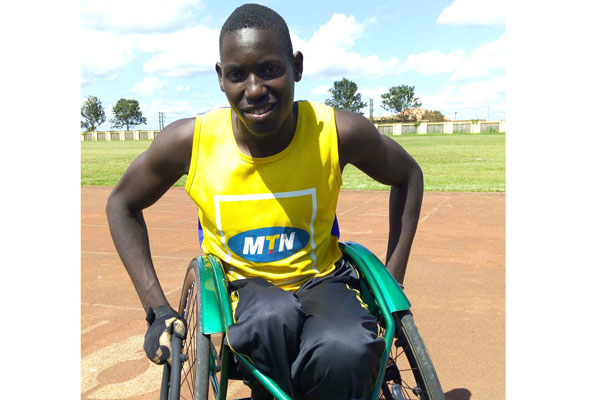
Ocira Richard, a member of the group, won the National Wheelchair 100 metres in Mbarara and has now gone to Berlin to represent Uganda in the Wheelchair Marathon, the first ever Ugandan to represent his country in this way; we all wish him the very best!

Ocholar Stephen July 1
Ocholar Stephen with Musema Faruk (ETC@GDPU Project Officer)

We are also very happy to see that Musema Faruk’s (the ETC@GDPU Project Officer) work coaching children in inclusive disability sports has been recognized. He has been shortlisted for Arsenal, WorldRemit Coaching Programme launched last month to offer local coaches from across Africa a place on a training camp with Arsenal’s Schools coaches in London; all the very best for that too Faruk!

In other news, Enhancing the Capacity of Persons with Disability (ETC of PWD), the umbrella group that includes the ETC@GDPU project, has now been fully registered as a charity in the UK. Which means of course, that once HMRC have finally approved our financial status as a charity we can start looking for funding; expect all sorts of demands soon. The Charities Commission have asked that we make each part of the programme clearly separate, so a new ETC of PWD website will be appearing in the near future.

GDPU Phase Two youth groups during the Business plan training
Phase Two youth groups during the Business Plan training at GDPU

What else has been happening at Gulu Disabled Persons Union?

After the evaluation of the successful ETC@GDPU pilot phase we all decided that:

  1. the project and its aims were worthwhile,
  2. that Gulu Disabled Persons Union (GDPU) should continue to keep an eye on the existing pilot phase groups
  3. GDPU should look to the past Youth Development Programme groups to find more young persons with disability in Gulu and district who would benefit from support in their businesses.
GDPKW SWEATER KNITTING ENTERPRISE (4)
Gulu Disabled Persons Knitting Workshop

We are now properly into Phase 2 of the ETC@GDPU Programme, Musema Faruk, the ETC@GDPU project Officer has found four groups:

  • Gulu Disabled Persons Knitting workshop
  • Hope for Disabled Girls (hairdressing)
  • Lubanga Lakija (Motor cycle repair and maintenance)
  • Tam Anyim (Motor cycle repair and maintenance)

And two individual enterprises:

  • Ocholar Stephen (Electronics)
  • Oloya Kenneth (Electronics)
Members of lubanga lakica Enterprise Developing their Business plan
Members of Lubanga Lakica Enterprise developing their Business Plan

Faruk has now worked with each one to find out what they want to do to improve their businesses and what skills they would like to improve, found new trainers where appropriate and assessed the level of support each enterprise will need.

As Phase 2 begins, he has worked with them on their financial structures, Ojok Patrick (Project Leader and GDPU co-ordinator) has worked with them all on group structures and conflict resolution. Courses have been delivered on literacy, numeracy and sanitation. As before, this support will continue for the next eight months.

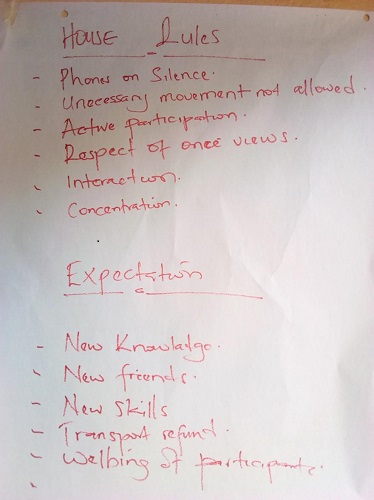
House rules and expectations for all participants
House rules and expectations for all participants during training

Business Plan Training

The usual conversations about facilitation (money for attending a session) with participants, we realise that members find difficulties with transport and time training is not time spent earning: “I spend my day here how will I survive in the evening?”

Discussion on how to make a record book according to their knowledge

As Faruk says: “With facilitation, members are active, without they are dormant”. But we also know that if people are given money to attend then they do not take up the skills on offer, they feel that by merely attending they have earned their money. So, the current process is to give money for transport and lunch and then it all depends on the quality of the training to inspire the activity of the participants. As an experiment, each member is given 5 thousand shillings by Faruk for facilitation but of that, 1 thousand must go into the group account to get into the idea that each must contribute from their own funds.

The members coped with the business template. They brainstormed in their groups. It is better for them to do the plan as part of their training and so now they have a working business plan for their group.

Business Plan Training

They have already carried out record keeping workshops and been given a book, a calendar and a calculator and they had drawn up their record books themselves to their own specifications.

Carrying out Financial Literacy training one week later allowed Faruk to find out their knowledge and he now knows the gaps and what kind of training each group needs and so can put together a training plan for each group.

Hope for Disabled Girls

So far, Faruk feels that the group needing the most support will be Hope for Disabled Girls: “this youth enterprise consisted of 7 females, their plans for a kiosk in a strategic location were denied by Pece Division Authorities which left the enterprise members stranded. The enterprise still lacks many of qualities and skills needed to operate successfully in the community. ETC@GDPU will try to mentor them to a level that they can become sustainable and strong.”

Oloya Kenneth at his workshop 2
Oloya Kenneth at his workshop

The strongest enterprise is probably Aloya Kenneth who is an ambitious, hardworking and skilful young man with thriving business in a good location, support will mostly be for extra skills training and how to find sources of investment.

There is a full breakdown and assessment of each Phase 2 group here.

Rwot Aye Twero Phase 2 July 3
Training at Rwot Aye Twero

And how are the Pilot Phase Groups pushing on?

Rwot Aye Twero Knitting Group

They are in Acet Trading Centre, a hard to reach area in Omoro District. This enterprise has two members who are actively knitting sweaters, although they still have gaps that need to be filled. In particular, joining the sweaters they have knitted and also making open sweaters as they are a design which is more marketable in their area.

Rwot Aye Twero Phase 2 July 1
Mama Cave training at Rwot Aye Twero

The group has identified an instructor they trust and she has started training them in gaps they have. The ETC@GDPU project supported 50% of the training, ETC project supported 50% because of the cost sharing policy of the project, which is aimed at involvement of the teams to register a sustainable development for the enterprise.

Meeting With Nyeko Rach Hairdressers Acet 5
Nyeko Rach Hairdressers, Acet

Nyeko Rach

Hairdressers group, also in Acet. They are doing well, they call every week for transporting chemicals as there is no shop there. They are very active and every week a car is sent with materials for them.

Gulu PWDs Electronics July 4
Gulu PWDs Electronics at work

PWD electronics

Charles from PWD electronics is still getting training from former PWD Electronics member Akira Robert, in fact whoever wants more knowledge can attend open training with him on Monday and Thursday. Akira Robert is eager to support his fellows and always keeps to time.

People have confidence with all of them, they don’t see their disability just people who can repair. Ocira Richard has not got his software yet, he is very active in his sport

Customers waiting for their appliances They do repair in the presence of their customers
Customers waiting for their appliances; They repair in the presence of their customers

More sport?

They participated in a marathon that was organized by Omoro District local government in celebrating the world population day. The winner of the marathon was Ocira Denis who received a Blanket and a Tailoring Machine and the second runner up was Ojara Denis who also received a blanket. Although they still haven’t sorted out their book keeping yet.

Back to Gulu: Pilot Phase Evaluation


GDPU Offices 2
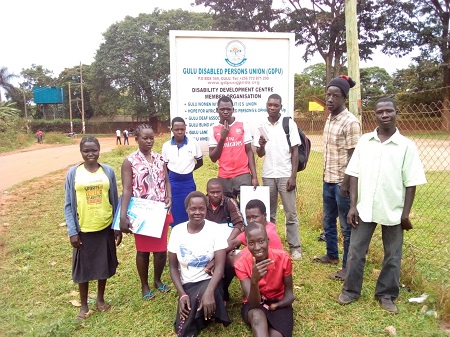
Gulu Disabled Persons Union Offices, looking towards the road

Recently, at Gulu Disabled Persons Union itself, we sat down with Ojok Patrick (Gulu Disabled Persons Union co-ordinator and ETC at GDPU Project Leader) and Musema Faruk (ETC at GDPU Project Officer) to discuss the end of the Pilot Phase. From a snowy UK and temperatures well into the minus to 37 degrees in dusty Gulu, Northern Uganda, but it was wonderful to be back with the team.


The Donor Board at GDPU
Musema Faruk at the donor board at GDPU

The basic aim of the ETC project is twofold:

  1. To ensure the sustainability of those businesses set up by disabled students under the earlier Youth Development Programme. Experience on that programme had taught us that hard inputs (cash, materials, machines etc) were unproductive, students needed skills training, psycho social support, monitoring and guidance far more.
  2. To help GDPU become a business hub for people with disability in the area, through gaining new knowledge, skills and materials from the external experts/consultants contracted to support ETC, and through making a workable development plan.
Musema Faruk and Mary Bennell outside GDPU 3
Musema Faruk and Mary Bennell outside GDPU

When we sat down to look back at the pilot project and last six months or more, we wanted to think about the two outcomes of the project and certain issues in particular:

Outcome 1: Working with ex- YDP students

  • Did the initial assumptions about planning the project work, ie that beneficiaries would know best what sort of training and support they needed.
  • Had the subsequent skills training and support been successful?
  • What does success look like and had the four groups we had chosen for the pilot achieved it?
  • And most importantly: what next?

Outcome 2: GDPU Business Hub

  • Had GDPU managed to start writing a business plan for themselves
  • Had people at GDPU developed their own skills so that they could train others? If so in which areas and which still need development?
  • And of course; what next here as well?


GDPU Offices from the road

This first meeting was just to get everything going, the next step was to go out to the field. To meet the four pilot groups again, to see how they were doing in Gulu Town and Acet. Then we would get together again to discuss what we had seen and to work on the Pilot Evaluation report that had been prepared by a local consultant. All that in the next blog.

Acholi Road Gulu
Off to the field: Acholi Road, Gulu

Gulu PWDs Electronic win again

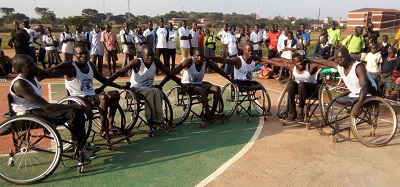
The Triumphant Gulu Wheelchair Basketball Team

Wheelchair basketball has long been a feature at GDPU. From 25th to 30th September 2017 Gulu PWDs Electronic, one of the three pilot groups on the ETC@GDPU project, along with other members of Gulu Wheelchair Basketball Team took part in a National Sport Gala for Persons with Disabilities.

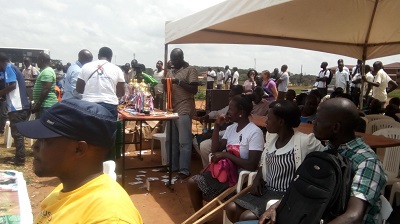
Spectators at the 2017 National Disability Sports Gala in Gulu

The Gala was organized by The Uganda Paralympic Committee and hosted by Gulu district. They took part in wheelchair race, wheelchair basketball and sitting volley ball.

Gulu Wheelchair Basketball Team in Action at Kaunda Ground, Gulu.

Gulu Wheelchair Basketball Club kept their national trophy by defeating arch-rivals Kampala Wheelchair Basketball Club 26-17. The exciting final of the Uganda National Paralympic Games in Wheelchair Basketball, held at Kaunda Grounds in Gulu, was witnessed by chief guest Kameda Kazuaki, the Japanese ambassador to Uganda.

The Japanese Ambassador at National Sports Gala, Gulu.

The Ugandan national paper, the Daily Monitor appears to believe that Japan might have a future role in training Ugandan Paralympic athletes, GDPU are following this up; you never know!

Awarding the medals at 2017 National Disability Sports Gala in Gulu

Gulu Pwds Electronics members of that winning team were: Ojara Charles, Ocira Richard, Okwonga Charles, Akera Robert, Oloya Kenneth and Omony Patrick, congratulations to them and everyone else who took part.

Congratulations to Gulu PWDS Electronic