VPEP: The V Plus Empowerment Project

The V Plus Empowerment Project (VPEP) May 2025 to April 2026

A new project started in May 2025, managed by the team at Gulu Disabled Persons Union (GDPU). This new project developed from the previous VPlusPlus programme and the feedback during reflection meetings: the training and awareness sessions for beneficiaries and wider community stakeholders.  
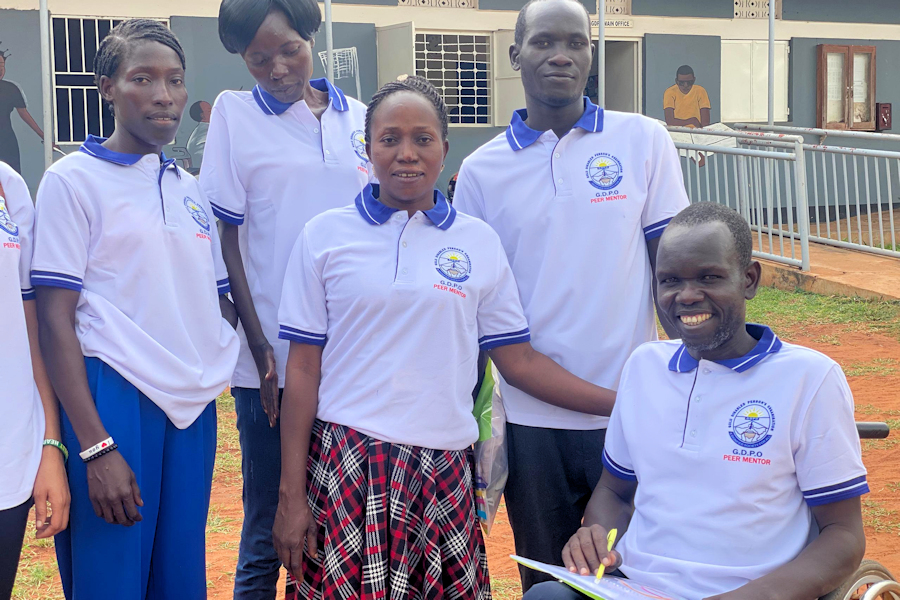
Peer Mentors in their VPEP sponsored uniforms

The new VPEP programme is delivered by GDPU project officers and the Peer Mentors from the scheme developed in the previous project. What did that project do? What did we learn from it?.

Reflection Meetings at GDPU

 V PlusPlus:

  • provided  ongoing training and support to previous graduates of the vocational training programme and other young people a total of 500 in all.
  • formed a team of peer mentors consisting of young people with disabilities to act as advocates for other people with disability in the local communities where they live.
  • provided information and training in safeguarding, sexual and reproductive health, disability rights. 
  • supported young entrepreneurs in making their businesses successful.
  • provided support and sessions to 500 people with disability from May 2024 to April 2025.

All the highlights of last year’s VPlusPlus project can be found in the blog here and, of course, in the Final Report here.
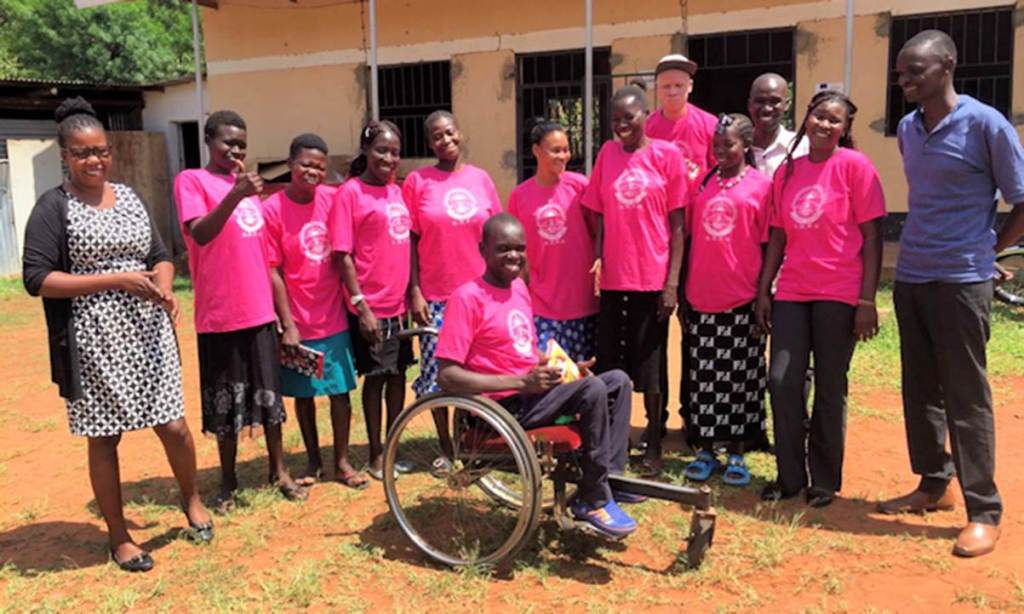
Peer Mentors with Safeguarding Manager and Project Officer

The main activities this year 2025 to 2026 will be:

  • Capacity development for peer mentors, their capacity will be further developed by providing training in: life skills; advocacy; awareness; communication; reporting skills and safeguarding, The training help improve their abilities to best support their communities. 
  • Tailor made training, young people with disabilities will be supported by their peers who have gained skills in different areas and shown significant achievement. This will develop a peer-to-peer support system by: visits to workshops: training: home visits and gathering students in one location to have the refresher and peer to peer support training. Identified gaps such financial literacy, life skills and skills development will be covered. Last year’s training sessions on how to make liquid soap were very popular, so they will be continued. A new training activity will be developed. Peer mentors and their communities feel poultry rearing would be a useful and profitable occupation without demanding too much initial investment. It will be included in VPEP.
  • Safeguarding, persons with disabilities are often exposed to different forms of abuses within their communities. They face sexual harassment, rape, and mistreatment from family members and community. The project builds the capacity of peer mentors to be able to identify, report and solve conflicts between family members within their communities.

Safeguarding training by a Peer Mentor

  • Documenting success stories, providing profiles and success stories from those who have been involved in the programmes over the years, to motivate and build on success. Every project success is worth documenting, evidence of resilience, commitments and hard work put in place by our beneficiaries to change their economic status. It’s also important to document challenges faced and overcome by our project beneficiaries. 
  • Referring and linking those who don’t have any income generating activities or are unemployed, to the different workshops and opportunities in their home locations.
  • Providing loans to those who have previously benefited from training programmes, to buy large pieces of capital equipment for example, or to start up their own business. Funded by the revolving loan fund established in 2023.   
  • Continual regular reflection meetings, with small and large groups, to seek their views on programme properties: what works well and what doesn’t. Regular reflection meetings provide meaningful monitoring and evaluations of all the activities delivered.

The future
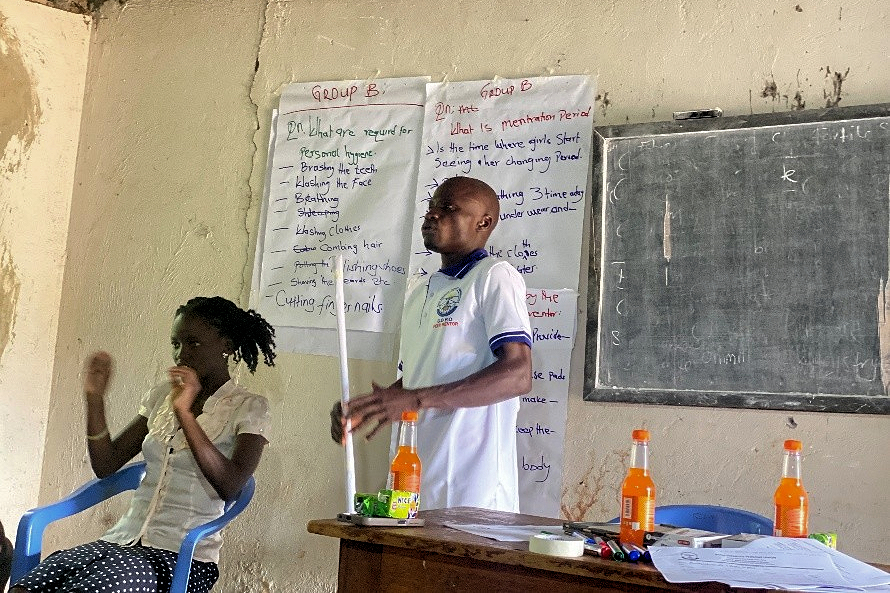
Sexual and Reproductive Health Training for Peer Mentors

VPEP builds on previous success, the Peer Mentor programme is innovative and has huge potential to develop the lives of young people with disability in Gulu and surrounding districts. An exciting programme to follow, which you can do by going to our project news here.

Want To Know More?

If you would like to know more about the ETC of PWD charity that manages the Vplus plus programme please go to our Home page

If you would like to give something, please go to our Donate page.

If you would like to know more about Gulu Disabled Persons Union (GDPU) please go to their website or Facebook page. 

Many Thanks.

VPlusPlus Project Summary

This is a summary of a longer, more detailed report that you can read online here, or download from here.

Peer Mentors in their VPEP sponsored uniforms

GDPU

Gulu Disabled Persons Union (GDPU) reached new milestones over the year to end-April 2025, engaging 500 young disabled persons in business, financial, literacy, numeracy, vocational and life-skills training. GDPU also created a network of 12 peer mentors who connected with over 1,000 young persons with disability across Gulu and surrounding Districts. This network forms a foundation for much greater economic and social inclusion of our young disabled persons than before.

ETC of PWD

These milestones were achieved through the second year of the VPlus Plus project, funded by a grant of UGX 48,960,000 (approximately £10,500) from the small UK-registered Enhancing the Capacity of Persons with Disability (ETC of PWD) charity.

Training at the centre

VPlusPlus and VPlus

VPlusPlus was a follow on from the two-year VPlus project for young disabled persons, jointly funded by UK Aid Direct and ETC, which ran from January 2020 to end-March 2023. VPlus trained 119 young disabled persons in seven vocational skill areas together with ‘Plus’ elements of literacy, numeracy, finance and business skills, cultural and community activity, and post-training follow-up support.

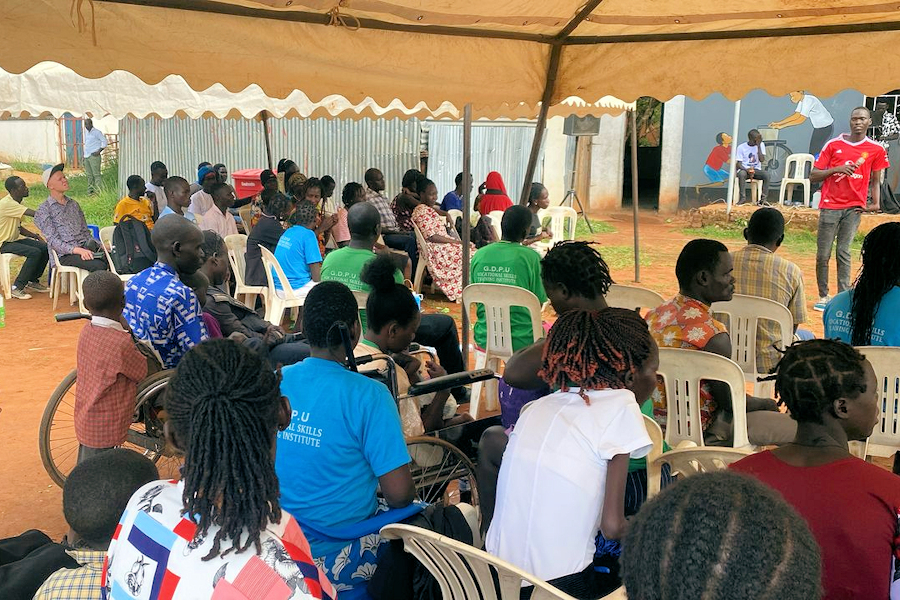
Reflection Meetings at GDPU

VPlus

The follow-up support continued through VPlusPlus, it was recognized that sustainable businesses and employment required more than a short course and a short follow-up period. This recognition was reinforced when 42 (82%) of the 51 attendees of the large reflection meeting held at the end of VPlus Plus reported that they were successfully self-employed, with a further 7 (14%) reporting sustainable employment.  The revolving loan scheme played a role in these successes but faced many challenges which have been addressed in various ways.

Project Design

The design of VPlusPlus, especially the tailor-made training component, was determined through reflection meetings of VPlus beneficiaries, including smaller meetings held in more outlying areas. This included training in record keeping, marketing and business planning, literacy, liquid soap manufacturing, social and life skills, Safeguarding was central to VPlusPlus, safeguarding (e.g. preventing gender-based violence) and disability awareness sessions for the wider community. Safeguarding training, allowing, with the help of peer mentors, the tackling of 15 safeguarding issues during the year.

Reflection Meetings at GDPU

Reflection Meetings

Reflection meetings were a source of information on challenges and successes. Data collected at the large reflection meeting suggested that attendees had earned an average of UGX 295,000 in the last 3 months (ranging from UGX 20,000 to 3,500,000) and had managed to save UGX 41million (average of UGX 800,000 per attendee, ranging from UGX 3,000 to 17,800,000).

Peer Mentors

A major impact of the project has been the creation of a network of peer mentors, to widen access to opportunities and to develop information on challenges faced by isolated persons with disability. Twelve beneficiaries of VPlus project were carefully chosen and provided with relevant training such as in communication, safeguarding, conflict management and data collection. The mentors have:

  • delivered training
  • brought together NGOs, government officials and communities
  • provided on-the-job training in their localities
  • reduced isolation of young disabled people, worked with families on disability issues
  • been a reference point for GDPU and others across a wide geographical area.

Challenges

As would be expected, VPlus Plus has faced many challenges, discussed in this report. Those challenges include the limited available budget to meet the high levels of demand from young disabled persons for more social and economic opportunities to improve the quality of their lives.

Trips to the field

Conclusion

VPlus Plus has developed effective ways of tackling issues faced by young disabled persons and has created the foundations for uniting communities and agencies in much more extensive work to address the huge scale of issues and demand. This work needs to continue.

If you would like to know more about the ETC of PWD charity that manages the Vplus plus programme please go to our Home page

If you would like to give something, please go to our Donate page.

If you would like to know more about Gulu Disabled Persons Union (GDPU) please go to their website or Facebook page. 

Many Thanks.