END OF PROJECT REPORT.
(There is a PDF version of this report which keeps the original Hard Copy format. If you want to read the original online or download it, please go here.)
VPLUS PLUS PROJECT
EMPOWERMENT PROGRAM FOR YOUTH WITH DISABILITIES
SUPPORTED BY: MUSEMA FARUK, OKWIR JOSEPH JOHNS AND AJOK EMMA
DONOR: ETC OF PWD UK
PROJECT DURATION: 1 YEAR FROM MARCH 2024 TO APRIL 2025.
TABLE OF CONTENTS:
Contents
CAPACITY BUILDING TRAININGS OFFERED TO PEER MENTORS.
IMPACT OF THE VPLUS PROJECT ON OUR BENEFICIARIES.
IMPACT OF THE REVOLVING FUNDS.
CASE STUDY 1: LAKOT PRECILLIA (ALBINO) BORROWED (500,000/=) HAIRDRESSING.
CHALLENGES OF THE LOAN SCHEME.
IMPACT OF THE TAILORED SUPPORT TO THE BENEFICIARIES AND COMMUNITY MEMBERS.
EMPLOYMENT STATUS OF OUR BENEFICIARIES’.
RELEVANCE OF THE TRAINING OFFERED BETWEEN MAY 2024- APRIL 2025.
CHALLENGES FACED DURING THE PROJECT IMPLEMENTATION.
WE ALSO REGISTERED SOME BIG SUCCESS.
WHYS FORWARD TO ADDRESS THE CHALLENGES FACED DURING PROJECT IMPLEMENTATION.
EXECUTIVE SUMMARY
GDPU reached new milestones over the year to end-April 2025, engaging 500 young disabled persons in business, financial, literacy, numeracy, vocational and life-skills training. We also created a network of 12 peer mentors who connected with over 1,000 young disabled persons across Gulu and surrounding Districts. This network forms a foundation for much greater economic and social inclusion of our young disabled persons than in the past.
These milestones were achieved through the second year of the VPlus Plus project funded by a grant of UGX 48,960,000 (approximately £10,500) from the small UK-registered Enhancing the Capacity of Persons with Disability (EtC) charity. VPlus Plus was a follow on from the two-year VPlus project, jointly funded by UK Aid Direct and EtC, for young disabled persons which ran from January 2020 to end-March 2023. VPlus trained 119 young disabled persons in seven vocational skill areas together with ‘Plus’ elements of literacy, numeracy, finance and business skills, cultural and community activity, and post-training follow-up support.
The follow-up support continued through VPlus Plus as it was recognized that sustainable businesses and employment required more than a short course and a short follow-up period. This recognition was reinforced when 42 (82%) of the 51 attendees of the large reflection meeting held at the end of VPlus Plus reported that they were successfully self-employed, with a further 7 (14%) reporting sustainable employment. The revolving loan scheme played a role in these successes but faced many challenges which have been addressed in various ways.
The design of VPlus Plus, especially the tailor-made training component, was determined through reflection meetings of VPlus beneficiaries, some smaller in more outlying areas. This included training in record keeping, marketing and business planning, literacy, liquid soap manufacturing, social and life skills, safeguarding (e.g. preventing gender-based violence) and disability awareness sessions for the wider community. Safeguarding was central to VPlus Plus, allowing, with the help of peer mentors, the tackling of 15 safeguarding issues during the year.
Reflection meetings were a source of information on challenges and successes. Data collected at the large reflection meeting suggested that attendees had earned an average of UGX 295,000 in the last 3 months (ranging from UGX 20,000 to 3,500,000) and had managed to save UGX 41million (average of UGX 800,000 per attendee, ranging from UGX 3,000 to 17,800,000).
A major impact of the project has been the creation of a network of peer mentors to widen access to opportunities and to information on challenges faced by isolated persons with disability. Twelve beneficiaries of VPlus project were carefully chosen and provided with relevant training such as in communication, safeguarding, conflict management and data collection. The mentors have delivered training, brought together NGOs, government officials and communities, provided on-the-job training in their localities, reduced isolation of young disabled people, worked with families on disability issues and been a reference point for GDPU and others across a wide geographical area.
As would be expected, VPlus Plus has faced many challenges, discussed in this report, including the limited available budget to meet the high levels of demand from young disabled persons for more social and economic opportunities to improve the quality of their lives.
VPlus Plus has developed effective ways of tackling issues faced by young disabled persons and has created the foundations for uniting communities and agencies in much more extensive work to address the huge scale of issues and demand. This work needs to continue.
OBJECTIVES OF THE PROJECT.
- Strengthen peer mentorship program for youth with and without disabilities.
- Support youth enterprises with tailored guidance and revolving loans.
- Facilitate reflection meetings for learning and experience sharing.
- Strengthen youth-community ties through safe, inclusive dialogue, ensuring respect, protection, and safeguarding awareness.
- Strengthen collaboration between local governments, NGOs, and youth.
- Equip youth with life skills, fostering resilience, decision-making, and conflict resolution while ensuring self-protection and safe reporting.
TARGET GROUP
12 youth peer mentors (Male & Female)
TARGET BENEFICIARIES
INDIRECT BENEFICIARIES
- Stakeholders, including leaders, NGO representatives, local government officials, parents, and community members.
- Youth, both with and without disabilities, who have yet to benefit from the Vplus project.
- Community members and other relevant individuals.
FINDINGS FROM THE PROJECT IMPLEMENTATION BETWEEN 2024 (MAY) TO APRIL 2025.

SELECTION OF PEER MENTORS.
Informed by data, Vplus Plus identified accomplished peer mentors with a demonstrated track record of successfully navigating employment challenges and overcoming community-related discrimination. These individuals have transformed adversity into personal success, inspiring others within their communities.
Carefully selected based on their ability to effectively share their experiences and insights, these youth play a pivotal role in supporting their peers. Through mentorship, they empower others to confront their fears, challenge harmful stereotypes, and shift societal attitudes toward persons with disabilities.
The peer mentors were strategically identified from five districts with a high concentration of project beneficiaries. They are currently engaged in mentorship activities across the following districts:
| SN | District | Number | Male | Female |
| 1 | Gulu City | 4 | 1 | 3 |
| 2 | Gulu District | 3 | 1 | 2 |
| 3 | Amuru District | 2 | 1 | 1 |
| 4 | Omoro District | 2 | 1 | 1 |
| 5 | Lira City | 1 | 1 | 0 |
| TOTAL | 12 | 5 | 7 |
During the project timeframe, peer mentors actively engaged in various support activities, including:
- Registration and Profiling: Peer mentors identified and recorded persons with disabilities within their communities, gathering over 1,000 profiles of both males and females across the five operational districts of the Vplus project. While the focus was on youth and children with disabilities, the profiling process was inclusive of all persons with disabilities encountered by peer mentors. This number continues to grow and is expected to surpass the initial estimate.
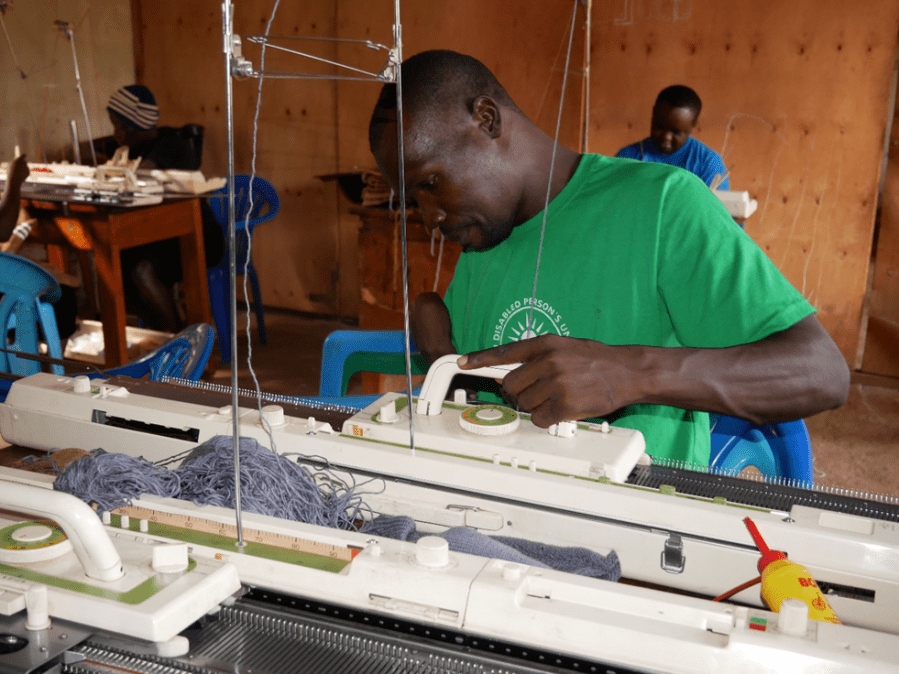
- Peer-to-Peer Support: Mentors provided assistance to fellow youth with disabilities in areas such as knitting, tailoring, and consultations on programs like special grants. Some individuals received skill training in tailoring with Pricilia, while others sought guidance on business development.
- Mobilization Efforts: Peer mentors played a vital role in mobilizing youth with disabilities to participate in various governmental and private sector programs. Their efforts enabled many young people with disabilities to access valuable opportunities and benefits.
- Training on Safeguarding and Disability Awareness: Equipped with training in these subjects, peer mentors facilitated community workshops, using role-playing exercises to enhance their delivery and boost their confidence in public speaking.
- Home Visits and Conflict Mediation: Mentors conducted home visits to support families of persons with disabilities, helping to mediate conflicts and restore harmony where tensions had arisen.
CAPACITY BUILDING TRAININGS OFFERED TO PEER MENTORS
We offered trainings to enhance the capacity of our peers’ mentors and enable them better interact with their peers meaningfully and mutually build trust, the trainings focused on areas such as: –
- Communication skills.
- Leadership skills.
- Conflict managements skills.
- Safeguarding and reporting incidences
- Awareness of on disability.
- Profiling beneficiaries (data collection)
Through this training, we have witnessed the significant impact of peer mentors in their communities. Their contributions include:
- Mapping and profiling persons with disabilities across five districts Gulu, Amuru, Nwoya, Omoro, and Lira, to ensure accurate data for targeted interventions.
- Leadership development, with Lakot Pricilla elected as the Gulu District Vice Chairperson of the Disability Youth Leadership League.
- Capacity-building initiatives, providing specialized training to their peers to enhance skills and knowledge.
- Safeguarding and protection, successfully addressing 15 cases of abuse, including rape, child neglect, and mistreatment. Two cases resulted in legal prosecution, while 13 were resolved through community-led interventions, including family dialogues, local council (LC1) engagements, and collaboration with GDPU.
- Social welfare advocacy, with peer mentor Jokene appointed by the Community Development Officer (CDO) of Paicho as a para-social worker, receiving formal training under the Ministry of Gender.
- Community mobilization, actively facilitating engagement between NGOs and local programs, ensuring widespread participation and awareness.
- Strategic partnerships, serving as GDPU’s contact persons in multiple districts, streamlining outreach efforts and strengthening institutional presence.
- Advocacy and alliance-building, reinforcing collaboration between GDPU and disability-focused organizations, including district unions, Sightsavers, NUDIPU, and Light for the World.
- Skills development and empowerment, inspiring youth participation in vocational training. Notably, Lakot Pricilla has trained 10 youth with disabilities in hairdressing through donor-supported initiatives.
IMPACT OF THE VPLUS PROJECT ON OUR BENEFICIARIES.
Through the one-year implementation of the Vplus Plus project, we successfully provided support to over 500 persons with disabilities through customized training programs, awareness initiatives, and peer mentorship. This intervention fostered a chain of support, extending beyond the initial project beneficiaries.
The ripple effect of our training programs was evident, positively impacting not only youth but also older persons with disabilities who were not originally targeted. This broad reach highlights the project’s effectiveness in strengthening community resilience, promoting inclusion, and empowering individuals beyond its intended scope.
IMPACT OF THE REVOLVING FUNDS
The revolving loan support has been a vital business-boosting mechanism, continuously circulating among Vplus Project beneficiaries. With a success rate of approximately 65%, the initiative has empowered entrepreneurs and strengthened economic resilience. Of the 14 beneficiaries who received the loan, 9 businesses are thriving, while 5 have shifted their business focus an encouraging evolution in this completed venture.
This revolving loan is uniquely designed to support businesses at their start-up stage. It carries a 0% interest rate, ensuring accessibility for emerging entrepreneurs. To promote accountability, a late repayment fee of 10,000/= has been introduced for any loan defaults. Eligibility criteria require businesses to have operated for at least three months, and the loan is strictly designated for business supplies, ensuring sustainability and growth.
Below is a compelling case study showcasing the transformative impact of this initiative one of many success stories that highlight the power of financial inclusion and economic empowerment.
CASE STUDY 1: LAKOT PRECILLIA (ALBINO) BORROWED (500,000/=) HAIRDRESSING
Pricilia, a beneficiary of the Vplus Project, secured employment with a friend immediately after completing her skills training in 2022. While she had acquired foundational skills to start her own business, the apprenticeship support further enhanced her expertise in hairdressing particularly in braiding various styles. This experience boosted her confidence and enabled her to attract a growing clientele.
Through continuous follow-up support from the Vplus Project, Pricilia was encouraged to establish her own salon to increase her income and foster personal growth and development. The project maintained a strong partnership with Sight Savers, an international organization dedicated to youth employment. Sight Savers informed the Vplus Project manager of their initiative to provide apprenticeships for youth with disabilities in hairdressing within Gulu District, Paicho Sub-County, where Pricilia resides.
With savings of 600,000 UGX, Pricilia planned to launch her salon, though her total budget was 1,200,000 UGX. Encouraged to begin in March 2024, she faced financial gaps that made the revolving loan a critical resource. She successfully applied for 500,000 UGX, enabling her to bridge the funding gap and officially start her business. Additionally, she was connected to Sight Savers to train other youth with disabilities in hairdressing. Since June, she has trained over 12 youth with disabilities, further contributing to skills development and empowerment within her communities.
Pricilia managed to repay her loan within six months and is now successfully running her salon. Through this support, she is able to contribute to her siblings’ school fees and household needs. She is extremely grateful to GDPU and ETC of PWD.
CHALLENGES OF THE LOAN SCHEME:
- The mindset and attitude that most support for disabled persons should be none refundable.
- Most of our beneficiaries have proved more interest in spending the proceeds and not investing and growing the business
- Fear or phobia resulting from the failure to service the loan result in strained relationship with the organization.
- Most beneficiaries have bridged the original payment schedule negotiated at the time of acquiring the loan, for instance, there are loans that are still being serviced one year after the original repayment period elapsed and this were loans for 6 or 8 months.
- Lack of parental commitment and/or support towards the growth of the business for which the loan has been acquired.
- Change of locations or businesses by our loan defaulters.
SOLUTION PUT IN PLACE:
- Involvement of parents in the process of loan acquisition and through to the follow up programs
- Introduction of loan application fee to measure the level of commitment and eliminate the perception that the program should be free, and find resources for running coast.
- Introduction of the cost sharing, this ensures the applicant meet some coast and the loan program meets some coast so its not entirely the burden of the loan program.
- Introduction late fee
- Adjustment of loan repayment schedule.
- All loan applicants must have started business prior to the loan application.
- Good business plan and good track record for business book keeping.
IMPACT OF THE TAILORED SUPPORT TO THE BENEFICIARIES AND COMMUNITY MEMBERS.
We evaluated the impact of the tailored trainings and support provided by the Vplus team to our beneficiaries and communities across our operational areas. This assessment was conducted through both mini and large reflection meetings, offering valuable insights. Through these discussions, we discovered that the relevance of certain trainings varied depending on the location and feedback gathered during the reflection sessions.
EMPLOYMENT STATUS OF OUR BENEFICIARIES’.
The Vplus Plus program prioritizes empowering beneficiaries to create jobs rather than seeking employment opportunities. We are excited to present insights from the project, which has provided trainings on business plan development, self-employment skills, and a comprehensive understanding of business growth and development through a series of tailored sessions.
PRACTICE OF SAVING CULTURE.
Among the employment opportunities available to our beneficiaries, cultivating a strong saving culture is a vital aspect of both business development and personal growth. Through the Vplus Plus mentorship program, youth were trained in various saving methods and encouraged to manage their funds wisely whether by saving in banks, Village Savings and Loan Associations (VSLA), mobile money platforms, or with parents in cases of severe disability. Additionally, some chose to invest in livestock as a form of savings. Our assessment has revealed that our beneficiaries actively engage in these saving practices, as detailed below.
SAVING PLACES
| SN | Where do they save their money | Total number of people | Total money saved in bank |
| 1 | Bank | M=1 F=7, Total: 8 | 29,210,000/= |
| 2 | VSLA | M=12, F=6, Total 18 | 5,640,000/= |
| 3 | SAVE AT HOME (PARENTS) | M=3, F=9, Total: 12 | 2,600,000/= |
| 4 | MOBILE MONEY | M=5 F=7, Total: 12 | 2,830,000/= |
| TOTAL | 40,280,000 |
Savings for the youth in the last three months January 2025 to March 2025.
The line graph above shows the levels of savings per individuals in the last three months from Jan- March 2025 for (51) individual assessed out of 115 beneficiaries of the Vplus plus project.
RELEVANCE OF THE TRAINING OFFERED BETWEEN MAY 2024- APRIL 2025
We conducted end-of-project reflection meetings with our beneficiaries to assess the relevance of our tailored trainings. The feedback was overwhelmingly positive, with beneficiaries sharing their views on the trainings, the facilitators, the content, and the overall impact. Some responses were influenced by how appealing the project was to them.
Below are their responses regarding the relevance of the trainings and services provided. The table presents the various trainings offered, ranked from most to least relevant. This chart is based on feedback from 120 respondents.
| SN | Most relevant | Yes | No |
| 1 | Financial literacy (Recordkeeping, business plan, Marketing skills) | 91 | 29 |
| 2 | Reflection meeting (big and small) | 95 | 25 |
| 3 | Liquid soap making. | 60 | 60 |
| 4 | Revolving loan | 80 | 40 |
| 5 | Disability awareness campaign. | 76 | 44 |
| 6 | Hygiene and Sanitation training | 64 | 56 |
| 7 | Safeguarding Awareness. | 55 | 65 |
| 8 | Conflict management and resolution | 46 | 74 |
| 9 | Gender-based violence prevention. | 67 | 53 |
| 10 | Follow up support | 57 | 63 |
| Sexual reproductive health | 42 | 78 | |
| 12 | Training on rights | 20 | 100 |
NB not all those who said no attended this training or benefited from this support
Bar-graph and line graph showing the relevant of the training offered
CHALLENGES FACED DURING THE PROJECT IMPLEMENTATION.
During the project implementation phase for the year 2024–2025, we encountered several challenges that impacted our ability to effectively carry out activities:
- Limited budget: The project activity budget was insufficient for scalable initiatives, restricting our ability to reach more beneficiaries.
- High demand from non-beneficiaries: Many persons with disabilities who were not part of the project expressed interest in benefiting from the revolving loan.
- Coordination challenges with peer mentors: Poor coordination between peer mentors and the project team created gaps in reporting and activity collaboration. Peer mentors often took a long time to share updates, affecting efficiency.
- Geographical imbalances: Implementation in Omoro, Amuru, and Nwoya was concentrated in rural centers due to the distances between beneficiaries, the lack of peer mentors in certain areas, and the extensive coverage required.
- Difficulty in tracing beneficiaries: Some beneficiaries relocated to unknown locations, making it challenging to provide tailored support and program interventions.
- Network issues: The type of phones used by beneficiaries posed communication barriers, affecting coordination during project implementation.
- Slow loan repayment: The first cohort of revolving loan beneficiaries has been slow in repayment, with approximately 2 million shillings outstanding.
WE ALSO REGISTERED SOME BIG SUCCESS.
- Increased income levels, youth with disabilities and their families have experienced financial growth through business opportunities and life skills acquired from the project.
- Strengthened saving culture, due to the financial knowledge gained, there has been a significant rise in savings habits among youth with disabilities, accumulating a total of 40 million shillings.
- Advocacy for parental support, efforts were made to shift negative perceptions among parents, encouraging them to support their children with disabilities in education and livelihoods.
- Improved employment status, out of 51 youth assessed, 42 are now self-employed, demonstrating increased confidence and independence.
- Impact of revolving loans, the revolving loan has contributed to better living standards, with 9 out of 14 beneficiaries achieving full success.
- Enhanced peer mentorship, peer mentors have strengthened their ability to support and work effectively with their peers.
WHYS FORWARD TO ADDRESS THE CHALLENGES FACED DURING PROJECT IMPLEMENTATION.
- We plan to introduce poultry and back yard farming to our beneficiaries knowing that agriculture is the back born of Uganda food basket, this will help widen their income.
- Strengthen the work of peer mentors to improve on their advocacy work in the community, this will be done through tailor made capacity building trainings offered to them.
- We plan to improve on the visibility and coordination of our beneficiaries in the next phase of the project, we plan to provide monthly airtime, name tags, and t-shirts to all our 12 peer mentors.
- We will conduct tracers’ studies and beneficiaries mapping to identify and reach out to all our beneficiaries.
- We plan to profile up to 10,000 youth with disabilities, we will share profiled data of persons with disabilities with (CDO) community development officers of the 5 districts to ease their operation and advocacy work.
- GDPU will partner with stakeholders to ensure a collaborated approach towards empowerment of our beneficiaries, this collaboration and partnerships will be through specialized trainings on life skills, agriculture, business, employment and health and sexual reproductive rights, referrals and funding’s.
- We plan to build capacity of youth business enterprises through tailor made support and financial support (revolving loan).
- We plan to offer reflection meeting as a point for learning and experience sharing among the youth.
- We plan to create a strong linkage between the youth and communities they come from through youth to youth engagement meeting, youth to community engagement through dialogue, and youth leader’s engagements.
If you would like to know more about the ETC of PWD charity that manages the Vplus plus programme please go to our Home page.
If you would like to give something, please go to our Donate page.
If you would like to know more about Gulu Disabled Persons Union (GDPU) please go to their website or Facebook page.
Many Thanks.
 ETC of PWD