Projects

Next Steps: June Report for ETC @ GDPU

Project officer training and sharing knowledge
ETC @ GDPU Project officer training and sharing knowledge with Gulu PWDs and Akera Robert

The ETC @ GDPU project officer (Musema Faruk) has come back with his June report detailing the very first pilot group Knowledge Sharing meetings, an exciting step forward. In summary, there were two meetings, one in Acet about 30 miles out of Gulu town, with Hairdressers and Sweater Weavers,. The other was in town at GDPU itself, with one electronics group and one electronics individual enterprise.

The purpose of both meetings was to begin to find out what each group thinks they need to sustain and develop their businesses.

NYEKO RAC ENTERPRISE AND RWOT AYE TWERO KNITTING ENTERPRISE
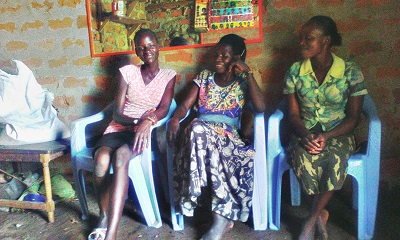
The ETC @ GDPU project officer at the Knowledge Sharing and Planning Meeting with Nyeko Rac enterprise and Rwot Aye Twero knitting enterprise in Omoro

Training needs:

In essence what the groups want to do is:

Upgrade their core vocational skills,

Develop their offer to customers

Learn how to plan effectively for that development

Learn better record keeping

Train for better group dynamics

Find out how to work with money/ learn a ‘Savings Culture’

Find out how to pay for the above

Diversify, especially into agriculture, to cover lean times

Akera Roberts Businesss Enterprise
Akera Roberts, individual Businesss Enterprise

Implications:

These training needs imply greater investment, helping each group find the money for that investment is one of the next steps for this project. In his initial audit reports, Faruk noted that group members find it almost impossible to access bank accounts, loans or possible grants, although some have started to use Village Savings and Loan Associations (micro savings and finance). He thinks this is down to a combination of poor self-esteem, lack of knowledge and barriers (physical and cultural) erected by the institutions themselves.

All groups want to acquire new equipment (sweater weaving machines/ sewing machines/ portable generators/ carry wider stock etc) but apart from learning how to use, maintain and repair them well, owning such equipment brings inevitable security problems. Theft by others, by group members or by domineering relatives is a common problem and solutions will need to be found.

Faruk reports that fear of taking risk, poor group dynamics and low self-esteem might well hold all the groups back in taking the next steps, so careful psycho-social support will need to be part of the pilot and subsequent programme.

NYEKO RAC ENTERPRISE AND RWOT AYE TWERO KNITTING ENTERPRISE 3
The Knowledge Sharing and Planning Meeting with Nyeko Rac enterprise and Rwot Aye Twero knitting enterprise in Omoro

All in all though, some great steps forward; really pushing on well!

Still Pushing On: three key questions for ETC @ GDPU

Camera 360
The Nyeko Rac Business group signboard at Acet (note that they are registered with the local authority, very important)

Still Pushing On: three key questions for ECT @ GDPU

  1. What do you need to set up a small business and keep it going?
  2. What do you need to run a sustainable small business in Gulu District, Northern Uganda, East Africa?
  3. What do you need succeed in a small business in that district if you are a person with disabilities?

These are some of the questions that the ‘Enhancing the Capacity at Gulu Disabled Persons Union; (ETC @ GDPU) project is starting to look at.

Camera 360
Bicycle Repair: Tam Anyim Youth Enterprise

Where are we up to?

GDPU have come back with the first assessment of the nine existing business groups that were set up by students with disabilities under the Youth Development Programme in 2015. There are 4 x electronics repairs groups. 2 x hairdressers. 2 x Sweater weavers. 1 x motorcycle and bicycle repairs. The electronics groups seem to be the most financially successful, partly because they are based in the centre of town, although that has significant mobility and security issues.

Camera 360
Diversification: a knife sharpener fashioned out of a bicycle

Group Strengths

Their businesses have been running for about two years, it seems that (most of) the groups share certain strengths:

  1. Good customer relations
  2. Viable businesses, in that there is a demand for their services in the area that they are working
  3. Many are able to diversify. So, for example many are able to carry out some small-scale farming alongside hairdressing.
  4. About half of the groups are able to make small savings from their earnings, typically about 200, 000 shillings a month per group (about £40). Having a financial cushion, however small, is vital to protect against ‘life events’. Average individual income is not easy to determine, given the lack of records (see below) but is somewhere around 66, 000 shillings a week or £14.50.
Camera 360
Store keeping

Group Challenges

But, from the GDPU report it seems that all the groups share similar weaknesses:

  • Keeping records is not built into their way of thinking, partly through poor literacy/ numeracy and self-confidence which…
  • Makes it difficult for members to plan ahead and to find out where they are at the moment
  • The planning methods they were taught under YDP are not suitable: too complex and text based for people who still struggle with reading and writing.
  • Core skills need updating to satisfy the needs of customers
  • Lack of suitable tools is holding back development, but there is no point members investing in tools until …
  • Security is much better
  • Group dynamics are stronger (in most cases these are poor), with theft and lack of trust between members holding back development.
  • Groups need considerable support (in literacy/ numeracy and self-confidence) to apply for grants/ loans to help them invest in their future.
Camera 360
Lubanga Aye Twero Business Group: Sweater Weaving

What next?

Now that we know how these nine groups are getting on and what their challenges are, the next step for the steering committee at GDPU is to choose three groups for the pilot phase of the project. These pilot groups, together with the project team, will then put together their own tailored programme for skills training, literacy/ numeracy, pyscho-social support and so on; exciting days.

Camera 360
The Nyeko Rac business group

Pushing on well: Piloting ETC @ GDPU

Camera 360
Carrying out the pilot assessment, May 2017

2 June 2017

The ETC @ GDPU Project Leader and Project Officer have been out and about in Gulu Town and district, visiting the nine functioning business groups set up by the students with disabilities who were trained at Gulu Disabled Persons Union.

Camera 360
Phone mending kit in the Electronics Shop, May 2017

ETC @ GDPU are choosing three groups to best suit the pilot phase of the project.

Camera 360
Ex YDP GDPU Sweater Weaving student at work 2017

As the Project Officer said:

“Greetings from GDPU we are all doing fine, only just busy working on the findings and report for the first assessment done so far. It was really great to find these beneficiaries still working, compared to other youth enterprises set up by other VTIs [ie the other Vocational Training Institutes that trained students without disabilities under the same scheme]. The report will tell more on what they’re doing, their level of diversification, challenges and needs of support to improve the capacity and build their businesses and then we agree on whom we can work with, as almost all of them are vulnerable.”

‘All pushing on well’, as they say in Gulu.

Camera 360
Ex YDP/ GDPU students outside their electronics shop in Gulu, 2017