| GULU DISABLED PERSONS UNION Music for Social Change Project VIVA WER WAA Brand Development & Empowerment Phase 2026 Music as a Tool for Advocacy, Livelihoods & Inclusion of Persons with Disabilities in Northern Uganda |
| Project Title | Viva Wer Waa Brand Development & Empowerment Phase 2026 |
| Implementing Organisation | Gulu Disabled Persons Union (GDPU) |
| Location | Gulu City, Northern Uganda (with rural community outreach) |
| Project Duration | 12 Months. |
| Target Beneficiaries | 4 new trainees + 16 graduates (Cohorts 1, 2 & 3 2023, 2024, 2025) |
| Proposed Budget | 36,950,000/= |
| Contact | Musema Faruk, Project Manager, GDPU |
| Date | 15July 2026. |
| Presented to | Viva La Visa UK. |
| Through | ETC of PWD Charity UK. |
| 1. BACKGROUND & CONTEXT |
Persons with disabilities in Northern Uganda continue to face deep-rooted barriers to social participation, economic empowerment, and public visibility. Negative community attitudes, limited access to education, and lack of livelihood opportunities compound the marginalization experienced by youth with disabilities in particular.
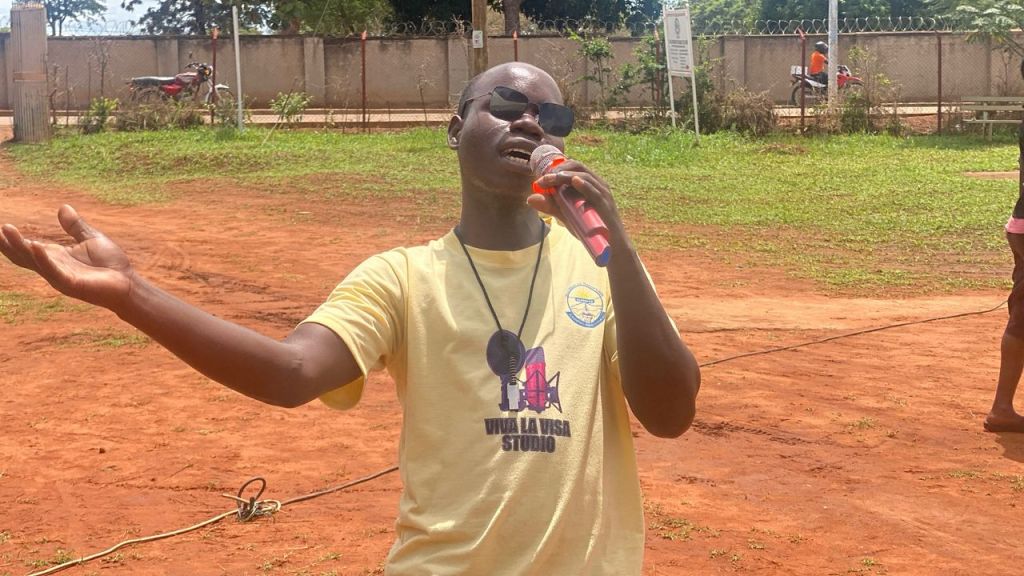
The Viva Wer Waa Studio translated loosely as ‘Viva the Voice’ was established in 2023 as a music-for-social-change initiative by Gulu Disabled Persons Union (GDPU). It became Uganda’s first dedicated music studio for persons with disabilities, providing an innovative platform for youth with disabilities to develop music production skills, advocate for their rights, and build sustainable livelihoods through the power of music.
Programme Achievements to Date.
| Year | Cohort | Key Achievements |
| 2023 | Cohort 1 (10 beneficiaries: 8M, 2F) | 8-month intensive training in music production, vocal training, and instrument playing. Establishment of the first music studio for PWDs in Uganda. |
| 2024 | Cohort 2 (6 artists) | 12-month training in music production and recording. Focus on local content and traditional Luo instruments with over 40 songs recorded. |
| 2023–2025 | All Cohorts | Over 80 songs and 18 music videos produced, plus 1 documentary. Songs broadcast in Luo language reaching 5k Ugandans. |
Songs produced by Viva Wer Waa artists are composed predominantly in the Luo language and encompass gospel, traditional Acholi (lakubukubu), and contemporary genres. The content is educative in nature, addressing disability stigma, social inclusion, good morals, and community wellbeing reaching audiences across Uganda and the wider Luo-speaking diaspora.
| 2. PROBLEM STATEMENT & JUSTIFICATION OF NEED |
Despite the significant achievements of Cohorts 1 and 2, graduates of the Viva Wer Waa programme face critical post-training barriers that threaten to reverse their progress. Without continued structured support, the risk of regression in skills, confidence, and economic participation is high.
| # | Problem | Evidence / Impact |
| 1 | Limited post-training support for graduates | 20 graduates lack structured mentorship, career development, and economic support after completing their training cohorts. |
| 2 | Lack of visibility and market access | Artists with disabilities remain invisible in Uganda’s competitive music industry due to limited marketing, promotion, and performance opportunities. |
| 3 | Weak institutional structures | The Uganda Association for Artists with Disabilities lacks the leadership capacity and organisational systems to sustain and grow independently. |
| 4 | Disability stigma in rural communities | Rural communities continue to hold negative perceptions of persons with disabilities; outreach music shows remain a critical tool for attitude change. |
| 5 | Studio financial sustainability at risk | Without a diversified revenue base, the studio remains donor-dependent; community access to studio services remains untapped. |
| 6 | Limited new talent pipeline | Without enrolling new trainees, the programme’s impact pipeline narrows and opportunities for newly identified artists with disabilities are missed. |
| 3. PROJECT DESCRIPTION |
The Viva Wer Waa Brand Development & Empowerment Phase 2026 is a 12-month project that builds directly on the achievements of the three preceding training cohorts. It combines post-training support for graduates, enrolment of new trainees, community outreach, institutional strengthening, and studio sustainability development into one integrated programme.
Goal
| To empower youth with disabilities in Northern Uganda to achieve economic independence, social inclusion, and public visibility through the transformative power of music and the arts. |
Project Components.
| # | Component | Description |
| A | Post-Training Support & Career Development | Structured 12-month mentorship, career coaching, and economic support for all 20 graduates from Cohorts 1, 2, and 3 (2023–2025). Includes individual development plans, performance opportunity linkages, and advocacy movement building. |
| B | Artist Promotion & Brand Development | Marketing support for Viva Wer Waa artists including social media campaigns, YouTube/online streaming, and connection to performance venues. Development of artist profiles and a dedicated programme website. |
| C | New Trainee Cohort (Cohort 4) | Enrolment of 4 new trainees with disabilities (2 in music production, 2 in marketing and brand development for a 12-month training programme including 6 months of intensive skills training and 6 months of post-training support. |
| D | Community Outreach Music Shows | Comprehensive outreach programme delivering music shows in rural communities, market days, and public events across Northern Uganda. Focus on disability awareness, stigma reduction, and community attitude change. |
| E | Video Production & Media Dissemination | Production of additional music videos for selected songs by Viva Wer Waa artists for placement on Ugandan and international TV channels and digital streaming platforms. |
| F | Institutional Strengthening Uganda Association for Artists with Disabilities | Capacity building for the Association’s leadership covering governance, financial management, marketing, and event organisation. Development of savings structures and organisational systems. |
| G | Studio Sustainability & Community Access | Development of the studio as a fee-for-service community resource. Promotion to community members at reduced rates, development of a functional website, and basic literacy support to enable artists to write and document their own songs. |
| 4. TARGET BENEFICIARIES |
| Category | Number | Gender | Description |
| New Trainees Cohort 4 | 4 | 2M / 2F | New youth with disabilities enrolled for 12-month training in 2 in Music production and 2 in marketing and brand development. |
| Graduates Post-training support | 16 | Mixed | Cohort 1, 2 & 3 graduates receiving career mentorship and economic empowerment support. |
| Uganda Assoc. for Artists with Disabilities leadership. | 6 | Mixed | Association leaders receiving capacity building in governance and management. |
| Rural community audiences | 500+ | Mixed | Community members reached through outreach music shows and awareness campaigns |
| 5. LOGICAL FRAMEWORK (LOGFRAME) |
The log frame below sets out the programme’s goal, outcomes, outputs, and activities with corresponding indicators, means of verification, and assumptions.
| Level | Statement | Indicators | Means of Verification | Assumptions |
| GOAL | Youth with disabilities in Northern Uganda achieve economic independence, social inclusion, and public visibility through music and the arts. | % of graduates reporting improved livelihoods; community attitude surveys show measurable shifts in perception of PWDs. | End-of-project evaluation; beneficiary testimonies; external review. | Political stability; continued donor support; community openness to music outreach. |
| OUTCOME 1 | Graduates of Viva Wer Waa demonstrate improved music careers, economic empowerment, and social wellbeing. | At least 14 of 16 graduates complete post-training mentorship; at least 8 report earning income from music within 12 months. | Quarterly beneficiary reports; income tracking forms; individual development plan reviews. | Artists remain engaged and motivated; performance opportunities are available. |
| Output 1.1 | Individual development plans developed and monitored for all 16 graduates. | 16 IDPs developed by Month 2; reviewed quarterly. | IDPs; quarterly review records. | Artists willing to engage in planning process. |
| Output 1.2 | Post-training mentorship and career coaching sessions delivered. | At least 10 group/individual mentorship sessions held over 12 months. | Attendance registers; session reports. | Mentors available and qualified. |
| Output 1.3 | Performance opportunities linked and facilitated for artists. | At least 6 artists linked to paid or revenue-generating performances. | Performance contracts; payment receipts. | Venues and event organizers are accessible. |
| Output 1.4 | Basic literacy support provided to enable artists to write and document songs. | At least 10 artists able to independently write and notate their compositions by end of project. | Literacy assessment records; artist portfolios. | Artists available and motivated. |
| OUTCOME 2 | Viva Wer Waa artists gain increased public visibility and market recognition in Uganda’s music industry. | At least 10 songs released on digital platforms; artist profiles launched on website; measurable growth in online reach. | Platform analytics; website traffic; media coverage records. | Internet and platform access maintained; artists release content. |
| Output 2.1 | Artist promotion campaign implemented across digital and social media platforms. | Monthly content posts; at least 500 new followers across platforms by Month 6. | Social media analytics; screenshots. | Artists approve and support content. |
| Output 2.2 | Individual artist profiles and programme website developed and launched. | Website live by Month 4 with profiles of all Viva Wer Waa artists. | Website URL; visitor analytics. | Technical support available. |
| Output 2.3 | Music videos produced and distributed to TV channels and streaming platforms. | At least 4 new music videos produced; submitted to at least 2 TV channels. | Video production records; submission confirmations. | TV channels accept submissions. |
| Output 2.4 | Songs released on YouTube and digital streaming platforms in compliance with safeguarding standards. | At least 10 songs uploaded with proper licensing and consent documentation. | Platform upload records; consent forms. | Artists have signed consent forms. |
| OUTCOME 3 | Rural communities demonstrate improved attitudes towards disability and inclusion, informed by Viva Wer Waa outreach. | At least 6 outreach shows held; at least 500 community members directly reached; pre/post attitude surveys show measurable improvement. | Show attendance registers; community feedback forms; photos and reports. | Community leaders support events; security conditions allow rural access. |
| Output 3.1 | Outreach music shows delivered in rural communities and at market days. | At least 6 community shows held across Northern Uganda sub-counties. | Event reports; attendance registers; photos. | Community leaders grant permission; transport available. |
| Output 3.2 | Disability awareness messages integrated into all community performances. | 100% of shows include structured disability inclusion messaging in Luo and other local languages. | Show outlines; community feedback forms. | Artists trained in advocacy messaging. |
| OUTCOME 4 | The Uganda Association for Artists with Disabilities operates with strengthened leadership, governance, and organisational capacity. | Association has functional leadership structure; conducts at least 4 meetings; implements savings scheme by Month 9. | Meeting minutes; savings records; capacity assessment reports. | Leaders commit time and engage constructively; members contribute to savings. |
| Output 4.1 | Capacity building training delivered to Association leaders. | At least 2 training workshops on governance, finance, and marketing delivered. | Training reports; pre/post assessment. | Leaders attend and engage. |
| Output 4.2 | Association savings and income-generation scheme established. | Savings group operational with at least 10 members contributing by Month 9. | Savings register; financial records. | Members trust the savings system. |
| Output 4.3 | Association independently organizes at least one music show or event. | At least 1 independently planned show held in the project period. | Event documentation; financial records. | Technical support available. |
| OUTCOME 5 | The Viva Wer Waa Studio is financially sustainable and serves as a community resource beyond donor funding. | At least 5 community clients access studio services on a fee basis by Month 10; sustainability plan documented and approved. | Client booking records; income reports; sustainability plan document. | Community has interest in and ability to pay for studio services. |
| Output 5.1 | Studio sustainability plan developed and implemented. | Sustainability plan completed and approved by Month 3; reviewed quarterly. | Sustainability plan document; quarterly reviews. | Management committed to diversification. |
| Output 5.2 | Studio promoted as a fee-for-service community resource at reduced rates. | At least 10 community promotional events/contacts; at least 5 paying clients by Month 10. | Client records; income registers. | Community has financial capacity. |
| 7. MONITORING, EVALUATION & LEARNING (MEL) |
GDPU will implement a robust Monitoring, Evaluation, and Learning (MEL) framework throughout the project. The MEL approach will be integrated into all programme activities and will be led by the M&E Consultant in collaboration with the programme team.
| Tool / Method | Purpose | Frequency | Responsible |
| Baseline survey | Establish starting point for beneficiary skills, confidence, and income | Month 1 | M&E Consultant |
| Monthly activity reports | Track outputs delivered against plan | Monthly | Programme Officer |
| Quarterly performance reviews | Review progress on outcomes and log frame indicators. | Quarterly | Executive Director |
| Beneficiary tracking database | Monitor individual progress, income, and wellbeing | Ongoing | Programme Officer |
| Community attitude survey | Pre/post measurement of community perceptions of PWDs | Month 1 & 12 | M&E Consultant |
| End-of-project evaluation | Assess overall achievement of outcomes and lessons learned | Month 12 | External Evaluator |
| Success stories & case studies | Document and share individual transformation stories | Bi-annually | Communications Officer |
| 8. SAFEGUARDING & ETHICS |
GDPU are committed to the highest standards of safeguarding, child protection, and ethical practice in all programme activities. All music recordings, videos, photographs, and online content featuring beneficiaries will be produced and disseminated strictly in accordance with ETC of PWDs safeguarding policy, donor requirements, and applicable Ugandan law.
- Written informed consent will be obtained from all beneficiaries and from parents or guardians for beneficiaries under 18 before any recording, photography, or publication.
- No identifiable personal data will be shared publicly without explicit consent.
- All online content will comply with relevant platform regulations and Ugandan data protection law.
- All staff and volunteers will undergo safeguarding orientation before engaging with beneficiaries.
- A designated safeguarding focal point will be identified within the project team.
| 9. SUSTAINABILITY |
Sustainability is a central design principle of this phase. Key sustainability strategies include:
- Revenue generation: Developing the studio as a fee-for-service community resource will create a local income stream that reduces dependence on external funding over time.
- Institutional strengthening: Building the capacity of the Uganda Association for Artists with Disabilities to independently manage events, finances, and membership ensures programme continuity beyond this grant.
- Artist livelihoods: Equipping artists with marketing, literacy, and career skills empowers them to generate income independently through performances, composition commissions, and song sales.
- Digital presence: A functional website and active digital media presence will sustain the visibility and reach of Viva Wer Waa artists beyond the project period.
- GDPU integration: GDPU’s continuing oversight and commitment ensures programmatic, administrative, and community-level sustainability.
| 10. INDICATIVE BUDGET SUMMARY |
| # | Budget Line | Est. Amount (UGX) | % of Budget |
| 1 | Training Cohort 4 (production & music, 12 months) | 2,080,000 | 6% |
| 2 | Post-training mentorship & career support (16 graduates, 12 months) | 2,900,000 | 8% |
| 3 | Artist promotion, social media & website development | 1,000,000 | 3% |
| 4 | Music video production (min. 8-15 videos) | 2,000,000 | 5% |
| 5 | Rural community outreach shows (min. 6 shows) | 2,400,000 | 6% |
| 6 | Association capacity building (min. 2 workshops) | 500,000 | 1% |
| 7 | Studio sustainability & community promotion | 0 | 0% |
| 8 | Graduation Ceremony and reflection | 450,000 | 1% |
| 9 | Staffing & programme management | 23,220,000 | 63% |
| 10 | Contingency/Admin cost. | 2,400,000 | 6% |
| TOTAL BUDGET REQUESTED | 36,950,000/= | 100% |
| 11. IMPLEMENTING ORGANISATIONS |
Gulu Disabled Persons Union (GDPU)
Gulu Disabled Persons Union (GDPU) is a registered disability rights organisation in Gulu City that advocates for and implements programmes to advance the rights, livelihoods, and social inclusion of persons with disabilities across Northern Uganda. GDPU serves as the hosting organisation for the Viva Wer Waa Studio.
| FOR FURTHER INFORMATION Musema Faruk — Project Manager VIVA WER WAA PROJECT GDPU Gulu City, Northern Uganda |
Want To Know More?
If you would like to know more about the ETC of PWD charity that manages the VPEP programme please go to our Home page
If you would like to give something, please go to our Donate page.
If you would like to know more about Gulu Disabled Persons Union (GDPU) please go to their website or Facebook page.
If you would like to know more about Viva La Visa please go to their website.
Many Thanks.


