TWO MAJOR IMPROVEMENTS TO THE GDPU PREMISES

Guest blog by Mary Bennell: ETC of PWD Trustee and Treasurer

The premises AT GDPU (Gulu Disabled Persons Union, Gulu City, Northern Uganda) have been painted and improved over the past few months.

GDPU murals: the newly decorated main office and classrooms

The main buildings have been painted and murals applied to the walls depicting and celebrating people with disability. The offices where the staff and volunteers work have also had new ceilings floors and a lick of paint.

GDPU before painting

Morale

This has been a real morale booster for the team and the disabled community. It has also made the wider community and people in the neighbourhood sit up and notice GDPU and become interested in what is happening there.

GDPU murals: the Viva @ GDPU studio

It’s amazing what a bit of smartening up can do for the people who work and train there.

A new stove and kitchen  

The former kitchen was a dark and rickety wooden structure with a cast iron sheet on top and two open fires with trivets for the cooking pots.

The new kitchen enclosure

It was unsatisfactory in so many ways – the open fire a risk to health and safety, the smoke causing the cooks to cough, the difficulty in keeping the area clean and tidy and the environmental impact of using so much wood.
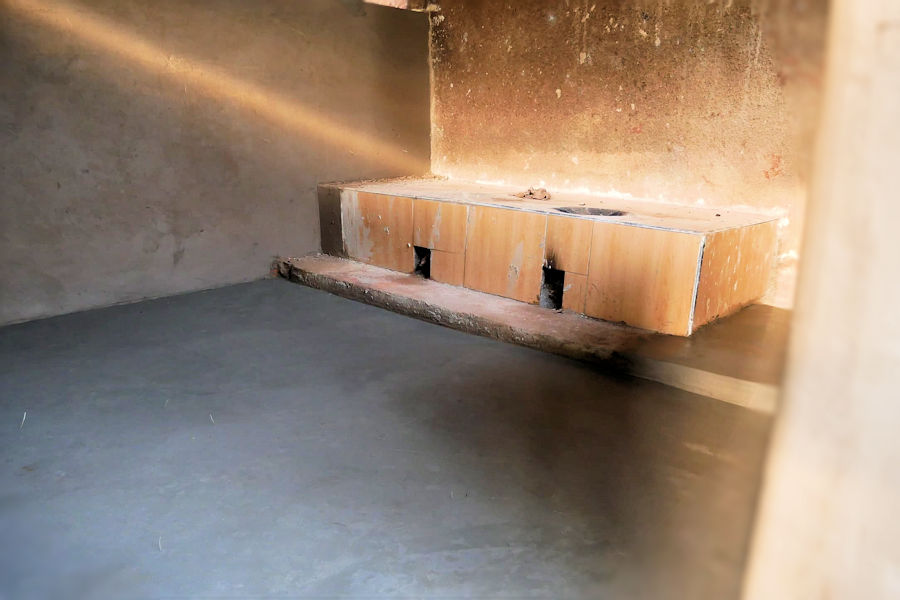
The new kitchen stoves in position

The ETC of PWD trustees agreed to use some of the underspend from the Vplus plus programme to buy new stoves and reconstruct /smarten up the GDPU kitchens.

Close up of the stoves

The new stoves were bought from Aid Africa, a charity specialising in reducing deforestation by installing energy saving stoves. They are the same as used in local hotels and schools.

They are obviously much more efficient than an open fire, having a contained firebox as shown in the pictures.

The original stove

The whole kitchen has now been improved. There is now a concrete floor and strong working surfaces outside for large pots and an area for food preparation making it a safe and pleasant place for people to cook.

Savings

GDPU was spending at least 50,000 UGX (£10 -15) a week on firewood for the old kitchen. But now, the same amount of wood has lasted for at least 3 weeks and will probably go longer. Fuel costs are down by a third or more, making a considerable saving to the operational costs and programme budgets.

New paint in the GDPU offices

Benefits

It’s these, apparently small, operational costs that really affect institutions like GDPU. If you can’t pay to light the kitchen fire, you can’t feed the trainees and staff. No feeding and the people don’t come or worse, they protest often violently and the whole situation collapses very quickly. There is also of course the environmental benefit of using less firewood!

And, and and….

GDPU Programme staff have also been extremely active. Not only is there the new Vplusplus extension going on, including a fascinating new Peer Mentor programme. But, the Viva @ GDPU (sponsored by Viva la Visa the UK Based visa specialists) music and music production programme has been extended and improved into a second year. All very busy and exciting. More information to come soon.

If you would like to know more about the ETC of PWD charity that manages the Vplus plus programme please go to our Home page.
If you would like to give something, please go to our Donate page.

If you would like to know more about Gulu Disabled Persons Union (GDPU) please go to their website or Facebook page. 

Many Thanks.
Viva @ GDPU: how is it pushing on?

Viva@GDPU

Learning music production at the Viva@GDPU studio

How is the revolutionary new music programme, Viva@GDPU, pushing on at Gulu Disabled Persons Union, Northern Uganda? How is the training of young people with disabilities, in music making and production, proceeding?

Up and running

Well, the studio is up and running, the studio equipment has been bought and installed successfully. 9 out of the 10 trainees reported for the music programme, good going for this context and we have hopes that the 10th will get there one day.

Singing training in the Viva@GDPU studio

Many songs have been written and recorded, all about social change; music for advocacy.

New software please

In fact it is going so well, the basic software programme they are using is not enough, trainees need something more sophisticated. Andy Corrigan at Viva la Visa, the sponsors of Viva@GDPU, has agreed that trainees should be more ambitious. In future, alongside the freeware programmes (‘FL Studio’) that local musicians and studios use, trainees will work with software that is common in professional studios and the West; ‘Logic Pro’ mostly. This also means that recordings made in Gulu can be mixed elsewhere if need be.

Kama Boo by Abramz

Local instruments

The team in Gulu have realised the importance of local instruments, (traditional ones like: thumb pianos, xylophones, flutes, drums etc) mixed with synthesizers, guitars and keyboards to give the unique ‘Viva’ sound. Viva la Visa have also agreed to pay for another instructor to teach local instruments.

Learning to play traditional instruments

Open mic

Alongside training and time to write their own songs, the trainees have an open mic session on Friday afternoons when they perform their new songs to a critical audience; their peers.

Friday afternoon open mic session: a brief glimpse

New songs?

A total of 18 songs have been produced so far, a small selection included here. The accompanying videos are on their way.

Yesu En Ceng by Nelson P

Viva trainees have presented their music to the community on Radio Speak FM in Gulu, they had good feedback from the community, many people are interested in what they are doing.

Kwan Ber by Brian Ug

And a gig too!

Visitors from NAD (Norwegian Association of Disabled and National Union of Disabled Persons of Uganda) were impressed with the VIVA project and asked the trainees to produce a song about NUDIPU (National Union of Disabled Persons of Uganda) which they presented at the national celebration: NUDIPU@36 on November 14th. National recognition.

PS: their videos are available on a YouTube channel here

If you would like to know more about the ETC of PWD charity that manages the Viva@GDPU programme please go to our Home page.

If you would like to give something, please go to our Donate page.

If you would like to know more about Viva la Visa, the sponsors for this programme, please go to their website.

If you would like to know more about Gulu Disabled Persons Union (GDPU) please go to their website or Facebook page. 

Many Thanks.

The Revolving Loan Scheme

The aim of vocational training is, of course, to get the trainee from training to lasting work; to a sustainable life. As the VPlus programme for youth with disabilities in Gulu, Northern Uganda has shown, core skills training is only a small part of that process. What happens for example, after training at the centre is equally important.

This image has an empty alt attribute; its file name is p1140032.jpg
Electronics Repair trainees in a lesson at GDPU

Post Training

‘Post Training Support’ as it is called has always suffered from one major problem: capital. Graduates are keen to get their business working, to do what they have trained to do. But they haven’t earned money when training and rarely have capital of their own; start-up costs what they haven’t got. How to solve the first problem that derails so many before they have even begun?

This image has an empty alt attribute; its file name is p1220112.jpg
Opiyo Benson in font of his new workplace in Koch Goma

Free Money?

In the past, donors gave out boxes of tools or cash to get things going. Perhaps surprisingly, free stuff didn’t help, far from it. These gifts distorted training before it even began. The first question would-be trainees asked was: what tools are you going to give me? how much money will I get? The gift became the goal, not the training or the aim of a sustainable life. That expectation ruined so many vocational training enterprises; no one values free money. And, anyway, most free tools were sold or stolen with days. Some cash also went to thieves or debts or parties, the vulnerable were preyed on by the powerful; very little went to the new business.

This image has an empty alt attribute; its file name is p1220129.jpg
Bob Gumakiriza now working at Niange Ber Motorcycle Repair in Koch Goma

The Revolving Loan Scheme

The solution Gulu Disabled Persons Union (GDPU), who run the VPlus programme, has come up with is innovative: the Revolving Loan Scheme. It depends, as schemes in this context should if they are to last, on strong connections with family and the community. Learning from the first VPlus cohort, GDPU deliberately built good bonds with families in the second cohort.

This image has an empty alt attribute; its file name is 20220801_1053441.jpg
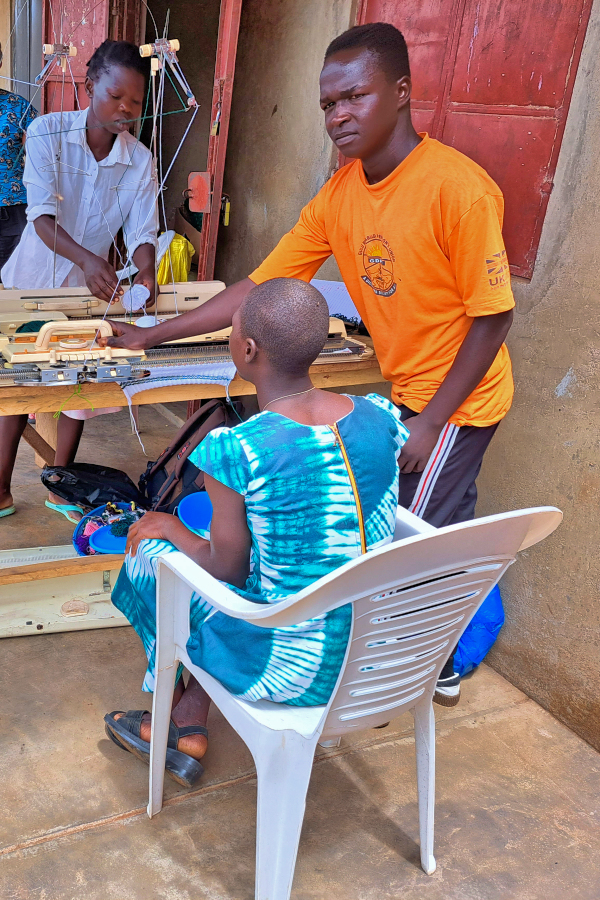
Apiyo Miriam’s Sweater Weaving Group

How the Scheme Works

In essence, and all participants are told this right from the beginning, they will have to contribute themselves. The trainee or more likely, parents, the community or both will part fund their graduates’ start-up costs. The rest of the start-up money comes from a ring fenced fund set up by GDPU and financed by ETC of PWD.

Akello Fiona hairdresser working on a customers hair

The Importance of the Plan

For example, a group of graduates want to buy a knitting machine for a sweater weaving business. Those graduates will have costed their needs while drawing up a business plan during training. That plan will be the basis of their loan application. The amount to be borrowed, payback terms, the parental/ community contribution and involvement will have been discussed with all concerned, at some length and formally agreed. After the loan terms are agreed and the matching fund is in, GDPU will buy the right machine at a good discount from their suppliers in Kampala (guaranteeing quality and supply etc).

This image has an empty alt attribute; its file name is 20220802_1230141.jpg
Sweater Weaving Group in Anaka

Tweaking the Scheme

At each subsequent Post Training Support visit, staff from GDPU will also look at the graduates record books (training in bookkeeping etc is of course part of the training). But, the actual financial process is now handled by the VPlus/ GDPU accountant, rather than PTS staff. It was found that graduates feared staff would demand money rather than give support, so graduates refused to be contacted. Separating out support from loans has now removed that problem. GDPU has also reformed repayment schedules, making them flexible according to income and circumstance as recorded by each graduate in their all important record books.

This image has an empty alt attribute; its file name is mf-revolving-loans.jpg
The VPlus Programme Manager, Musema Faruk, discussing a Revolving Loan application

Revolving?

What is also new, is that participants know from the start that the repaid loan is not returned to ETC or GDPU. This money goes into a separate account, used for the next graduate loan. It becomes a growing capital fund for the disability community. Parents and graduates are reminded that repaid loans help their community and the next person down the line; this seems to help repayment. Second cohort parents are far more keen to support and keep their children working, after all their income goes toward paying the loan. GDPU has even started training family members in core skills, so they can keep enterprises going when graduates health and disability makes work difficult.

VPlus Guidance Counsellor, Okello Emma, on a Post Training Support visit to graduates in Odek

Is it Working?

Early reports look good, the money is being returned. Already graduates from the earlier etc@gdpu programme are setting up their own access to the scheme, others we hope will follow if the scheme can be kept running.

A revolving loan indeed.

Want to Know More?

If you would like to know more about the ETC of PWD charity please go to our Home page.

If you would like to give something, please go to our Donate page.

If you would like to know more about Gulu Disabled Persons Union (GDPU) please go to their website or Facebook page. 

Many Thanks.

This image has an empty alt attribute; its file name is image.png

This project is match funded with UK aid from the British people

This image has an empty alt attribute; its file name is image-1.png

Field trips and the future: ETC of PWD trustees visit to Gulu and beyond

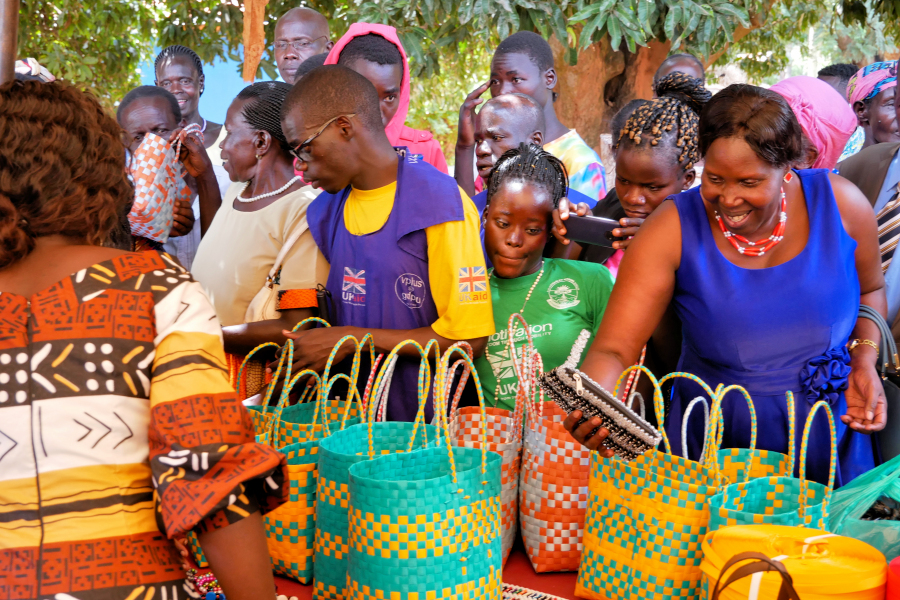
Buying from the Design and Decoration graduates at Graduation Day

Cohort 1 of the VPlus programme graduated in December 2021, they have been at work ever since. So, August 22 was a good time to visit past graduates, learn how they were getting on, what extra training and support they needed and how future programmes should be adapted.

Out To The Field

Developments

The growing quality of the training at Gulu Disabled Persons Union, (GDPU) and greater ambition amongst graduates, has expanded the range of Post Training Support. Extra training demands have moved far beyond the usual literacy, numeracy and record keeping. IT, getting involved with social media as part of the selling process or access to new information, featured heavily in our Post Training Support visits.

But, context matters. Contrast the ways in which three graduates work and sell their goods.

Apiyo Miriam

Apiyo Miriam and the Knitting group with Musema Faruk, outside their shop in Gulu

Apiyo Miriam works with Sweater Weaving groups in Gulu town: ‘Disabled Youth Living Enterprise Group Sweater Knitting’ and ‘Waneno Anyim Sweater Knitting’. They have a smart shop and a growing selection of knitting and sewing machines. Miriam’s record keeping and leadership, in this or any other context, is extraordinarily good.

Miriam with her book keeping records and graduation photo

She is very proactive, seeking out knitting contracts from local schools and individuals; the group is busy. But, as she says the future of selling is on the internet, and that was the training she needed. How to access and use, probably Facebook, to sell their goods across Uganda, certainly. But Miriam’s ambition is much wider, she realises that the West will pay much more for goods made by groups like hers and she wants to know how to do it.

Akello Brenda with Musema Faruk

Akello Brenda

Akello Brenda has sickle cell, and lives with her parents out beyond Unyama traiding centre, five kilometres north east of Gulu. Brenda trained on the Design and Decoration course and makes baskets and jewellery. Every month she takes her baskets etc on a boda (motorbike taxi) out to an auction, one of the large markets that visit outlying trading centres. She will set a blanket on the ground and sell what she can. Last months auction was disturbed by the rain and she sold nothing.

There is nowhere to set up shop around her family compound, although she sometimes sell to people who use the path leading to the centre. It was noticeable how proud her mother was of her child, and how much she wanted to help, buying materials for example. A shop in Unyama might be one possibility, although it is doubtful that returns would cover the rent. But, during Cohort 2, the GDPU Design and Decoration instructor dropped out and Brenda took over, successfully. Most instructors balance making and selling with teaching, it could be a model for her too. Past graduates have already become good instructors at GDPU, eg Aciro Brenda who helped set up the new tailoring course.

A range of Design and Decoration Goods on show at Graduation

Akello Brenda also asked for training in making more complex, and fashionable jewellery, which she knows will sell well. This is where the internet could help her; You Tube videos perhaps? Access to them is tricky without a smartphone, she would probably have to come into GDPU for that. Diversity will be the key for her, she is also a very good traditional dancer

Odong Haron Bob

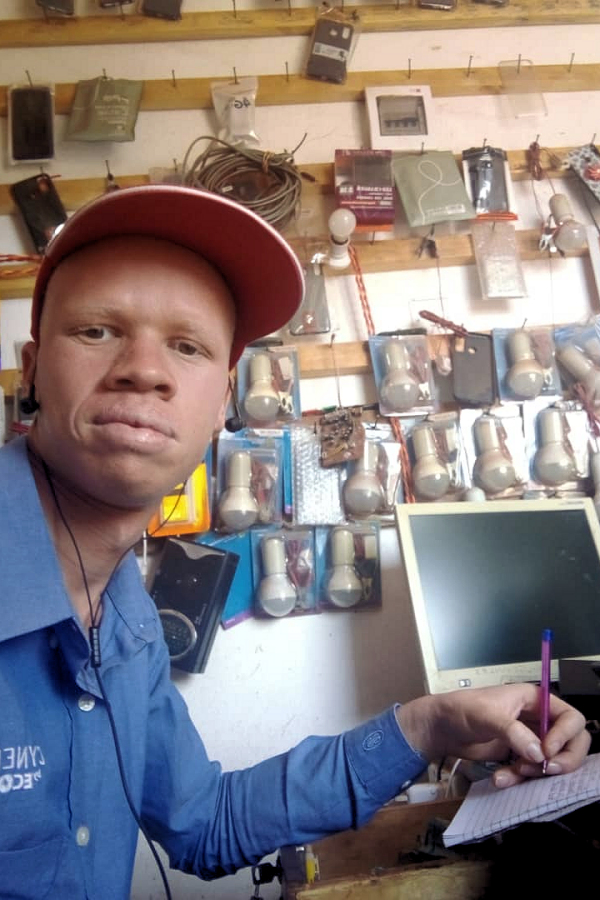
Haroon Bob at work in Lira

We travelled to Lira, a town similar to Gulu, some 130 or so kilometres to the south east. Odong Haron Bob, an albino, trained in electronics and has a good placement with an extremely entrepreneurial man near the centre. Bob was being trained thoroughly, on more IT kit than I have seen outside Kampala.

Musema Faruk with a member of Gulu PWD Electronics in Gulu Main Market recently

The contrast between this set up and the Gulu PWD electronics group we have been visiting in Gulu Main Market since 2017 was significant. Gulu PWDs have not moved beyond basic feature phones, have little IT experience and after many years have still not put up a sign advertising their business. But, they are significant sportsmen, up to Olympic standard, have genuine political ambitions, likely to be realised and are great company.

Haroon Bob and other Cohort 1 trainees at GDPU

Meanwhile in Lira, all the relevant software was there: several laptops; basic coding; everything you need for modern IT work and Bob was learning it all. There is a well known saying here, “Lira is for business and Gulu is for party”, but there is more to it than that. Gulu PWDs trained in 2014-5 when aspirations were lower, less kit was available and community involvement less significant. For example, Bob’s family helped to place him with this business. The serious development of the ‘Plus’ element in the training that GDPU provides must be part of the solution too.

Back to GDPU

It was with thoughts like these that we returned to our meetings at GDPU. we would consider where the VPlus training programme had led and what should be the future path for training young people with disabilities in Gulu and surrounding districts. See the next blog for more.

Diversity and Music

Odong Sunday plays his music at Cohort 2 Graduation Day

Thinking of the diversity many VPlus graduates use to become self supporting This video, taken during the Cohort 2 graduation at GDPU, shows Odong Sunday and his group playing one of his songs. He has already recorded a more contemporary song that is getting attention, he has many more and appealed for funds to pay for more recording. The Deputy Mayor no less, put forward a significant sum, she knew real talent when she heard it. The role of music and music technology (performed, recorded and sold) in skills training became a significant talking point in our subsequent meeting at GDPU, see the next blog for more.

Want to Know More?

If you would like to know more about the ETC of PWD charity please go to our Home page. If you would like to give something, please go to our Donate page. If you would like to know more about Gulu Disabled Persons Union (GDPU) please go to their website or Facebook page. 

Many Thanks.
This programme is funded by aid from the British people

Cohort 2: New Beginnings and Old Routines.

Cohort 1

In December 2021, the first cohort of VPlus trainees at Gulu Disabled Persons Union (GDPU), Northern Uganda graduated. Those graduates have moved into their own businesses, or they are working in other workshops. The programme will now give them six months of Post Training Support.

Cohort 2

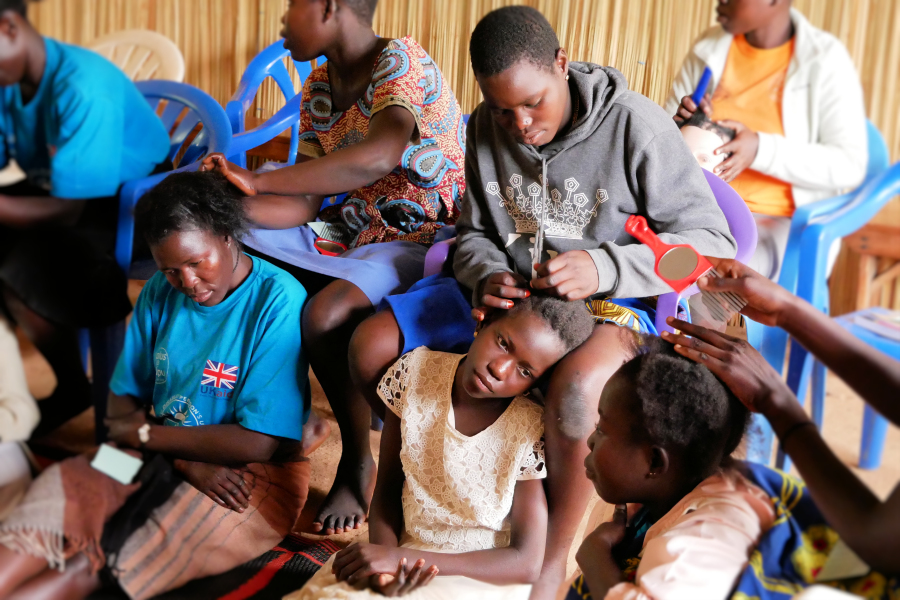
Cohort 2: Hairdressing Trainees

The next cohort of 65 trainees has also begun at the centre; a very busy time indeed for the team at GDPU. Immediately the ‘Plus’ aspects of the training programme have started too: training on hygiene and sanitation for example. Or, the Friday debates, building self-confidence and the ability to speak in public for the many who have never been listened to before. And, the crucial elections of student leaders who will work with, guide and set the tone for their peers.

Cohort 2: Hygiene and Sanitation talk

Age Range

There is a considerable age difference between trainees in this cohort, from 16-35. Therefore, a range of life experiences which the older trainees can use to support the younger. The oldest trainee is visually impaired, this is the first time in his life he has had any opportunities at all.

Cohort 2: Hairdressing

Staff Meetings and, Yes, the Dress Code!

Evaluation at the end of the last cohort identified poor communication between staff and programme managers. New weekly staff meetings have begun. Issues in the first minutes are familiar for any teacher anywhere: Schemes of Work and Lesson Plans; weak discipline; late arrivals; trainees not wearing the right uniform, girls showing too much of themselves, (many, many years as a sixth form girls tutor in the UK made this topic very familiar indeed).

A training visit for instructors, to Gulu Community College.

The fact that staff in a town in Northern Uganda, working with 65 disadvantaged trainees coping with a wide range of disabilities and experiences are struggling, like teachers across the world, with the mundane problems like the dress code; well, it’s reassuring somehow. It shows that GDPU has got the balance about right.

Student Leader Elections

Cohort 2: Leader Elections

The school has an electoral commission chaired by the school accountant. Leadership development for youth with disabilities is a significant part of the programme, so these elections are, deliberately, a formal process, The commission advertised the vacant leadership positions, trainees were given a week to campaign, some students even printed their election posters.

Twenty-one positions in all, in hard fought contests rigorously carried out in proper democratic process to give trainees their first sense of political involvement. It is noticeable how many past trainees from previous projects have subsequently become politically involved in their local community. And, of course Ojok Patrick, GDPU coordinator is now LC5 for Disability in Gulu and district; a very senior position indeed.

Cohort 2 leaders elections

Tailoring

Recruits for this second VPlus cohort made a clear distinction between wanting to learn Sweater Weaving and, mostly the visually impaired, wanting to learn Tailoring. Mama Cave who runs the Sweater Weaving is not a specialist tailor and has too many trainees to run another course. Rather than recruit outside the team, Musema Faruk the VPlus coordinator, suggested developing the skills of an existing member of the community.

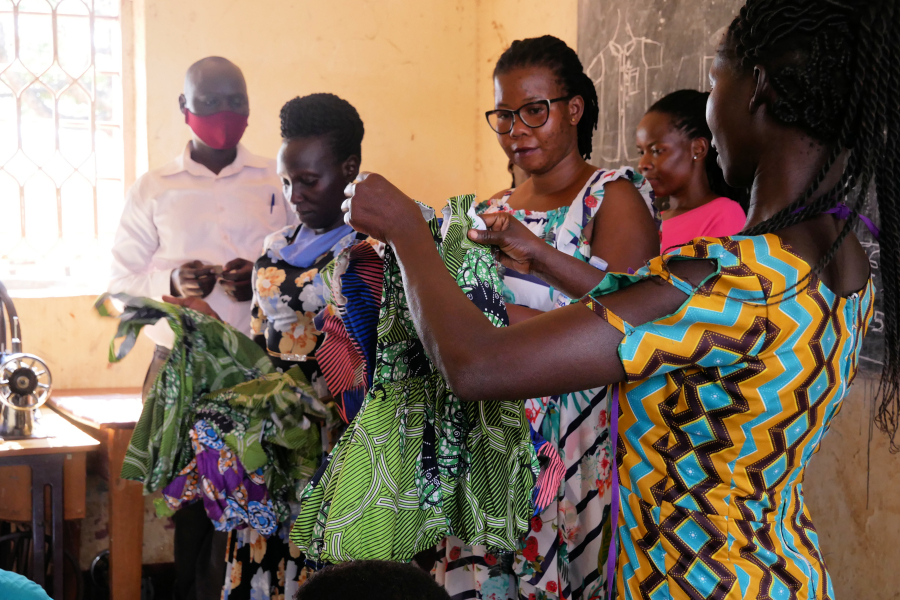
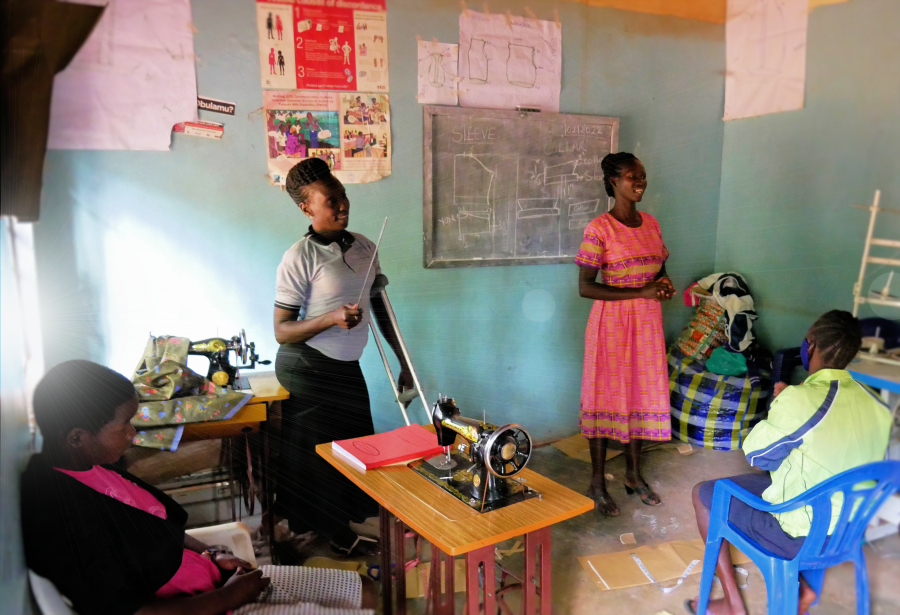
Cohort 2: Tailoring with Mama Cave and Brenda

 It was always the intention of the Vplus programme to develop the capacity of GDPU; to support it in creating a self-sustaining disabled community. Brenda has been a mainstay of the Gulu Disabled Persons Knitting Workshop, set up after the VSO YDP programme back in 2015 and then supported by the subsequent etc@gdpu project funded by ETC of PWD. She is an innovative tailor, able to make styles that the market wants rather than just copy the templates she was taught.

Madam Brenda’s Tailoring Class

Brenda has all the core skills needed to teach new tailors, she was willing but lacked confidence. With suitable support, Faruk’s recent reports show that Brenda is doing well as the new Tailoring Instructor, her pupils are learning and she is finding the right ways to communicate with them. A successful development and a route to follow in future.

Covid Restrictions

Despite the Ugandan President relaxing all Covid restrictions recently, GDPU is very aware of the vulnerability of its staff and trainees. So, the Standard Operating Procedures are still in place there; which is good to hear, they have kept the centre largely Covid free so far. And, the Guidance Counsellor is pursuing ways in which to get all the trainees fully vaccinated.

Cohort 2: Youth Leaders Electioneering

Pushing on Well

It was so exciting to see the first cohort begin the next phase of their working lives and now the second cohort start that process. But it’s also great to know that the team at GDPU takes nothing for granted, they continue to innovate and explore ways to benefit the disabled community in Gulu and surrounding districts: pushing on well indeed.

Cohort 1 Graduation

Want to Know More?

If you would like to know more about the ETC of PWD charity please go to our Home page. If you would like to give something, please go to our Donate page. If you would like to know more about Gulu Disabled Persons Union (GDPU) please go to their website or Facebook page. Many Thanks.

This project is match funded with UK aid from the British people