Spreading the Secrets of Success

Peer Mentors, Disability Unions and Sustainability

By ETC of PWD Trustee: Brenda Addison
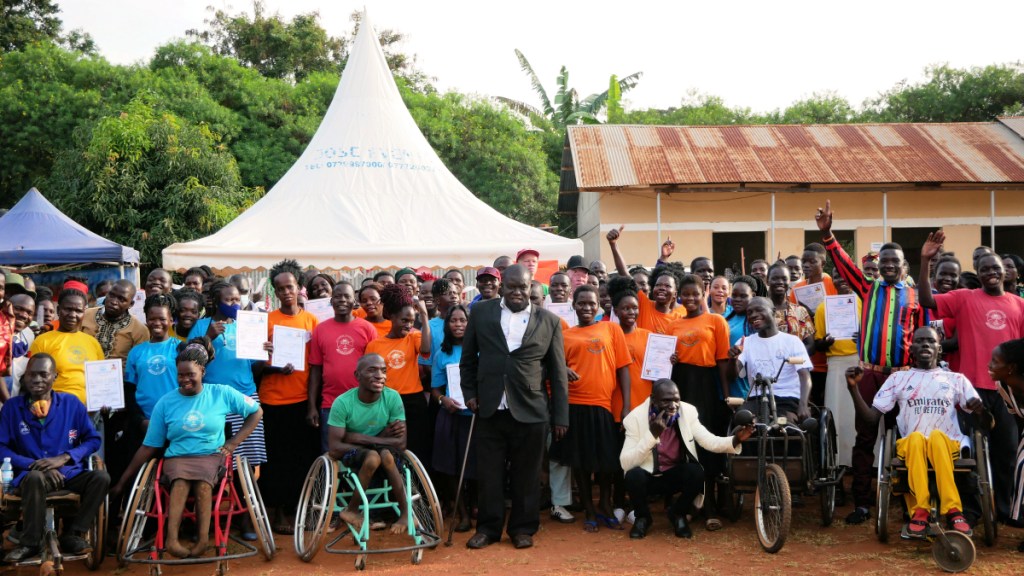
Vplus Graduation Day 2021

In 2020 we, the Enhancing the Capacity of Persons with Disability charity (ETC), were awarded funds from the UK government’s very last tranche of small charities development funding. With this grant and our own fundraising efforts, we were able to provide skills training and business support for 119 young adults at Gulu Disabled Persons Union (GDPU) in Northern Uganda.
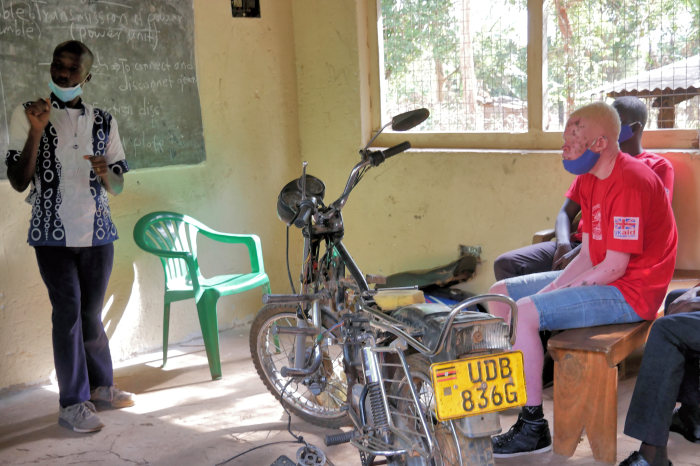
A mechanics class with a sign language interpreter

When the UK Aid funding ended, there was nothing to replace it, but we did not move away. Together with GDPU we worked on a new strategic vision to support the business activities of our young entrepreneurs. From the beginning, both ETC and GDPU understood that for young and vulnerable people to build sustainable lives, skills training alone is not enough. Ongoing support would be needed, and the support should be wider and deeper and must involve the whole community. 

The next big step: GDPU Peer Mentors
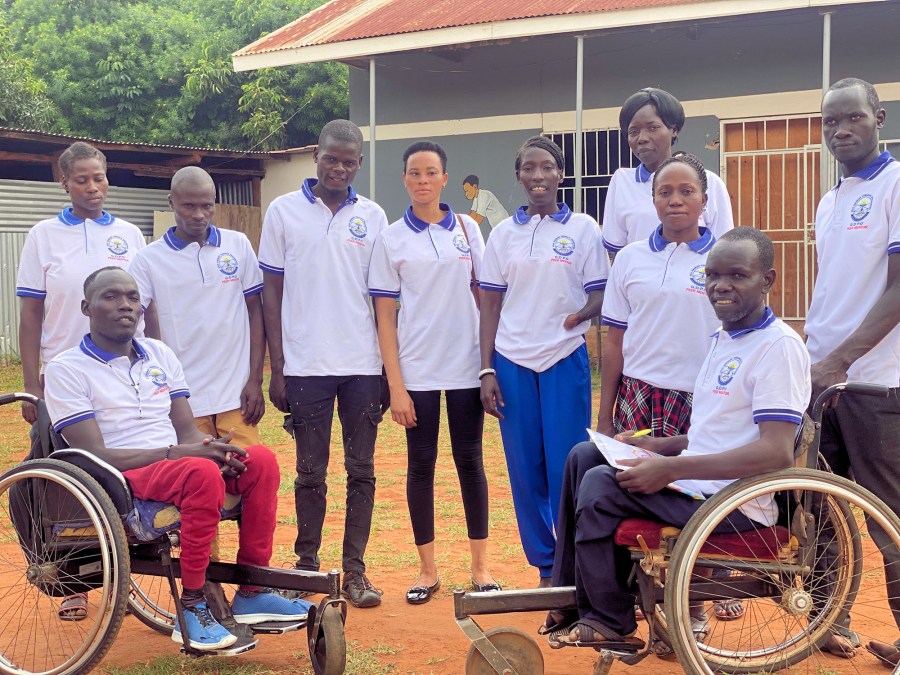
GDPU Peer Mentors

We were looking for young men and women with disabilities and the right skills to go out into the towns and villages of Gulu Sub-Region.  They would work with people in similar situations setting up their own businesses. GDPU identified 10 outstanding ex-trainees. We called this new support team ‘Peer Mentors’.
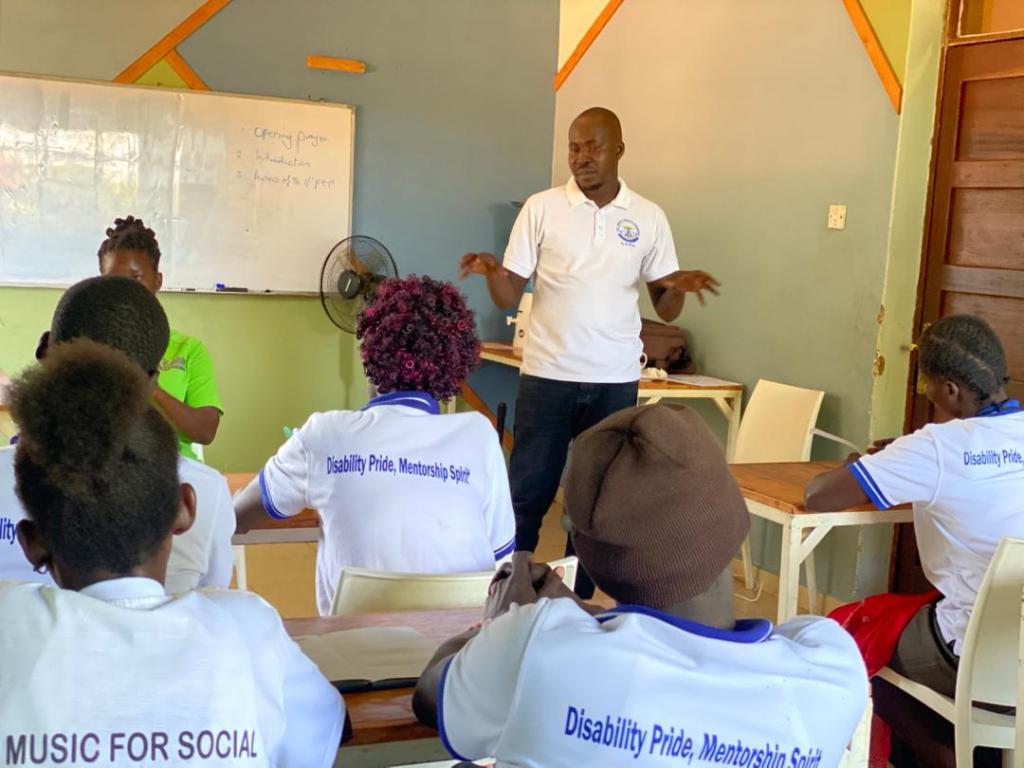
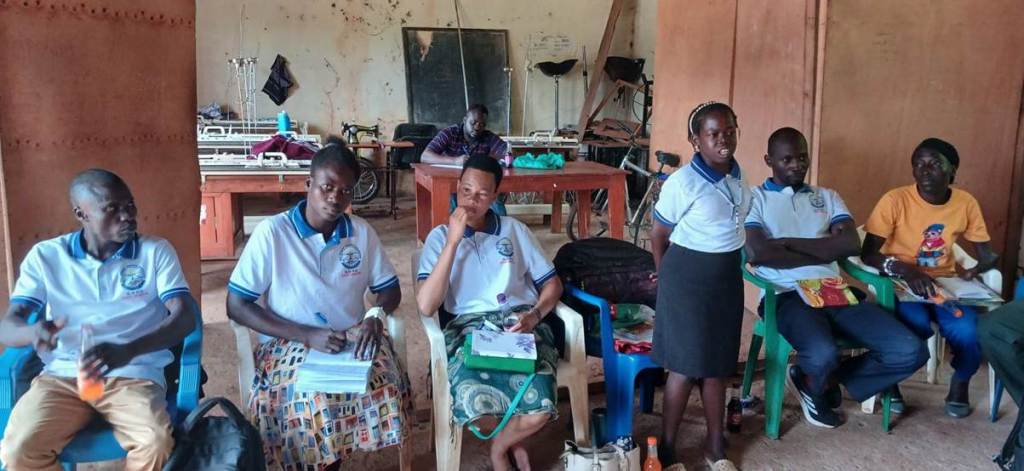
Peer Mentor training with GDPU training coordinator Musema Faruk

Since 2024, ETC has raised funds each year to enable this initiative to continue to grow, and at this point I must thank all the friends and friends-of-friends who have helped us.

We are so immensely proud of the Peer Mentors and the team at GDPU who are managing this initiative with such commitment and strategic vision.

From business support to community action

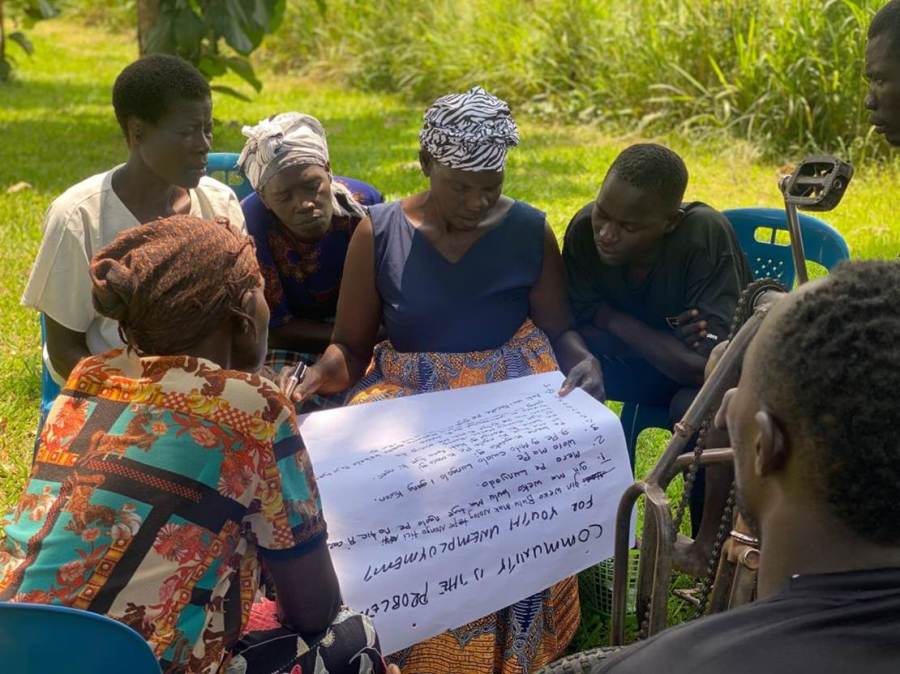
The Peer Mentors’ work in Gulu and surrounding Districts quickly developed into much more than supporting ex-trainees to find employment or sustain their self-employment. Their survey work found large numbers of other young people with disabilities and begun to identify their needs. Community meetings have been organised with parents and community leaders, helping people find routes into grants and other forms of support.
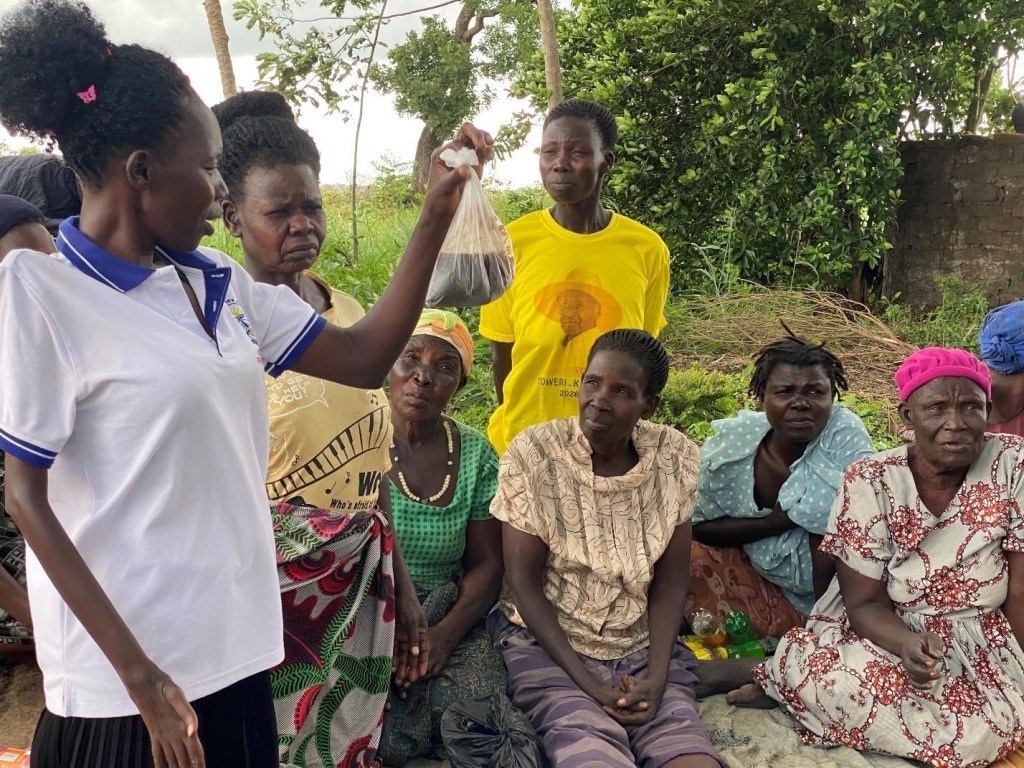
Training on personal development by a Peer Mentor in Nwoya

Of course, the needs identified are substantial and extend to issues far greater than business development. Safeguarding has become a serious part of the programme, addressing the neglect of children with disabilities, domestic violence, teenage pregnancies, the effects of prejudice, and the weakness – or complete absence – of structures able to tackle these and many other problems.
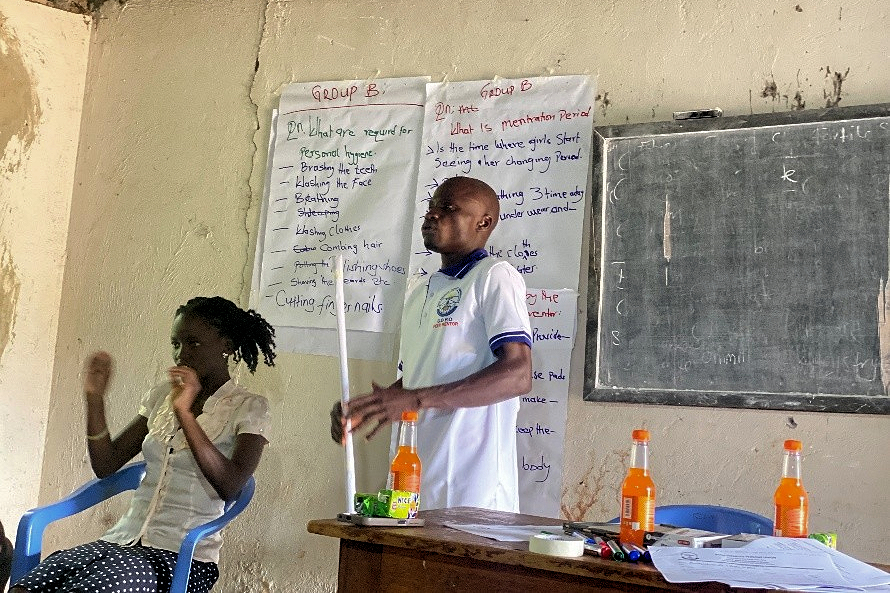
Sexual and Reproductive Health training for Peer Mentors

The huge challenges facing community leaders have exposed the need to bolster the structures that do exist, while at the same time supporting isolated people with disabilities to join or form their own organisations. That is, to self-organise and advocate for themselves: nothing about us without us.

Strengthening the District Unions

In strategic terms, GDPU identified the role it could play in providing support to the District Unions for People with Disabilities. These are statutory bodies established in every Ugandan District, but many exist in name only.
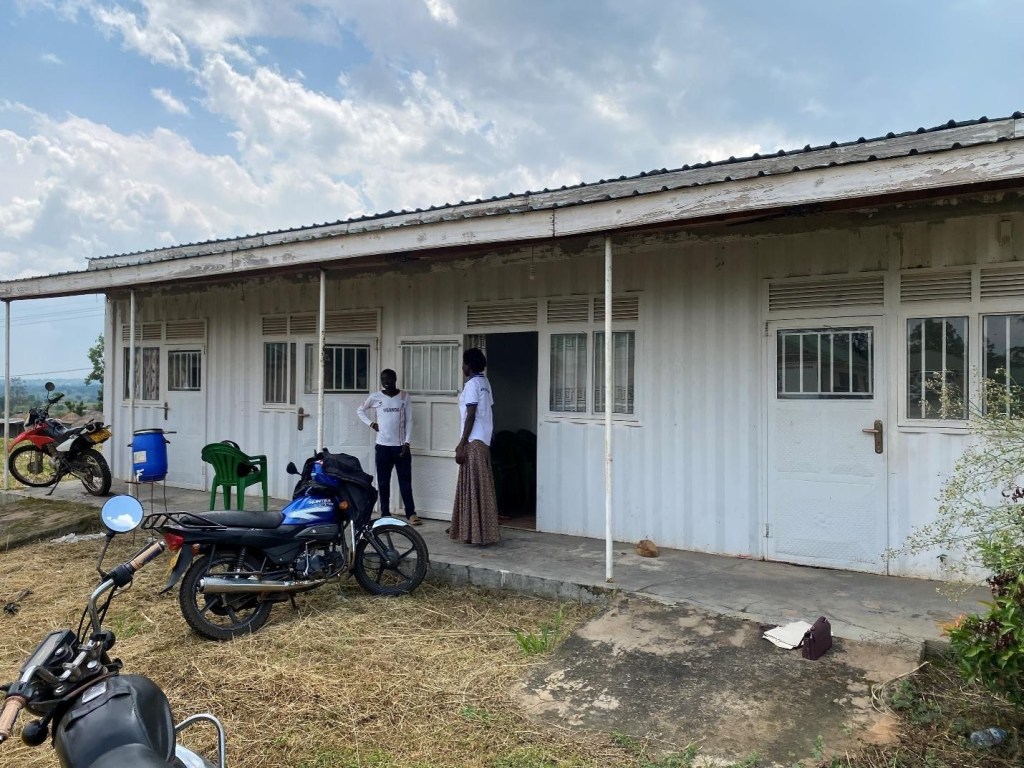
District Union Office in Nwoya

GDPU is the centrally located Union based in Gulu City. Consequently it can play an important strategic role by working with these wider District Unions, empowering them to advocate for and support the rights of people with disabilities in their own areas.
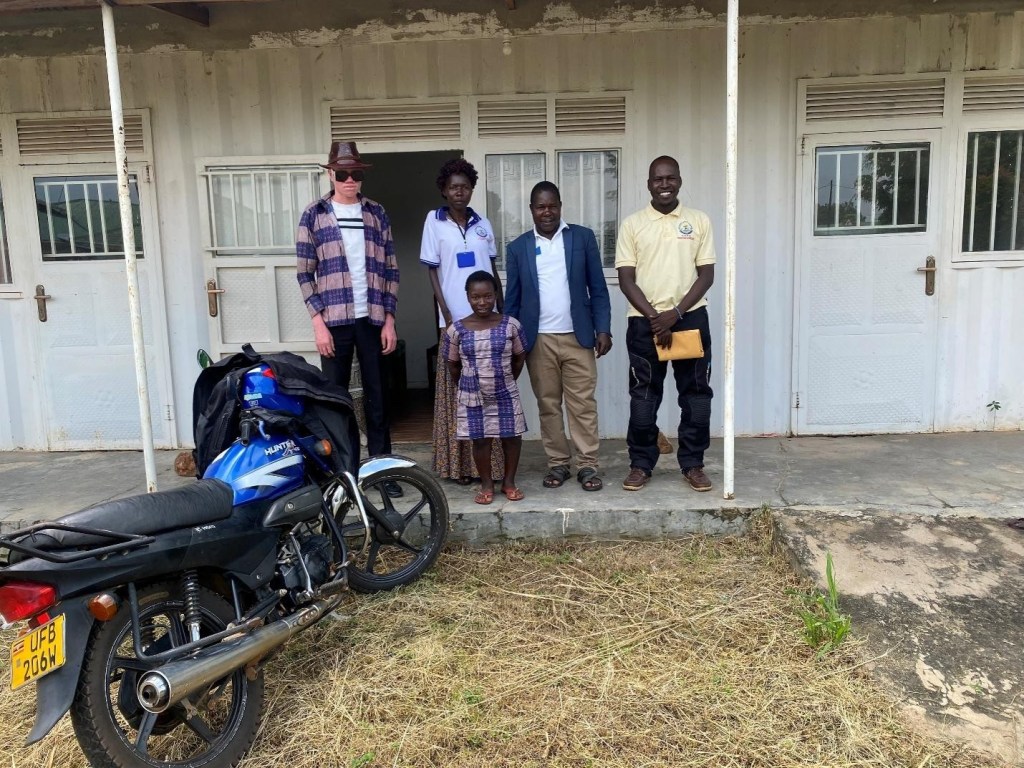
District Union Inception Meeting in Nwoya

For this to work, to be the central body advocating for people with disabilities in Gulu and its surrounding districts, GDPU must have the right premises to work from. It must have spaces for meetings, workshops, skills training and to bring in the all-important local authorities, businesses and stakeholders – premises of a standard expected of a professional organisation working on this scale.

Enter ETC

This is where ETC comes in. GPDU want to improve what they have at their site on Jomo Kenyatta Road in Gulu. ETC wants to extend our work with them through a new fundraising drive for these building improvement projects.  There are two imperatives: first, GDPU needs high standard, fully accessible facilities that are busy and well maintained. Secondly, income generating possibilities for GDPU itself. International grants cannot be relied upon as in the past; GDPU must become self-sustaining.

Building a sustainable future

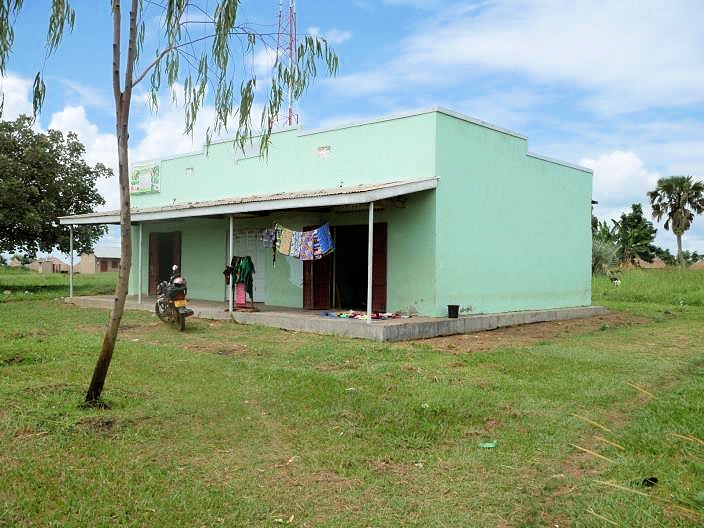
With the funds ETC has raised to date, GDPU has already upgraded the timeworn multi-purpose hall.
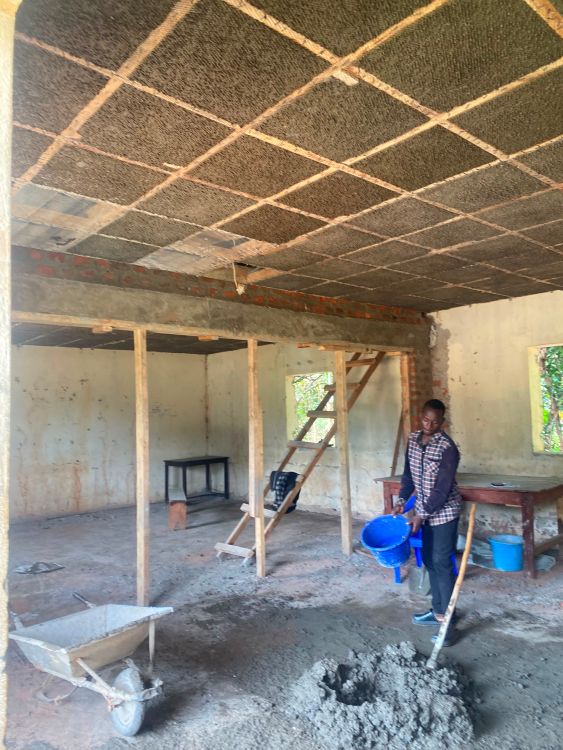
The Community Hall: in the beginning

They now have a fine venue perfect for regular GDPU needs:

  • Peer Mentor training and meetings;
  • Business skills training;
  • Life skills and personal development training for young people with disabilities;
  • Regional conferences of the newly reconstituted District Unions;
  • Community events;
  • Musical events associated with GDPU’s music studio Viva Wer Waa
  • Staff training;
  • Meetings of GDPU’s Board of Trustees.  
The Community Hall: taking shape

The hall will also be booked for use by other organisations, thereby offering another opportunity for income generation.

Te-Yat: a place for everyone

The hall has been given an evocative name:  Te-Yat, meaning “under the tree”. Across Northern Uganda, and most rural African communities, the big tree is always more than shade. It is a gathering place — a space for sharing ideas, resolving conflicts, learning, and passing on wisdom. It will be attractive to the community and, we are sure, the Te-Yat Hall will be attractive to NGOs, businesses and others who are looking for meeting or event facilities, a vital long term sustainable income to keep the work going at GDPU.
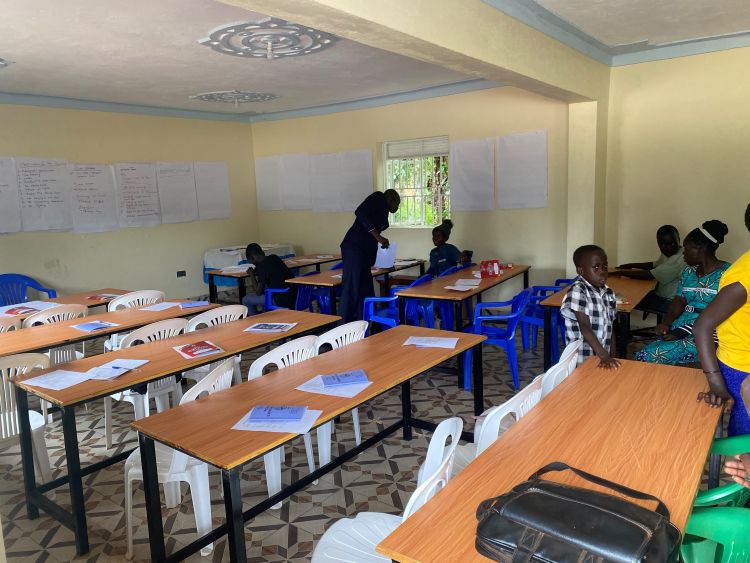
The Community Hall: up and running

And, what is the first thing that a prospective rental will always look for? Yes, proper toilets. Included in Te-Yat Hall renovation budget is the installation of modern, fully accessible sit-down WC conveniences. These will meet the needs of all people with disabilities, visitors, trainees and staff.
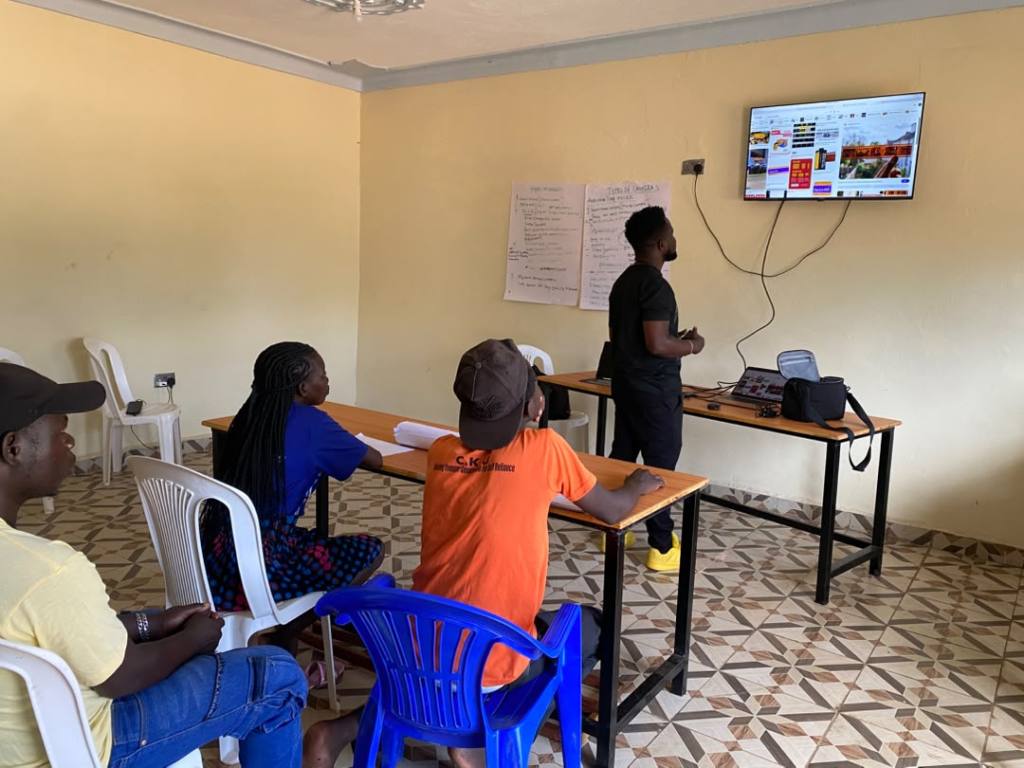
Training in the new hall

Back to our Roots: skills training

While developing these new initiatives, we must not forget our original reason for being involved with GDPU: to support skills training facilities for young people.
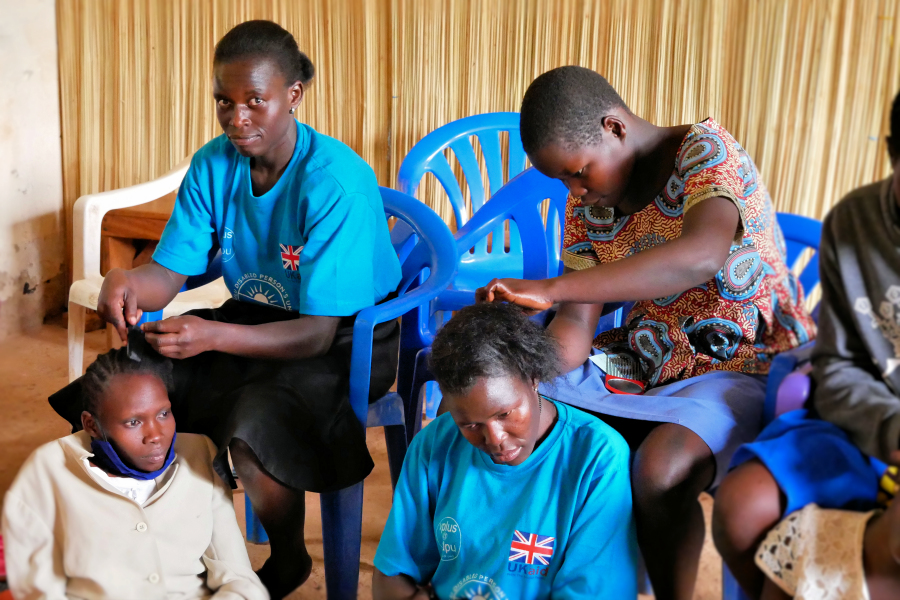
Hairdressing Training

In recent years GDPU has generated some income to fund skills training, attracting fee paying trainees and small contracts with donors. However, the classrooms and other facilities (dormitories for example) also need updating, especially as GDPU will be taking in trainees from surrounding Districts. Better classrooms and more attractive facilities will generate greater support, and more young people will benefit from training. 
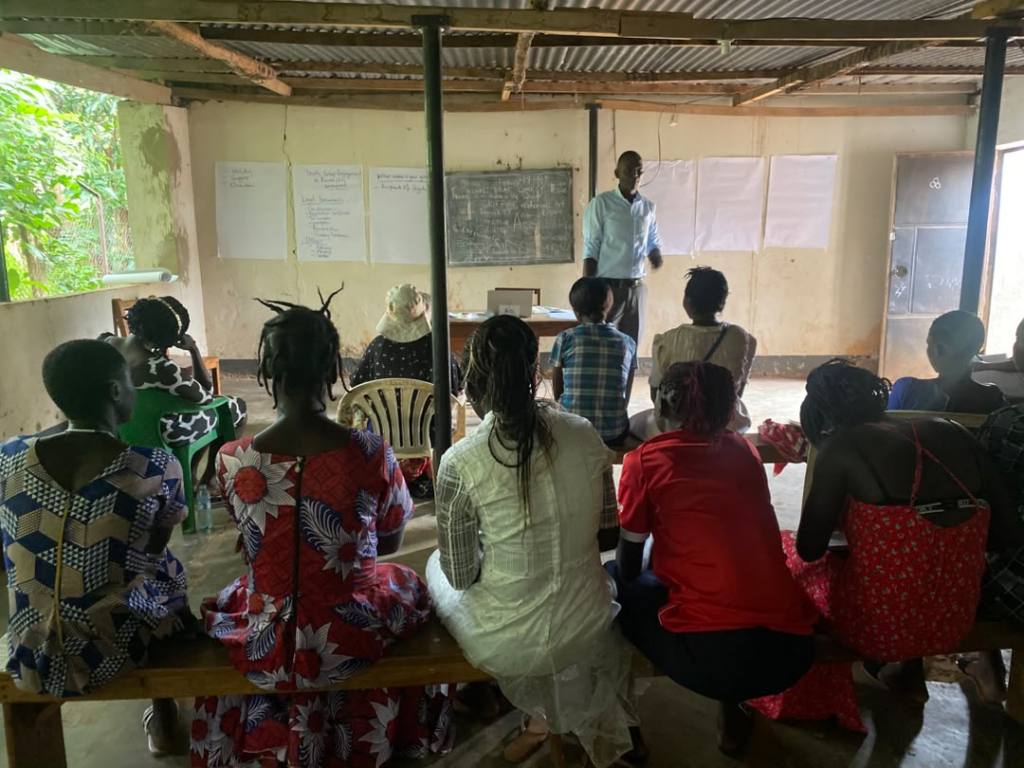
An existing classroom

Funding for infrastructure, such as buildings and renovation, is difficult to find. The training fees asked of parents must remain affordable and flexible, and available grants are short term and outcome-led.

ETC Funding Appeal

This is why, at ETC we have, with some success, been fundraising in recent years for specific infrastructure funding, and we have been able to fill quite a few gaps with the money raised through Just Giving and our personal contacts. Above all, our funding has helped us to sustain the profound impact the Board and Staff of GDPU are having on the lives of people with disabilities across Northern Uganda.

At this point, in the weeks up to Christmas, we are reaching out to the friends of GDPU and supporters of our work at etcofpwd.com asking you to help us continue to support the irreplaceable Peer Mentors. Through the donate page on this site or our Just Giving page, the quest continues to meet the cost of building work.
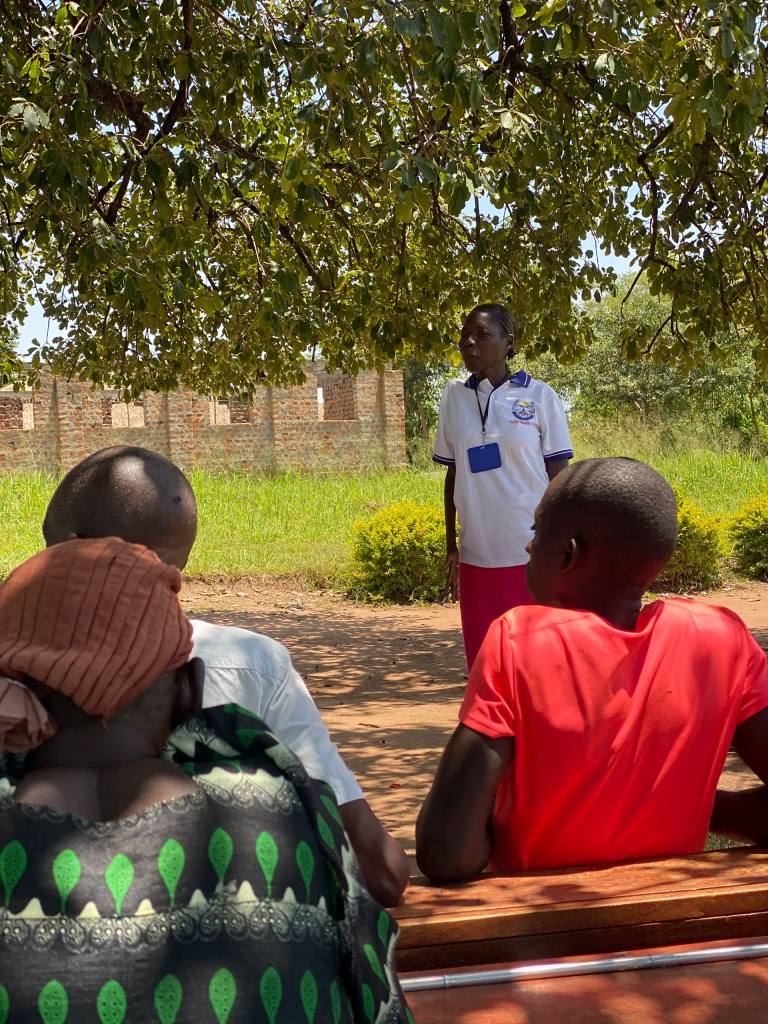
A Peer Mentor, out training in the field

Thank you to friends new and old who are reaching out to us. As Trustees we are always happy to talk about our work, so do keep in touch and we can talk about the difference we can all make in 2027.

Many thanks for your time

Brenda Addison

ETC of PWD Trustee

Want To Know More?

If you would like to know more about the ETC of PWD charity that manages the VPEP2  programme please go to our Home page

If you would like to give something, please go to our Donate page.

If you would like to know more about Gulu Disabled Persons Union (GDPU) please go to their website or Facebook page.
Thoughts from Under the Mango Tree

By ETC of PWD Trustee: Brenda Addison

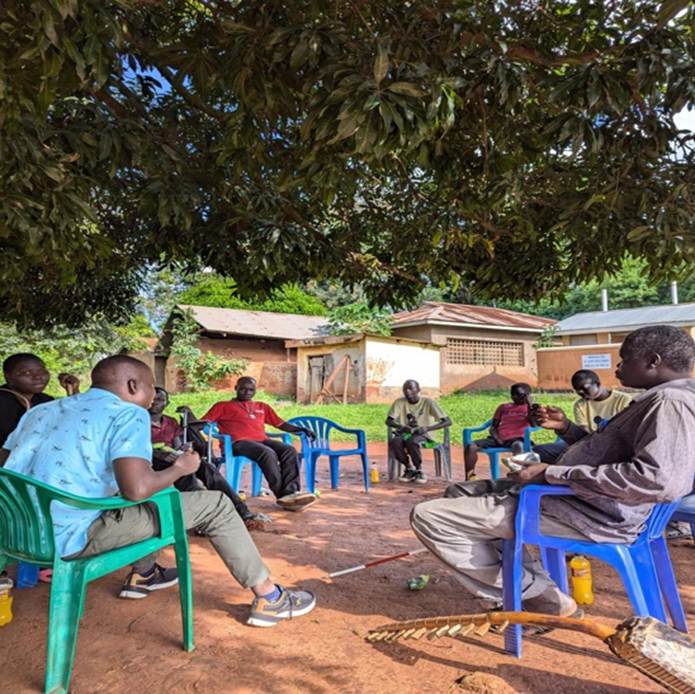
There is nothing better than the shade of a full-sized mango tree! It is great for parking your car under to keep it cool, or you can sit on your motorbike and chat to friends who are leaning up against the tree’s hefty trunk. The best use, I think, for the mango tree’s dense shade is to use it as an outdoor classroom or a meeting space – bring a plastic chair, sit in a circle and learn or discuss or plan. It’s the coolest place and frequently a fresh breeze will pass by.

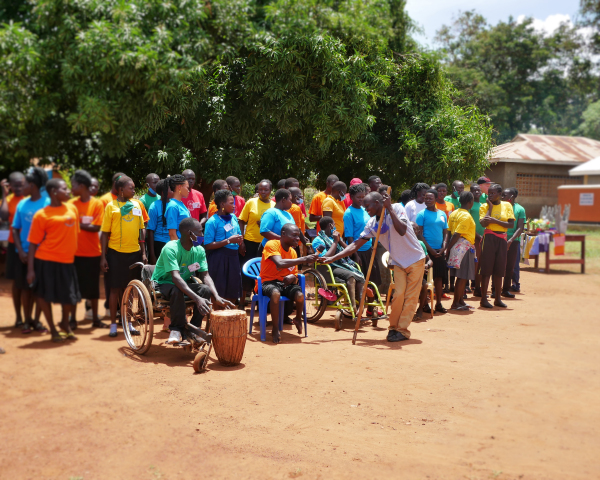
GDPU Open Day with staff, volunteers and trainees

As the winter lingers on here in Europe I am missing the dry season in Uganda and I am missing my mango tree at Gulu Disabled Persons Union (GDPU). This is the time of year when we usually visit, but this year we have missed that opportunity so we stay at home and work on our fundraising tasks. My thoughts take me indoors, to the actual classrooms at GDPU, to the meeting rooms and community spaces that we are working to support at the Centre. They have become run-down and no mainstream funding is forthcoming to pay for a renovation.

Now is the time to try to put this right because now is an exciting time in terms of the current development of GDPU as an organization. It is important to have better premises in which to work and build a more sustainable future. Let’s consider three reasons why:

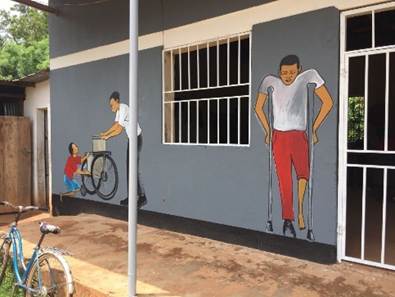
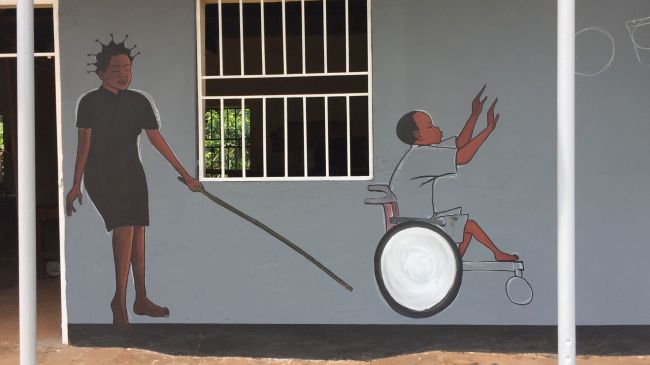
Talking walls at GDPU

First, a keystone of the work of GDPU is a skills training programme for young adults with disabilities. Our ETC project, (Vplus 2021 – 23) jointly funded by UK AID, was a model of how to integrate skills training with business support and personal development. Most trainees went on to set up their own small businesses, with others finding employment, and are now contributing to their family income.

The skills training programme has continued but on a smaller scale and has become more self-financing, attracting fee-paying parents, as well as project funding from locally-based NGOs.

We would like parents and prospective donors who visit GDPU to be impressed by its attractive premises, knowing that this reflects the quality of the training on offer.

Raising community awareness about disability

Secondly, the role that GDPU plays in providing spaces for community-based activities is an important growth area for which the Board of Trustees of GDPU will require extra capacity. The organization is planning to extend its reach across the Sub-Region, using its advantageous position to host more meetings and events in Gulu city, making space available for disability activists and for consultation with disabled communities.

In addition, our current ETC project (VPEP) funds a team of Peer Mentors who work across the Sub-Region providing  business development and employment support for ex-trainees, and engaging in community advocacy for people with disabilities. Their work often brings them into Gulu for meetings, training sessions and district-level events.

VPEP Peer Mentors

Meeting spaces, large and small, are needed for these purposes, suitably furnished and equipped. There could even be an income generating element to this in the future.

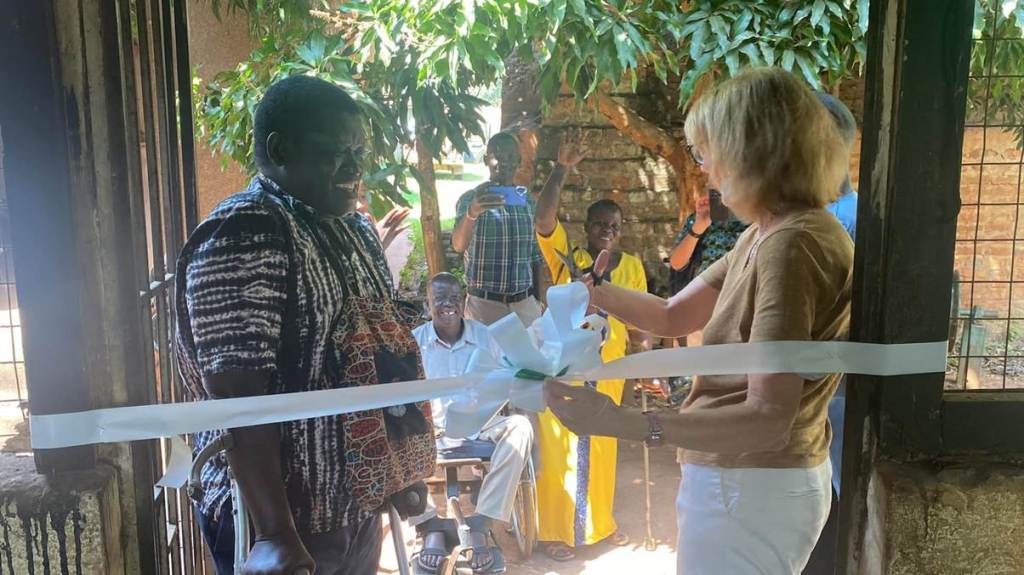
Cutting the ribbon on the new wheelchair workshop

Thirdly, the road towards financial independence is being built by some new and exciting initiatives at GDPU which have income generation at their heart. One example is a Wheelchair Workshop which I was able to officially inaugurate when we visited last year. The workshop is repairing, redesigning and actually building prototypes of newly designed wheelchairs. It is already taking orders for its work, but it needs space to meet customers and promote its services. This workshop will be collaborating with the skills training programme as trainees begin to feed into its productive capacity.

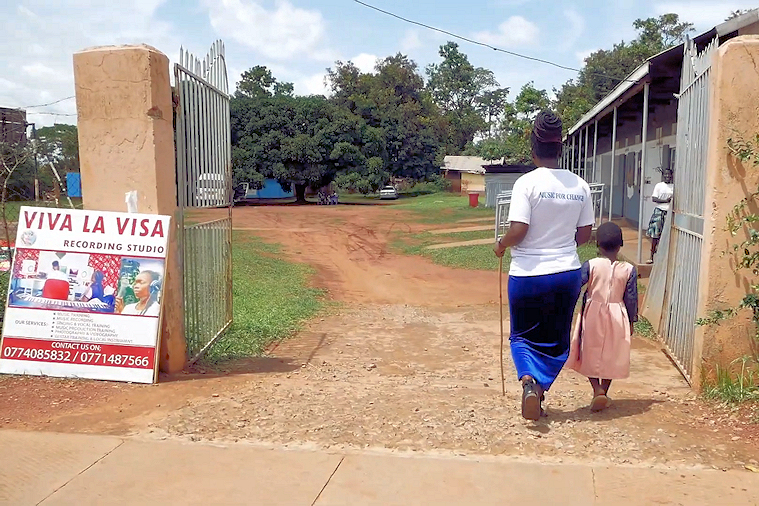
Walking into training at GDPU

Similarly, UK-based Viva La Visa, the entertainment visa company, sponsors a Music for Change programme: Viva Wer Waa, with state-of-the-art equipment and recording studio. It’s training future musicians and involving current ones to enable young people with disabilities to find a place within the music industry of Uganda where they can advocate for disability rights and dignity. Meeting and training spaces are needed of a quality to match this industry-level initiative.

Donate

ETC of PWD Funding Drive

This is where our funding drive comes in.

We don’t need to wait until we have reached our target on the Just Giving page (the crowd-funding platform that we are using – link below). We can start now, with the portion we have raised so far. Some people contribute via our website, or, if you would prefer to donate directly to our charity bank account, please ask us via our contact page. I was surprised to discover that Just Giving releases the money collected at regular intervals after the appeal is launched. Consequently, although we still need more to complete, we already have enough money to make a start!

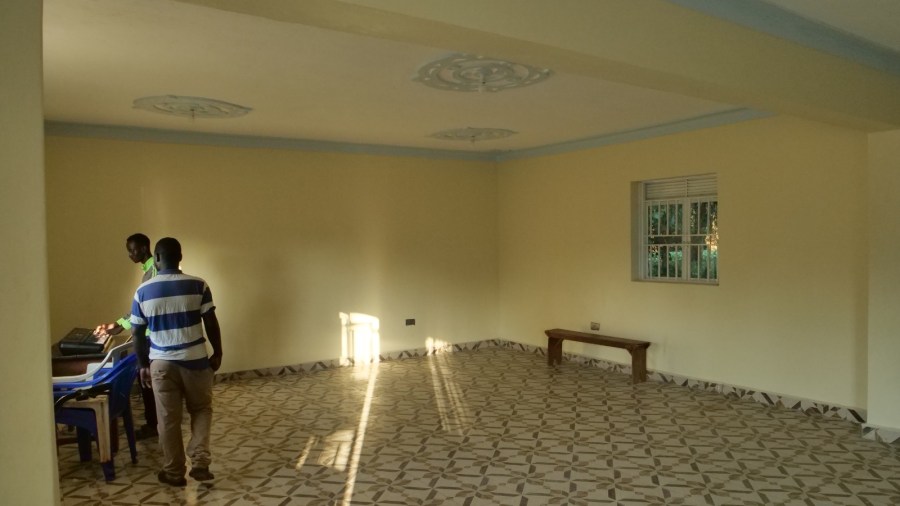
It has been decided that work will begin on one large room that is ripe for development. It is sizable enough to become a flexible, multi-purpose teaching and community space but it needs to be transformed.

The walls need good plaster and paint that will last for years in the tropical climate; the roof and the windows must be suitable for all the days of the year, for when it rains so hard and for when the sun beats down so relentlessly. A functioning method of dividing the space must be included in the re-construction, the floor must be durable and smart, and security considerations must be built into the design. 

This is the room in question. We want it to be transformed into a space that we will be proud to show to parents and prospective trainees, to the community, to donors and to customers.

The way I imagine it, I would be as happy to sit in that space as I would be sitting under my mango tree.

ETC of PWD Donate page

ETC of PWD.Com Just Giving Charity Appeal

Many thanks for your time

Brenda

ETC of PWD Trustee

Want To Know More?

The ETC of PWD charity manages the Viva Wer Waa programme and the VPep skills training programme. For more please go to our Home page

You can give money for these programmes and our 2025 Funding Appeal via our Donate page, or via our Crowdfunding page

If you would like to know more about Gulu Disabled Persons Union who deliver VPEP and Viva Wer Waa please go to their website or Facebook page. 

Viva @GDPU: music documentary

Viva@GDPU has just released a documentary, made by the team at the Viva studio at Gulu Disabled Persons Union. The video shows the impact of the first two years of this innovative music and production training programme on the lives of it’s trainees: young people with disabilities in Gulu and surrounding regions in Northern Uganda.

The Viva programme has been sponsored by Viva la Visa, the UK based entertainment Visa agent, for the last two years. Without that support, none of these fine musicians and performers would have been seen or heard. They are making sustainable lives for themselves now, when once that would have been unthinkable; the excitement and joy in this film is wonderful to see.

We are also very excited to say that Viva La Visa have agreed to sponsor another year of developing this programme further. The Viva extension programme will move further into music production, supporting trainees as they become public performers on a much bigger stage. Watch out for further information and links to their work.

Don’t forget that you can already see many of the music videos already made by Viva trainees on their You Tube channel

This is the most recent video, from Lady Brenda:

Want To Know More?

If you would like to know more about the ETC of PWD charity that manages the Vplus plus programme please go to our Home page

If you would like to give something, please go to our Donate page.

If you would like to know more about Gulu Disabled Persons Union (GDPU) please go to their website or Facebook page. 
If you would like to know more about Viva La Visa please go to their website.

Many Thanks.

Kica Ber: a Vplus plus case study

The Vplusplus programme exists to support, amongst others, the past graduates of the VPlus programme. That programme taught vocational, business and life skills to young people with disabilities, at Gulu Disabled Persons Union, in Gulu, Northern Uganda. Vplus plus includes follow-up training, often in the workshop or place of business. This case study might help show how it works in practice.

Kic Ber Sweater Weaving Group: Anaka.

The was a follow up to check on how group members are catching up with their business; on the gaps that exist. It would also allow members to share their personal experiences, to find any safeguarding issues and plan the way forward.

Kica Ber Sweater knitting group is based in Anaka, 50 kilometres west of Gulu. They knit sweaters, mostly for school uniform and have other smaller side businesses. They have enough space and the right machines to do the sweater work effectively. The group is doing well, the customers are turning up, but slowly, and the group is keen to expand.

Vplusplus: following up

Previous trips by the Vplusplus team identified the need for training on the design cards that fit into the Kica Ber knitting machines.  Working with these cards would really improve the quality of their sweaters and help them compete. The card brings out the best in fabric and design, making them more attractive to the community.

The right instructor

The instructor at work

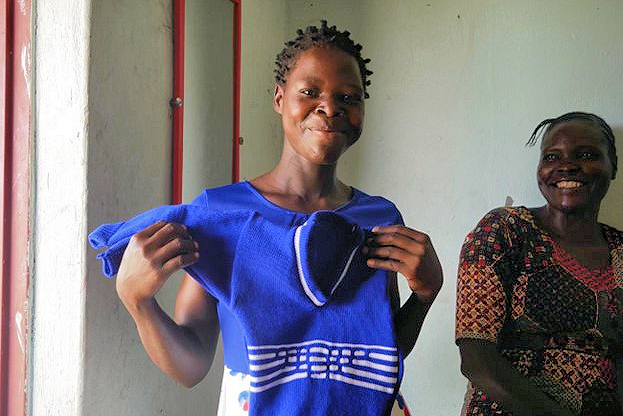
An instructor was hired to train the group on making different sweaters using the cards. The female instructor is very interactive and relates well to the members; she also has a disability. She is one of the community members in Anaka, so she will keep in touch with the enterprise in future.

The cards

The instructor trained Kica Ber for one week, teaching them a range of new skills. For example, the group members learned how to weave and join a sweater directly on the knitting machine, without taking it to the tailors to finish. Joining sweaters has always been a problem for groups like this, getting outside tailors to finish is expensive and loses time.  This solution will make a huge change.

They were also taught to make buttonholes in sweaters, using the knitting machines directly; again something that had to be sent out to finish in the past.

The importance of marketing

After some discussion about marketing, members have brought artwork into their workshop. They’ve given some work space to a young man who does art and design, he stamps badges on school uniforms and he is teaching them the process. They have also designed their own signpost, clearly showing what they do, and indeed people are starting to check what they are doing.

Constant support

A new design

A busy week for the group at Kica Ber, but a very productive one. Graduates often think learning finishes with the graduation certificate. But these industrious and successful young people are showing how much continuous learning can help, and how important it is to tailor the learning to the learner. Constant support to help constant development.

If you would like to know more about the ETC of PWD charity that manages the Vplus plus programme please go to our Home page.

If you would like to give something, please go to our Donate page.

If you would like to know more about Gulu Disabled Persons Union (GDPU) please go to their website or Facebook page. 
Many Thanks.

SHARE THIS:


Announcing Vplusplus @ GDPU

Vplusplus is coming.

Although the VPlus programme has ended, support and skills training for those 113 young trainees with disabilities in Gulu and surrounding districts does not stop. With funding from private individuals and ETC of PWD trustees, Vplusplus @GDPU has just begun. This is so that Gulu Disabled Persons Union (GDPU) can give long term Post Training support to all graduates. The first steps have been carried out: Reflection Meetings and trips to the field; to liaise with them all, What will help them succeed in the future? What will get them, their families and their community to a sustainable life?

Out To The Field

One on One Interviews

Formal support trips have begun too, visiting all those graduates in their places of work, or not work as the case maybe. And to discuss with each person what training might help them – core skills perhaps– the latest hairstyles for hairdressers, how to mend the different motorbikes in your area; different techniques for sweater weavers etc. Inevitably literacy and numeracy – book keeping/ invoicing that sort of thing.

Innovation

The new areas brought in for Vplusplus include training members of the family to temporarily produce your goods when your disability prevents you from working yourself. Also, peer support: creating local networks with other people with disabilities banding together for practical and moral support, particularly useful for sweater weavers, for example, whose work is seasonal and intensive when the demand comes.

VPlus Graduates meeting at GDPU

The Vital Role for the Guidance Counsellor

One on One Interviews

Vplusplus field visits also allow the Guidance Counsellor to give support, encouragement, to identify and follow up Safeguarding incidents. Sadly, abuse is, a constant factor in the lives of these graduates. Sometimes that abuse comes from members of the family, sometimes from colleagues at work; often it comes from both. The solutions involve discussion, advocacy, alerting the relevant authorities where necessary, finding safe refuge, medical aid and more; changing the mindset, as the team puts it, is a very slow process

New location for Rubanga Mamiyo Knitting group in Nwoya,

The first monthly report from the Vplusplus team in Gulu:

What went well?
We linked up with our beneficiaries in Gulu, Omoro and Nwoya
The Knitting group in Nwoya can afford to shift to a better house, along the main road to Anaka Town Council.
Diversification of work witnessed during the follow up visit: many members are doing side business to support their main skills.
Well facilitated to conduct the activities.
Able to identify skills and gaps that exist among the youth.
We managed to identify some key safeguarding issues.

What challenges did you have?
 We faced challenges of mobilisation: some students are not at home; others take so long in the garden, they are still not at home.
Some parents are not supporting their children.
Some students are not employed or starting their own business.
Some students are failing to pay back the revolving capital.
Sometimes you get disappointed seeing a student not engaged in work.
Long distances and sitting on the bike for long period of time.
Bad weather keeps you too long in the field waiting for the rain to stop.

Lessons learnt and recommendations for future trainings:
Students do better when they work in a group.

We were impressed that the team in Nyowa are doing so well, because they have a strong team spirit. They are always willing to support one another, physically, financially and emotionally.

Those who have mobile phone are doing quite well; they get in touch with their friends for more business connection and networking.

Where trainees are earning some money, their lives are improving and they are being valued by their parents and relatives.
Opiyo Derrick, Knitting, Nwoya

If you would like to know more about the ETC of PWD charity please go to our Home page and please keep in touch via Project News.

If you would like to give something, please go to our Donate page.

If you would like to know more about Gulu Disabled Persons Union (GDPU) please go to their Facebook page. 

Many Thanks.