Viva @GDPU: music documentary

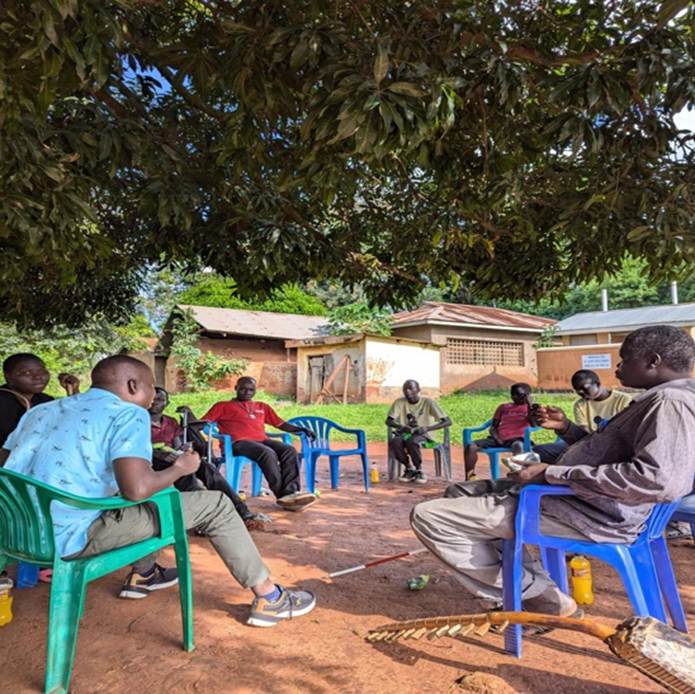
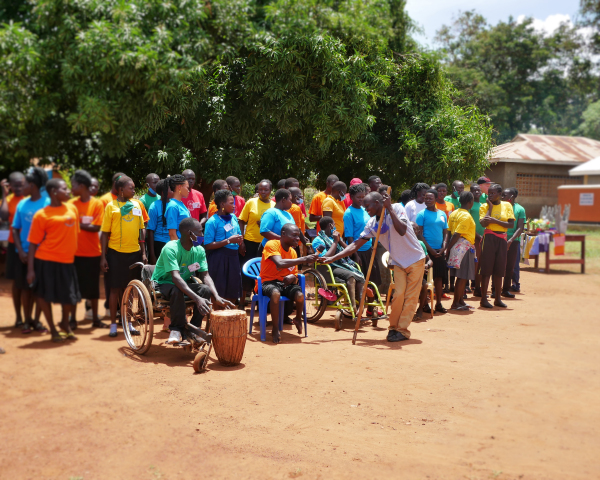
Viva@GDPU has just released a documentary, made by the team at the Viva studio at Gulu Disabled Persons Union. The video shows the impact of the first two years of this innovative music and production training programme on the lives of it’s trainees: young people with disabilities in Gulu and surrounding regions in Northern Uganda.

The Viva programme has been sponsored by Viva la Visa, the UK based entertainment Visa agent, for the last two years. Without that support, none of these fine musicians and performers would have been seen or heard. They are making sustainable lives for themselves now, when once that would have been unthinkable; the excitement and joy in this film is wonderful to see.

We are also very excited to say that Viva La Visa have agreed to sponsor another year of developing this programme further. The Viva extension programme will move further into music production, supporting trainees as they become public performers on a much bigger stage. Watch out for further information and links to their work.

Don’t forget that you can already see many of the music videos already made by Viva trainees on their You Tube channel

This is the most recent video, from Lady Brenda:

Want To Know More?

If you would like to know more about the ETC of PWD charity that manages the Vplus plus programme please go to our Home page

If you would like to give something, please go to our Donate page.

If you would like to know more about Gulu Disabled Persons Union (GDPU) please go to their website or Facebook page. 
If you would like to know more about Viva La Visa please go to their website.

Many Thanks.

Kica Ber: a Vplus plus case study

The Vplusplus programme exists to support, amongst others, the past graduates of the VPlus programme. That programme taught vocational, business and life skills to young people with disabilities, at Gulu Disabled Persons Union, in Gulu, Northern Uganda. Vplus plus includes follow-up training, often in the workshop or place of business. This case study might help show how it works in practice.

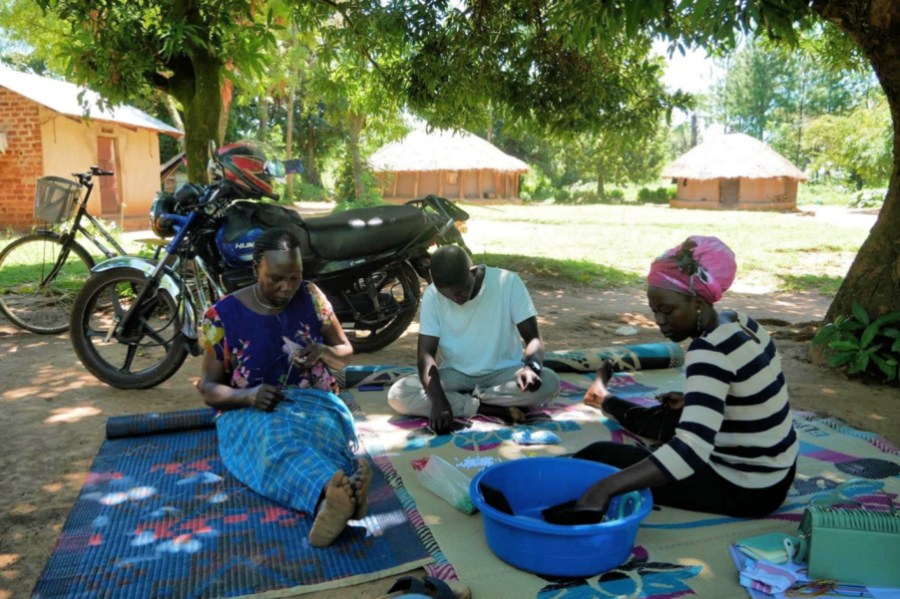
Kic Ber Sweater Weaving Group: Anaka.

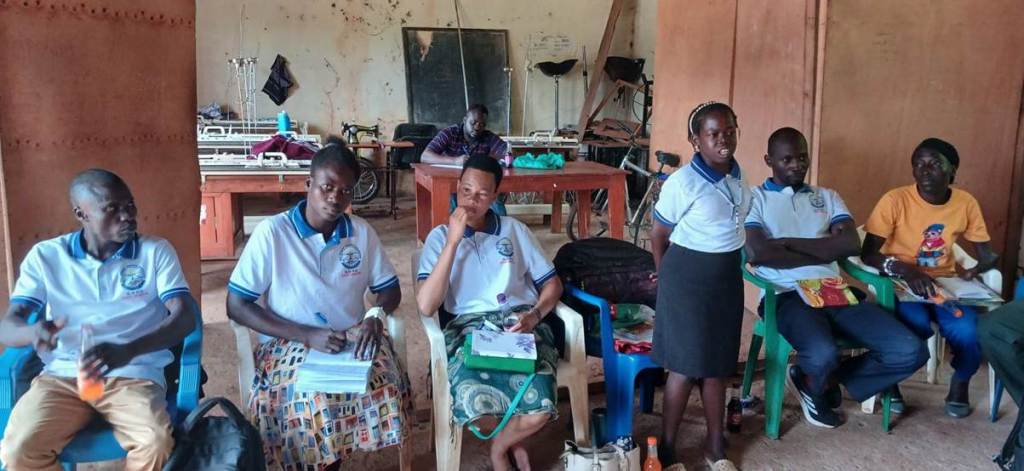
The was a follow up to check on how group members are catching up with their business; on the gaps that exist. It would also allow members to share their personal experiences, to find any safeguarding issues and plan the way forward.

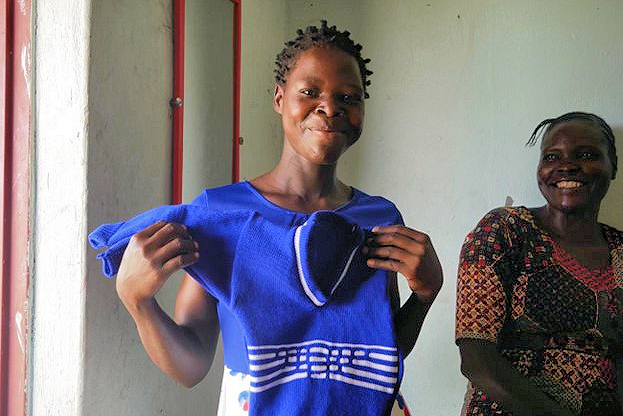
Kica Ber Sweater knitting group is based in Anaka, 50 kilometres west of Gulu. They knit sweaters, mostly for school uniform and have other smaller side businesses. They have enough space and the right machines to do the sweater work effectively. The group is doing well, the customers are turning up, but slowly, and the group is keen to expand.

Vplusplus: following up

Previous trips by the Vplusplus team identified the need for training on the design cards that fit into the Kica Ber knitting machines.  Working with these cards would really improve the quality of their sweaters and help them compete. The card brings out the best in fabric and design, making them more attractive to the community.

The right instructor

The instructor at work

An instructor was hired to train the group on making different sweaters using the cards. The female instructor is very interactive and relates well to the members; she also has a disability. She is one of the community members in Anaka, so she will keep in touch with the enterprise in future.

The cards

The instructor trained Kica Ber for one week, teaching them a range of new skills. For example, the group members learned how to weave and join a sweater directly on the knitting machine, without taking it to the tailors to finish. Joining sweaters has always been a problem for groups like this, getting outside tailors to finish is expensive and loses time.  This solution will make a huge change.

They were also taught to make buttonholes in sweaters, using the knitting machines directly; again something that had to be sent out to finish in the past.

The importance of marketing

After some discussion about marketing, members have brought artwork into their workshop. They’ve given some work space to a young man who does art and design, he stamps badges on school uniforms and he is teaching them the process. They have also designed their own signpost, clearly showing what they do, and indeed people are starting to check what they are doing.

Constant support

A new design

A busy week for the group at Kica Ber, but a very productive one. Graduates often think learning finishes with the graduation certificate. But these industrious and successful young people are showing how much continuous learning can help, and how important it is to tailor the learning to the learner. Constant support to help constant development.

If you would like to know more about the ETC of PWD charity that manages the Vplus plus programme please go to our Home page.

If you would like to give something, please go to our Donate page.

If you would like to know more about Gulu Disabled Persons Union (GDPU) please go to their website or Facebook page. 

Many Thanks.

SHARE THIS:


Announcing Vplusplus @ GDPU

Vplusplus is coming.

Although the VPlus programme has ended, support and skills training for those 113 young trainees with disabilities in Gulu and surrounding districts does not stop. With funding from private individuals and ETC of PWD trustees, Vplusplus @GDPU has just begun. This is so that Gulu Disabled Persons Union (GDPU) can give long term Post Training support to all graduates. The first steps have been carried out: Reflection Meetings and trips to the field; to liaise with them all, What will help them succeed in the future? What will get them, their families and their community to a sustainable life?

Out To The Field

One on One Interviews

Formal support trips have begun too, visiting all those graduates in their places of work, or not work as the case maybe. And to discuss with each person what training might help them – core skills perhaps– the latest hairstyles for hairdressers, how to mend the different motorbikes in your area; different techniques for sweater weavers etc. Inevitably literacy and numeracy – book keeping/ invoicing that sort of thing.

Innovation

The new areas brought in for Vplusplus include training members of the family to temporarily produce your goods when your disability prevents you from working yourself. Also, peer support: creating local networks with other people with disabilities banding together for practical and moral support, particularly useful for sweater weavers, for example, whose work is seasonal and intensive when the demand comes.

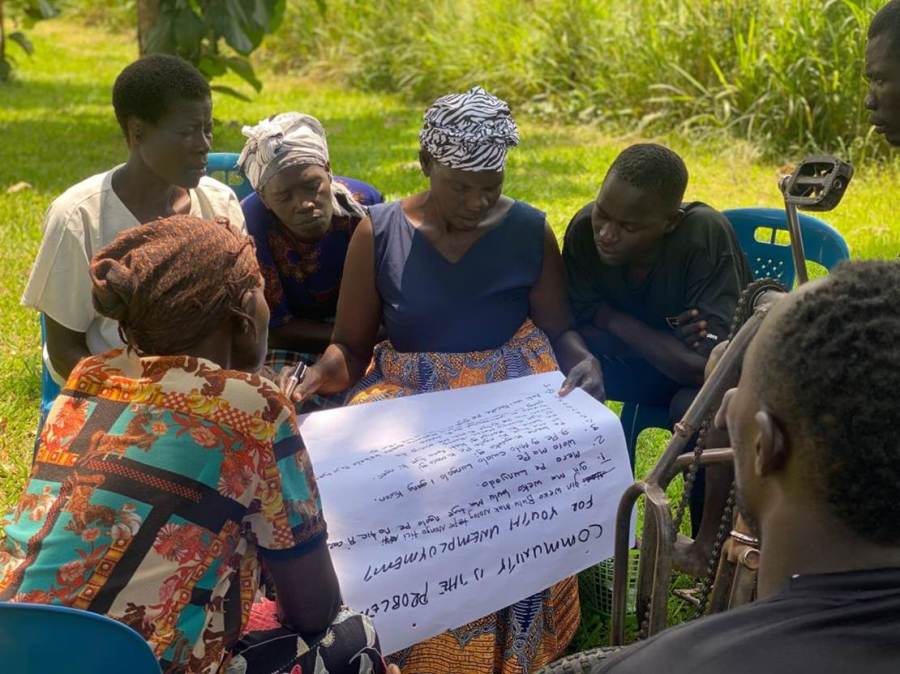
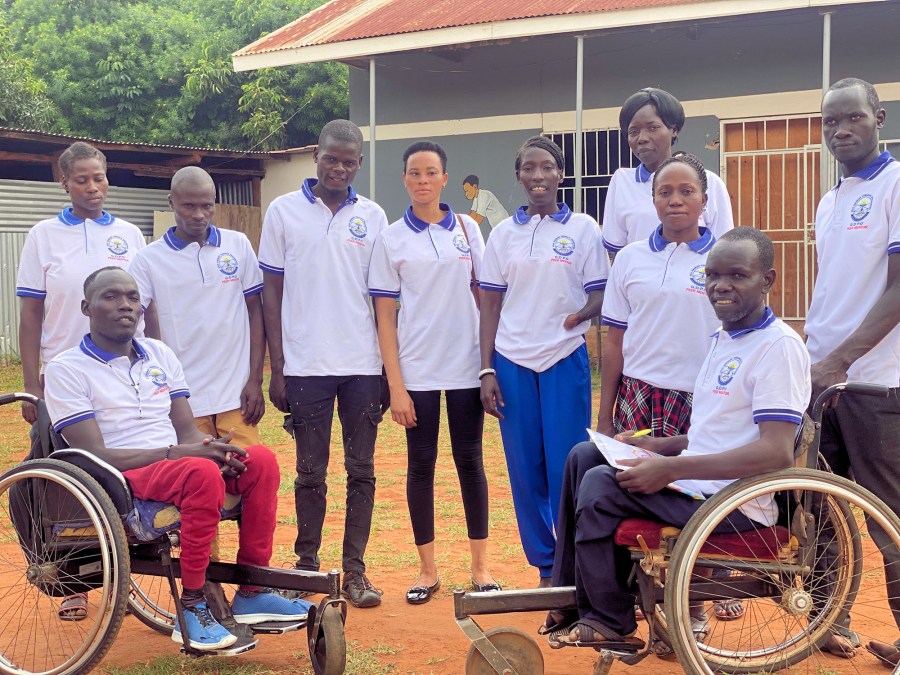
VPlus Graduates meeting at GDPU

The Vital Role for the Guidance Counsellor

One on One Interviews

Vplusplus field visits also allow the Guidance Counsellor to give support, encouragement, to identify and follow up Safeguarding incidents. Sadly, abuse is, a constant factor in the lives of these graduates. Sometimes that abuse comes from members of the family, sometimes from colleagues at work; often it comes from both. The solutions involve discussion, advocacy, alerting the relevant authorities where necessary, finding safe refuge, medical aid and more; changing the mindset, as the team puts it, is a very slow process

New location for Rubanga Mamiyo Knitting group in Nwoya,

The first monthly report from the Vplusplus team in Gulu:

What went well?
We linked up with our beneficiaries in Gulu, Omoro and Nwoya
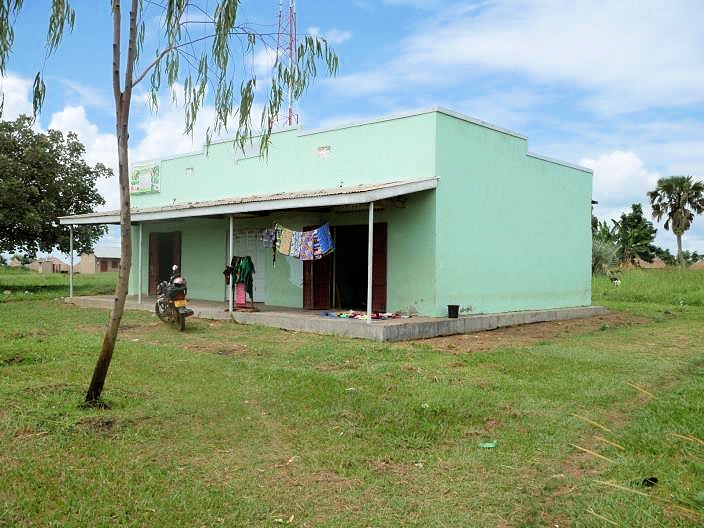
The Knitting group in Nwoya can afford to shift to a better house, along the main road to Anaka Town Council.
Diversification of work witnessed during the follow up visit: many members are doing side business to support their main skills.
Well facilitated to conduct the activities.
Able to identify skills and gaps that exist among the youth.
We managed to identify some key safeguarding issues.

What challenges did you have?
 We faced challenges of mobilisation: some students are not at home; others take so long in the garden, they are still not at home.
Some parents are not supporting their children.
Some students are not employed or starting their own business.
Some students are failing to pay back the revolving capital.
Sometimes you get disappointed seeing a student not engaged in work.
Long distances and sitting on the bike for long period of time.
Bad weather keeps you too long in the field waiting for the rain to stop.

Lessons learnt and recommendations for future trainings:
Students do better when they work in a group.

We were impressed that the team in Nyowa are doing so well, because they have a strong team spirit. They are always willing to support one another, physically, financially and emotionally.

Those who have mobile phone are doing quite well; they get in touch with their friends for more business connection and networking.

Where trainees are earning some money, their lives are improving and they are being valued by their parents and relatives.
Opiyo Derrick, Knitting, Nwoya

If you would like to know more about the ETC of PWD charity please go to our Home page and please keep in touch via Project News.

If you would like to give something, please go to our Donate page.

If you would like to know more about Gulu Disabled Persons Union (GDPU) please go to their Facebook page. 

Many Thanks.

VPlus: the story so far

VPlus was the shorter name for the Enhancing the Capacity of Young Persons with Disability through Vocational and Literacy Education and Training project, delivered by Gulu Disabled Persons Union (GDPU) and jointly funded by the Enhancing the Capacity of Persons with Disability charity (ETC of PWD) and UK Aid Direct. UK Aid funding has now finished.

VPlus Cohort 1 Graduation Day Graduates with the GDPU Chair: Allii Geoffrey

Who was VPlus for?

VPlus was targeted at young persons with disabilities in Northern Uganda, many of whom have received little or no formal education. They enrolled on a six-month vocational training course at the GDPU training centre combined with all-important ‘Plus’ elements of training in literacy, numeracy, financial literacy, and cultural and community activity which build confidence and self- esteem.

Post Training Support

The six-month training is followed by long-term support to graduates in establishing and sustaining businesses or employment. In 2021 and 2022 113 young persons with disability graduated from two training cohorts and, in 2023 are working on establishing a business or finding a job to earn income.

Aroma Elvis and his mother being supported on skill gaps
VPlus: some figures
•         119 recruited to the two cohorts (53 Cohort 1; 66 Cohort 2) and 115 graduated/passed their exams (49;66). Of these, one carried onto further training and one, sadly died.  So GDPU, supported 113 trainees.  (64F, 49M; all bar one with disabilities; 89 aged 15 to 24 years and 24 aged 25 to 32; all from Gulu.)
•         In addition, the project trained 32 GDPU staff and workplace providers in safeguarding and, for GDPU staff, sign language.   
•         Cumulatively, 114 trainees (100%) are showing that they have improved their confidence and self-esteem significantly, some more than others (65F, 49M; 113 disabled.)
•         94 graduates (44M, 50F) having increased their income by the end of the project,
•         107 graduates from both training programmes securing employment or establishing a business (62F, 45M; all bar one with disabilities; 64 aged 15 to 24, 23 aged 25 to 32.) This includes a couple of trainees who were employed within their family’s farming work but not paid a wage. The employment of 98 (58F, 40M) of these was assessed as being sustainable.

This case study probably sums up the VPlus approach best:

VPlus@GDPU 2023 Case Study 1: Akello Brenda

Akello Brenda with Musema Faruk (VPlus Programme Coordinator)

Akello Brenda is a Cohort 1 Design and Decoration VPlus graduate who has a real eye for colour and design. She returned to GDPU to help teach Cohort 2 trainees and their new instructor in basket weaving. (The previous instructor decided to move on and a new instructor with different skills was employed.)

Brenda’s Dream

Akello Brenda used to make her products at home, supported with the cost of materials by her mother, where she also helped in other work of her family. She takes her products to the big, local market once a month where they sell well. However, it is some way to travel, and the market days were occasionally rained off. Brenda dreamt of finding a unit in the trading centre on the main road, as well as learning how to make more complicated jewelry.

How the Revolving Loan Scheme Helped

In 2022 she was supported with a revolving capital loan of about UGX 150,000/= (about £35.00) from the VPlus @ GDPU project. Interest is not charged on loans from this fund and there are no strings attached to it, in order to help VPlus beneficiaries consolidate, enhance and grow the business they have started.

Brenda Realises Her Dream

With support from her parents, Brenda gained new skills in tailoring by enrolling in the Emmanuel School of Fashion where she studied on weekends. She graduated in August 2022, and managed to buy a sewing machine for UGX 350,000/= (about £75.00) from her savings. She found a shared space to make and sell her products in the centre of Loyo Boo, Unyama Sub-county, Gulu District. She always displays her products for tailoring and decoration in front of her shop, Brenda also goes to every Sunday market day to sell her products. She earns an average of UGX 25,000/= (about £6.00) in a week.

The ‘Plus’ Element

Brenda enjoyed the non-vocational elements of the VPlus programme as well, especially the traditional dance in which she excelled and which gave her the confidence to develop her own business.

Akello Brenda and VPlus Cohort 1 at their Graduation Day

Challenges and the future for Brenda

  • Brenda’s Sickle Cell Anaemia is an issue, a hidden impairment, which has greatly affected her business because of frequent admissions to hospital.
  • High market competition especially from traders who have started hawking their wares from house to house, diminishing the incentive customers to come to shop based traders.
  • Lack of materials for basket weaving which are sometimes out of stock in Gulu as these materials are brought from Congo.

VPlus and the future

What next? Is it all over for training and support for these determined young people? Not at all. Please see the next blog for news about Vplusplus @GDPU and exciting news about another new programme: VIVA@GDPU.

Want to know more?

A Support Session for VPlus graduates at GDPU

If you would like to know more about the ETC of PWD charity please go to our Home page.

If you would like to give something, please go to our Donate page.

If you would like to know more about Gulu Disabled Persons Union (GDPU) please go to their website or Facebook page. 

Many Thanks.

VPlus was match funded by UK Aid Direct and ETC of PWD
ETC of PWD is supported by its trustees and private donations

The Revolving Loan Scheme

The aim of vocational training is, of course, to get the trainee from training to lasting work; to a sustainable life. As the VPlus programme for youth with disabilities in Gulu, Northern Uganda has shown, core skills training is only a small part of that process. What happens for example, after training at the centre is equally important.

This image has an empty alt attribute; its file name is p1140032.jpg
Electronics Repair trainees in a lesson at GDPU

Post Training

‘Post Training Support’ as it is called has always suffered from one major problem: capital. Graduates are keen to get their business working, to do what they have trained to do. But they haven’t earned money when training and rarely have capital of their own; start-up costs what they haven’t got. How to solve the first problem that derails so many before they have even begun?

This image has an empty alt attribute; its file name is p1220112.jpg
Opiyo Benson in font of his new workplace in Koch Goma

Free Money?

In the past, donors gave out boxes of tools or cash to get things going. Perhaps surprisingly, free stuff didn’t help, far from it. These gifts distorted training before it even began. The first question would-be trainees asked was: what tools are you going to give me? how much money will I get? The gift became the goal, not the training or the aim of a sustainable life. That expectation ruined so many vocational training enterprises; no one values free money. And, anyway, most free tools were sold or stolen with days. Some cash also went to thieves or debts or parties, the vulnerable were preyed on by the powerful; very little went to the new business.

This image has an empty alt attribute; its file name is p1220129.jpg
Bob Gumakiriza now working at Niange Ber Motorcycle Repair in Koch Goma

The Revolving Loan Scheme

The solution Gulu Disabled Persons Union (GDPU), who run the VPlus programme, has come up with is innovative: the Revolving Loan Scheme. It depends, as schemes in this context should if they are to last, on strong connections with family and the community. Learning from the first VPlus cohort, GDPU deliberately built good bonds with families in the second cohort.

This image has an empty alt attribute; its file name is 20220801_1053441.jpg
Apiyo Miriam’s Sweater Weaving Group

How the Scheme Works

In essence, and all participants are told this right from the beginning, they will have to contribute themselves. The trainee or more likely, parents, the community or both will part fund their graduates’ start-up costs. The rest of the start-up money comes from a ring fenced fund set up by GDPU and financed by ETC of PWD.

Akello Fiona hairdresser working on a customers hair

The Importance of the Plan

For example, a group of graduates want to buy a knitting machine for a sweater weaving business. Those graduates will have costed their needs while drawing up a business plan during training. That plan will be the basis of their loan application. The amount to be borrowed, payback terms, the parental/ community contribution and involvement will have been discussed with all concerned, at some length and formally agreed. After the loan terms are agreed and the matching fund is in, GDPU will buy the right machine at a good discount from their suppliers in Kampala (guaranteeing quality and supply etc).

This image has an empty alt attribute; its file name is 20220802_1230141.jpg
Sweater Weaving Group in Anaka

Tweaking the Scheme

At each subsequent Post Training Support visit, staff from GDPU will also look at the graduates record books (training in bookkeeping etc is of course part of the training). But, the actual financial process is now handled by the VPlus/ GDPU accountant, rather than PTS staff. It was found that graduates feared staff would demand money rather than give support, so graduates refused to be contacted. Separating out support from loans has now removed that problem. GDPU has also reformed repayment schedules, making them flexible according to income and circumstance as recorded by each graduate in their all important record books.

This image has an empty alt attribute; its file name is mf-revolving-loans.jpg
The VPlus Programme Manager, Musema Faruk, discussing a Revolving Loan application

Revolving?

What is also new, is that participants know from the start that the repaid loan is not returned to ETC or GDPU. This money goes into a separate account, used for the next graduate loan. It becomes a growing capital fund for the disability community. Parents and graduates are reminded that repaid loans help their community and the next person down the line; this seems to help repayment. Second cohort parents are far more keen to support and keep their children working, after all their income goes toward paying the loan. GDPU has even started training family members in core skills, so they can keep enterprises going when graduates health and disability makes work difficult.

VPlus Guidance Counsellor, Okello Emma, on a Post Training Support visit to graduates in Odek

Is it Working?

Early reports look good, the money is being returned. Already graduates from the earlier etc@gdpu programme are setting up their own access to the scheme, others we hope will follow if the scheme can be kept running.

A revolving loan indeed.

Want to Know More?

If you would like to know more about the ETC of PWD charity please go to our Home page.

If you would like to give something, please go to our Donate page.

If you would like to know more about Gulu Disabled Persons Union (GDPU) please go to their website or Facebook page. 

Many Thanks.

This image has an empty alt attribute; its file name is image.png

This project is match funded with UK aid from the British people

This image has an empty alt attribute; its file name is image-1.png