VPlus: the story so far

VPlus was the shorter name for the Enhancing the Capacity of Young Persons with Disability through Vocational and Literacy Education and Training project, delivered by Gulu Disabled Persons Union (GDPU) and jointly funded by the Enhancing the Capacity of Persons with Disability charity (ETC of PWD) and UK Aid Direct. UK Aid funding has now finished.

VPlus Cohort 1 Graduation Day Graduates with the GDPU Chair: Allii Geoffrey

Who was VPlus for?

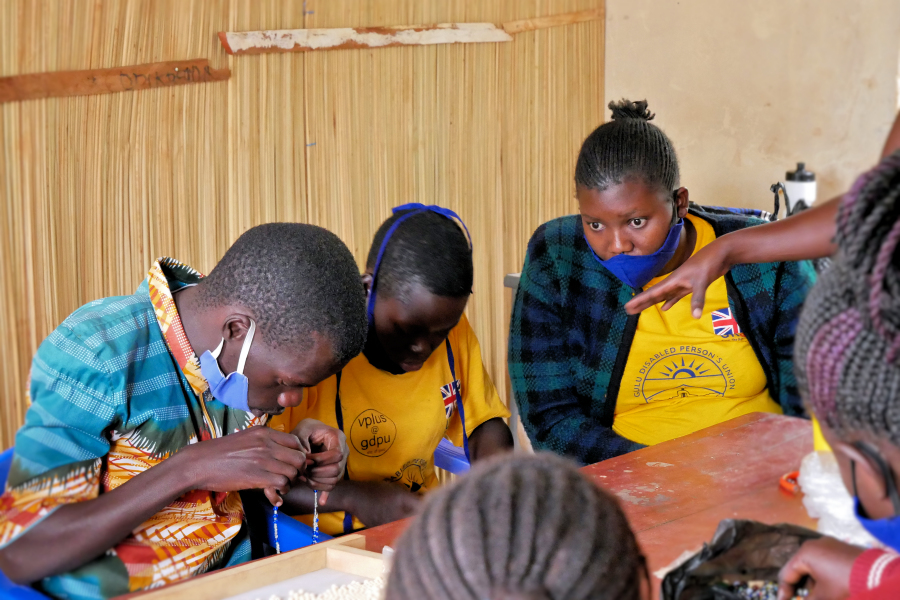
VPlus was targeted at young persons with disabilities in Northern Uganda, many of whom have received little or no formal education. They enrolled on a six-month vocational training course at the GDPU training centre combined with all-important ‘Plus’ elements of training in literacy, numeracy, financial literacy, and cultural and community activity which build confidence and self- esteem.

Post Training Support

The six-month training is followed by long-term support to graduates in establishing and sustaining businesses or employment. In 2021 and 2022 113 young persons with disability graduated from two training cohorts and, in 2023 are working on establishing a business or finding a job to earn income.
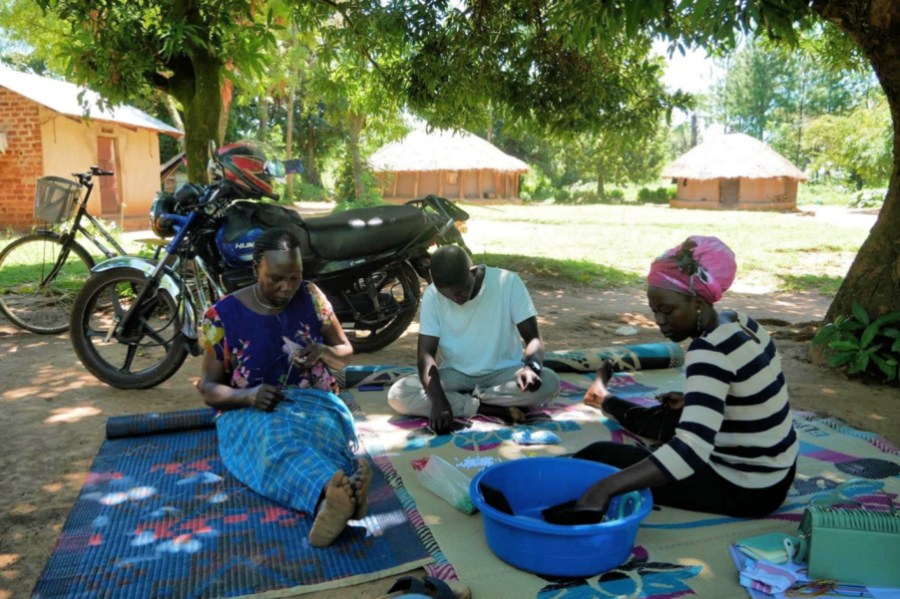
Aroma Elvis and his mother being supported on skill gaps
VPlus: some figures
•         119 recruited to the two cohorts (53 Cohort 1; 66 Cohort 2) and 115 graduated/passed their exams (49;66). Of these, one carried onto further training and one, sadly died.  So GDPU, supported 113 trainees.  (64F, 49M; all bar one with disabilities; 89 aged 15 to 24 years and 24 aged 25 to 32; all from Gulu.)
•         In addition, the project trained 32 GDPU staff and workplace providers in safeguarding and, for GDPU staff, sign language.   
•         Cumulatively, 114 trainees (100%) are showing that they have improved their confidence and self-esteem significantly, some more than others (65F, 49M; 113 disabled.)
•         94 graduates (44M, 50F) having increased their income by the end of the project,
•         107 graduates from both training programmes securing employment or establishing a business (62F, 45M; all bar one with disabilities; 64 aged 15 to 24, 23 aged 25 to 32.) This includes a couple of trainees who were employed within their family’s farming work but not paid a wage. The employment of 98 (58F, 40M) of these was assessed as being sustainable.

This case study probably sums up the VPlus approach best:

VPlus@GDPU 2023 Case Study 1: Akello Brenda

Akello Brenda with Musema Faruk (VPlus Programme Coordinator)

Akello Brenda is a Cohort 1 Design and Decoration VPlus graduate who has a real eye for colour and design. She returned to GDPU to help teach Cohort 2 trainees and their new instructor in basket weaving. (The previous instructor decided to move on and a new instructor with different skills was employed.)

Brenda’s Dream

Akello Brenda used to make her products at home, supported with the cost of materials by her mother, where she also helped in other work of her family. She takes her products to the big, local market once a month where they sell well. However, it is some way to travel, and the market days were occasionally rained off. Brenda dreamt of finding a unit in the trading centre on the main road, as well as learning how to make more complicated jewelry.

How the Revolving Loan Scheme Helped

In 2022 she was supported with a revolving capital loan of about UGX 150,000/= (about £35.00) from the VPlus @ GDPU project. Interest is not charged on loans from this fund and there are no strings attached to it, in order to help VPlus beneficiaries consolidate, enhance and grow the business they have started.

Brenda Realises Her Dream

With support from her parents, Brenda gained new skills in tailoring by enrolling in the Emmanuel School of Fashion where she studied on weekends. She graduated in August 2022, and managed to buy a sewing machine for UGX 350,000/= (about £75.00) from her savings. She found a shared space to make and sell her products in the centre of Loyo Boo, Unyama Sub-county, Gulu District. She always displays her products for tailoring and decoration in front of her shop, Brenda also goes to every Sunday market day to sell her products. She earns an average of UGX 25,000/= (about £6.00) in a week.

The ‘Plus’ Element

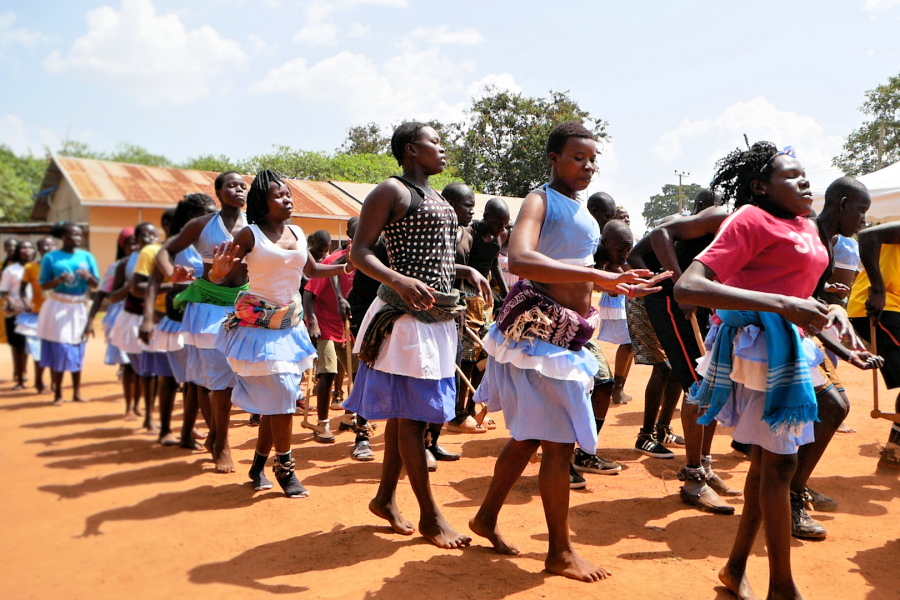
Brenda enjoyed the non-vocational elements of the VPlus programme as well, especially the traditional dance in which she excelled and which gave her the confidence to develop her own business.

Akello Brenda and VPlus Cohort 1 at their Graduation Day

Challenges and the future for Brenda

  • Brenda’s Sickle Cell Anaemia is an issue, a hidden impairment, which has greatly affected her business because of frequent admissions to hospital.
  • High market competition especially from traders who have started hawking their wares from house to house, diminishing the incentive customers to come to shop based traders.
  • Lack of materials for basket weaving which are sometimes out of stock in Gulu as these materials are brought from Congo.

VPlus and the future

What next? Is it all over for training and support for these determined young people? Not at all. Please see the next blog for news about Vplusplus @GDPU and exciting news about another new programme: VIVA@GDPU.

Want to know more?

A Support Session for VPlus graduates at GDPU

If you would like to know more about the ETC of PWD charity please go to our Home page.

If you would like to give something, please go to our Donate page.

If you would like to know more about Gulu Disabled Persons Union (GDPU) please go to their website or Facebook page. 

Many Thanks.

VPlus was match funded by UK Aid Direct and ETC of PWD
ETC of PWD is supported by its trustees and private donations

The Revolving Loan Scheme

The aim of vocational training is, of course, to get the trainee from training to lasting work; to a sustainable life. As the VPlus programme for youth with disabilities in Gulu, Northern Uganda has shown, core skills training is only a small part of that process. What happens for example, after training at the centre is equally important.

This image has an empty alt attribute; its file name is p1140032.jpg
Electronics Repair trainees in a lesson at GDPU

Post Training

‘Post Training Support’ as it is called has always suffered from one major problem: capital. Graduates are keen to get their business working, to do what they have trained to do. But they haven’t earned money when training and rarely have capital of their own; start-up costs what they haven’t got. How to solve the first problem that derails so many before they have even begun?

This image has an empty alt attribute; its file name is p1220112.jpg
Opiyo Benson in font of his new workplace in Koch Goma

Free Money?

In the past, donors gave out boxes of tools or cash to get things going. Perhaps surprisingly, free stuff didn’t help, far from it. These gifts distorted training before it even began. The first question would-be trainees asked was: what tools are you going to give me? how much money will I get? The gift became the goal, not the training or the aim of a sustainable life. That expectation ruined so many vocational training enterprises; no one values free money. And, anyway, most free tools were sold or stolen with days. Some cash also went to thieves or debts or parties, the vulnerable were preyed on by the powerful; very little went to the new business.

This image has an empty alt attribute; its file name is p1220129.jpg
Bob Gumakiriza now working at Niange Ber Motorcycle Repair in Koch Goma

The Revolving Loan Scheme

The solution Gulu Disabled Persons Union (GDPU), who run the VPlus programme, has come up with is innovative: the Revolving Loan Scheme. It depends, as schemes in this context should if they are to last, on strong connections with family and the community. Learning from the first VPlus cohort, GDPU deliberately built good bonds with families in the second cohort.

This image has an empty alt attribute; its file name is 20220801_1053441.jpg
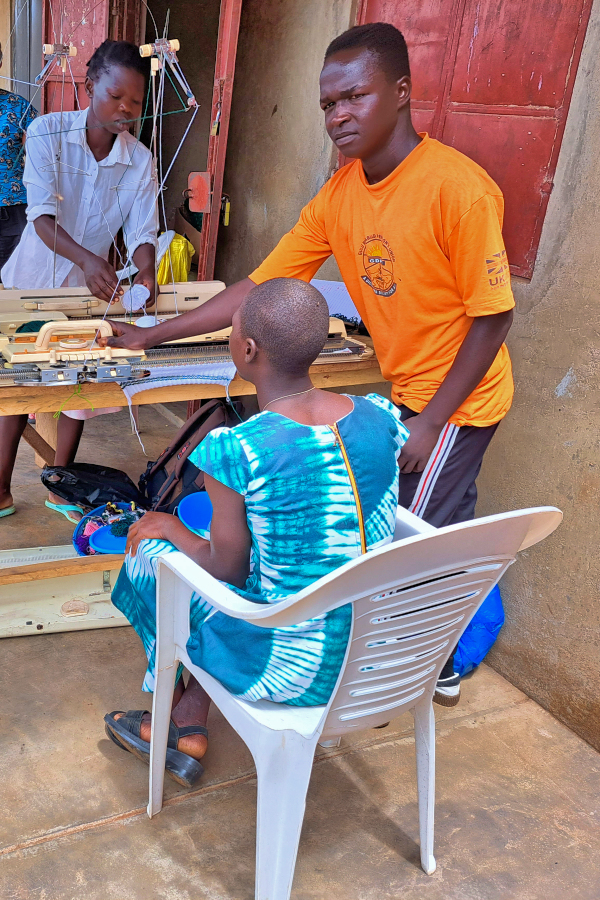
Apiyo Miriam’s Sweater Weaving Group

How the Scheme Works

In essence, and all participants are told this right from the beginning, they will have to contribute themselves. The trainee or more likely, parents, the community or both will part fund their graduates’ start-up costs. The rest of the start-up money comes from a ring fenced fund set up by GDPU and financed by ETC of PWD.

Akello Fiona hairdresser working on a customers hair

The Importance of the Plan

For example, a group of graduates want to buy a knitting machine for a sweater weaving business. Those graduates will have costed their needs while drawing up a business plan during training. That plan will be the basis of their loan application. The amount to be borrowed, payback terms, the parental/ community contribution and involvement will have been discussed with all concerned, at some length and formally agreed. After the loan terms are agreed and the matching fund is in, GDPU will buy the right machine at a good discount from their suppliers in Kampala (guaranteeing quality and supply etc).

This image has an empty alt attribute; its file name is 20220802_1230141.jpg
Sweater Weaving Group in Anaka

Tweaking the Scheme

At each subsequent Post Training Support visit, staff from GDPU will also look at the graduates record books (training in bookkeeping etc is of course part of the training). But, the actual financial process is now handled by the VPlus/ GDPU accountant, rather than PTS staff. It was found that graduates feared staff would demand money rather than give support, so graduates refused to be contacted. Separating out support from loans has now removed that problem. GDPU has also reformed repayment schedules, making them flexible according to income and circumstance as recorded by each graduate in their all important record books.

This image has an empty alt attribute; its file name is mf-revolving-loans.jpg
The VPlus Programme Manager, Musema Faruk, discussing a Revolving Loan application

Revolving?

What is also new, is that participants know from the start that the repaid loan is not returned to ETC or GDPU. This money goes into a separate account, used for the next graduate loan. It becomes a growing capital fund for the disability community. Parents and graduates are reminded that repaid loans help their community and the next person down the line; this seems to help repayment. Second cohort parents are far more keen to support and keep their children working, after all their income goes toward paying the loan. GDPU has even started training family members in core skills, so they can keep enterprises going when graduates health and disability makes work difficult.

VPlus Guidance Counsellor, Okello Emma, on a Post Training Support visit to graduates in Odek

Is it Working?

Early reports look good, the money is being returned. Already graduates from the earlier etc@gdpu programme are setting up their own access to the scheme, others we hope will follow if the scheme can be kept running.

A revolving loan indeed.

Want to Know More?

If you would like to know more about the ETC of PWD charity please go to our Home page.

If you would like to give something, please go to our Donate page.

If you would like to know more about Gulu Disabled Persons Union (GDPU) please go to their website or Facebook page. 

Many Thanks.

This image has an empty alt attribute; its file name is image.png

This project is match funded with UK aid from the British people

This image has an empty alt attribute; its file name is image-1.png

Field trips and the future: ETC of PWD trustees visit to Gulu and beyond

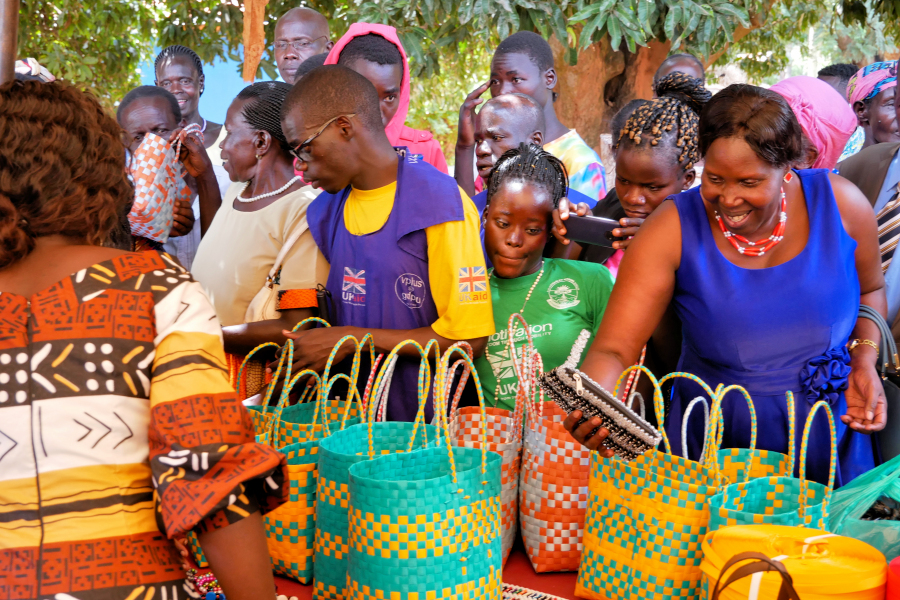
Buying from the Design and Decoration graduates at Graduation Day

Cohort 1 of the VPlus programme graduated in December 2021, they have been at work ever since. So, August 22 was a good time to visit past graduates, learn how they were getting on, what extra training and support they needed and how future programmes should be adapted.

Out To The Field

Developments

The growing quality of the training at Gulu Disabled Persons Union, (GDPU) and greater ambition amongst graduates, has expanded the range of Post Training Support. Extra training demands have moved far beyond the usual literacy, numeracy and record keeping. IT, getting involved with social media as part of the selling process or access to new information, featured heavily in our Post Training Support visits.

But, context matters. Contrast the ways in which three graduates work and sell their goods.

Apiyo Miriam

Apiyo Miriam and the Knitting group with Musema Faruk, outside their shop in Gulu

Apiyo Miriam works with Sweater Weaving groups in Gulu town: ‘Disabled Youth Living Enterprise Group Sweater Knitting’ and ‘Waneno Anyim Sweater Knitting’. They have a smart shop and a growing selection of knitting and sewing machines. Miriam’s record keeping and leadership, in this or any other context, is extraordinarily good.

Miriam with her book keeping records and graduation photo

She is very proactive, seeking out knitting contracts from local schools and individuals; the group is busy. But, as she says the future of selling is on the internet, and that was the training she needed. How to access and use, probably Facebook, to sell their goods across Uganda, certainly. But Miriam’s ambition is much wider, she realises that the West will pay much more for goods made by groups like hers and she wants to know how to do it.

Akello Brenda with Musema Faruk

Akello Brenda

Akello Brenda has sickle cell, and lives with her parents out beyond Unyama traiding centre, five kilometres north east of Gulu. Brenda trained on the Design and Decoration course and makes baskets and jewellery. Every month she takes her baskets etc on a boda (motorbike taxi) out to an auction, one of the large markets that visit outlying trading centres. She will set a blanket on the ground and sell what she can. Last months auction was disturbed by the rain and she sold nothing.

There is nowhere to set up shop around her family compound, although she sometimes sell to people who use the path leading to the centre. It was noticeable how proud her mother was of her child, and how much she wanted to help, buying materials for example. A shop in Unyama might be one possibility, although it is doubtful that returns would cover the rent. But, during Cohort 2, the GDPU Design and Decoration instructor dropped out and Brenda took over, successfully. Most instructors balance making and selling with teaching, it could be a model for her too. Past graduates have already become good instructors at GDPU, eg Aciro Brenda who helped set up the new tailoring course.

A range of Design and Decoration Goods on show at Graduation

Akello Brenda also asked for training in making more complex, and fashionable jewellery, which she knows will sell well. This is where the internet could help her; You Tube videos perhaps? Access to them is tricky without a smartphone, she would probably have to come into GDPU for that. Diversity will be the key for her, she is also a very good traditional dancer

Odong Haron Bob

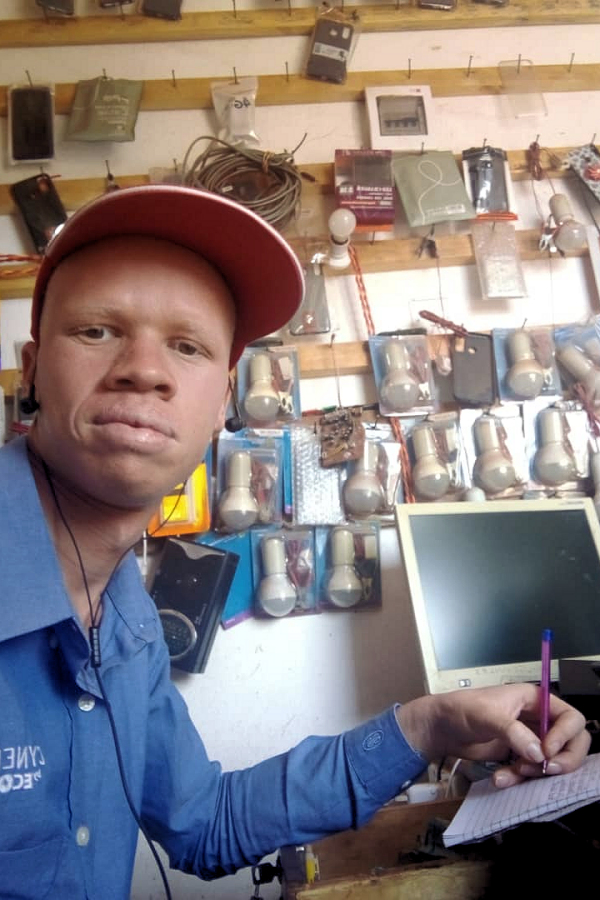
Haroon Bob at work in Lira

We travelled to Lira, a town similar to Gulu, some 130 or so kilometres to the south east. Odong Haron Bob, an albino, trained in electronics and has a good placement with an extremely entrepreneurial man near the centre. Bob was being trained thoroughly, on more IT kit than I have seen outside Kampala.

Musema Faruk with a member of Gulu PWD Electronics in Gulu Main Market recently

The contrast between this set up and the Gulu PWD electronics group we have been visiting in Gulu Main Market since 2017 was significant. Gulu PWDs have not moved beyond basic feature phones, have little IT experience and after many years have still not put up a sign advertising their business. But, they are significant sportsmen, up to Olympic standard, have genuine political ambitions, likely to be realised and are great company.

Haroon Bob and other Cohort 1 trainees at GDPU

Meanwhile in Lira, all the relevant software was there: several laptops; basic coding; everything you need for modern IT work and Bob was learning it all. There is a well known saying here, “Lira is for business and Gulu is for party”, but there is more to it than that. Gulu PWDs trained in 2014-5 when aspirations were lower, less kit was available and community involvement less significant. For example, Bob’s family helped to place him with this business. The serious development of the ‘Plus’ element in the training that GDPU provides must be part of the solution too.

Back to GDPU

It was with thoughts like these that we returned to our meetings at GDPU. we would consider where the VPlus training programme had led and what should be the future path for training young people with disabilities in Gulu and surrounding districts. See the next blog for more.

Diversity and Music

Odong Sunday plays his music at Cohort 2 Graduation Day

Thinking of the diversity many VPlus graduates use to become self supporting This video, taken during the Cohort 2 graduation at GDPU, shows Odong Sunday and his group playing one of his songs. He has already recorded a more contemporary song that is getting attention, he has many more and appealed for funds to pay for more recording. The Deputy Mayor no less, put forward a significant sum, she knew real talent when she heard it. The role of music and music technology (performed, recorded and sold) in skills training became a significant talking point in our subsequent meeting at GDPU, see the next blog for more.

Want to Know More?

If you would like to know more about the ETC of PWD charity please go to our Home page. If you would like to give something, please go to our Donate page. If you would like to know more about Gulu Disabled Persons Union (GDPU) please go to their website or Facebook page. 

Many Thanks.

This programme is funded by aid from the British people

VPlus Cohort 2 Graduation

Running to get the graduation certificate

This graduation was the second joyous celebration of the achievements of youth with disability in Gulu and surrounding districts of Northern Uganda.

Waiting for the rain at GDPU

The rains had begun earlier in the week, but luckily, they held off for most of the occasion. Allowing the speeches, traditional dance and display of goods and skills to take place. Gulu Disabled Persons Union, our delivery partner, organised the day very well and many important local people were there.

Motorcycle repair graduate explaining his new skills. Note the Gulu City District Education Officer behind and the Sign Language Interpreter in front

Ability in Disability

The attendance by dignitaries, and the subsequent affirmation of people with disabilities, matters a great deal in this context. The theme for the day was ‘ability in disability’ and it was interesting to note how many of the speeches described the speakers own involvement with disability, through perhaps a child, a sibling or training. It was a day that highlighted the inclusivity that will be crucial for the future lives of those graduating.

Vplus trainees march out to present themselves to visitors, honoured guests, friends and families. The Deputy Mayor is clapping along

GDPU Success

It was also the first time in over two and a half years that the ETC of PWD trustees could get to Gulu, it was wonderful to be back, and in time for such an important occasion. It was also important to have the chance to publicly applaud the success of GDPU, in particular the work of Ojok Patrick GDPU Centre Co Ordinator and Musema Faruk, VPlus programme manager (and now Head Teacher at GDPU). Their efforts have been boosted been by Ajok Emma, Guidance Counsellor and Mary Paul Lakot, Accounts Manager. It is their integrity, dedication and endless hours of work throughout Pandemics, Lockdowns and every other sort of challenge that has delivered the change to the disabled community in Gulu. Not forgetting of course the crucial role of the highly committed team of instructors and support staff.

Running to get the graduation certificate, with family and instructors

Parental Involvement

The first cohort of the VPlus programme was older than the second and parental/ community involvement had not been so strong. This gap was identified in Reflection Meetings and for the second cohort Faruk and the team tried hard to get greater involvement. Parental attendance at their graduation was much higher this time and support for trainees more noticeable. It is a pre-condition of the course that trainees come with at least some tools for their training, supplied by parents. To qualify for the VPlus Revolving Loan Scheme, that helps start up new businesses post training, parents also have to contribute. Faruk reports that parents have been far more willing to give something and much more involved in the training programme this time around; a big step forward.

Tradiitional Dance: the Acero

Joy

The usual bandwidth problems prevented us livestreaming the graduation, but I hope these images and video give some flavour of the joy with which parents, family and friends greeted the public recognition of the graduates (or graduands as they are called here).

Buying from the Design and Decoration graduates

Setting out their stall

The stalls with goods made by trainees were busy, selling clothes from the new tailoring course, jumpers, scarves from the sweater weavers, bags, jewelry and more from the new Design and Decoration course. The motorcycle repair graduates talked everyone through their new skills and the electronics graduates offered to mend everyone’s phones; there were many takers for that.

Tradiitional Dance: the Acero

Continued Support

The genuine interest and buying of goods was a great start to their new careers, but we know that continued support is vital to any long term success and sustainability. The next phase of the VPlus programme for Cohort 2 is six months post training support for all these new businesses. But, as the training part of this programme draws to an end, and as our field trips to Cohort 1 graduates showed, there are many questions to ask and answer about the future for ETC and GDPU. For those questions and some possible answers please see the next blog.

Want to Know More?

If you would like to know more about the ETC of PWD charity please go to our Home page. If you would like to give something, please go to our Donate page. If you would like to know more about Gulu Disabled Persons Union (GDPU) please go to their website or Facebook page. 

Many Thanks.
This project is match funded with UK aid from the British people’

How are things pushing on at GDPU: Cohort 2 reach a crucial stage

Three busy months have gone by very quickly and the second cohort of the Vplus programme for youth with disabilities in Gulu, Northern Uganda, have just completed the first part of their six month vocational training. They are now out for industrial placement; an apprenticeship process that builds on the first cohort ‘instant apprenticeships’. Instant apprenticeships were a quick solution to the Uganda wide Covid lockdowns that closed Gulu Disabled Persons Union (GDPU), but they have proved to be a great success and are now integral to the programme.

Design and Decoration Training

Disability, and behaviour towards people with disability, is a complex subject in any society. One of the fundamental aims of GDPU and subsequently, the Vplus programme is to “change the mindset of the community” as Musema Faruk, the Vplus programme manager puts it.

Training April 2022: Design and Decoration

Perhaps this change is best shown by a story he told us about the recent School Open Day, which marked the end of the first part of Cohort 2 training. GDPU opens up to parents, elders and VIPs from the District. Trainees show off their vocational skills, take part in sports, cultural activities and dance the traditional dances (Many trainees are from communities that do not allow them to participate in cultural life).

Motorcycle Repair and Maintenance Training

The programme gives them training so that they can participate with confidence. One father’s motorbike broke down on the way to the Open Day, the father pushed it into the centre expecting to phone for a mechanic. His Motorcycle Repair and Maintenance trainee son took the bike, gave it both a full service and a full repair. Musema reported that the parent was astonished and really proud, he said: “I didn’t know that he could learn so much in three months, I never believed that he could do such things”.

School Open Day: Traditional Dance, the Bwola

Equal pride was shown as parents queued for trainees to mend their phones or plait their hair, while stalls sold trainee design and decoration products and more. But apparently, the biggest source of enjoyment came from watching trainees dance two traditional Acholi Dances: the Ajero and the Bwola. Few members of the community expected young people with disabilities to be able to dance at all, let alone dance so well – they have been practising very hard.  As Musema Faruk said in his recent monthly report:

School Open Day: Design and Decoration and Hairdressing stalls

“All youth were encouraged to participate regardless of their disabilities, deaf learners for example were concentrating on the traditional dances. Many people wondered how the deaf could dance so perfectly to the tune of the drum, it was a mindset shift to many among their colleagues at school and in the community.”

School Open Day: Traditional Dance, the Ajero

“Nelson and Sunday are students with visual impairment, they were so perfect in the drumming that impressed many during practice and the School Open Day. Nelson specialized in drumming and Sunday concentrated in playing local guitar. Everyone was so impressed with what the two can do to beat the odds around visual impairment; many had thought blind people are not good in playing instruments.” Musema Faruk: VPlus programme manager.

School Open Day: Wheelchair Basketball match with past etc@gdpu graduates (PWD Electronics)

When the trainees return from internships next week, they will spend time discussing what they have learnt. Instructors will organise lessons to fill the gaps identified in trainee knowledge. Business plans are put together ,and applications are made to the ‘Revolving Loan’ scheme. This innovative scheme (more on the Revolving Loan in the next blog) helps finance the future businesses that trainees are planning to begin

Training April 2022: Hairdressing

As their training at the centre ends, trainees enter six months Post Training Support, when instructors and managers from GDPU go out into the field to work with workshop owners or trainees in their new businesses. Everything is aimed at making these determined young people fully self sufficient and active members of their community.

Things are pushing on well.

School Open Day: Traditional Dance, the Ajero

Want to Know More?

If you would like to know more about the ETC of PWD charity please go to our Home page. If you would like to give something, please go to our Donate page. If you would like to know more about Gulu Disabled Persons Union (GDPU) please go to their website or Facebook page. 

Many Thanks.

This project is match funded with UK aid from the British people’